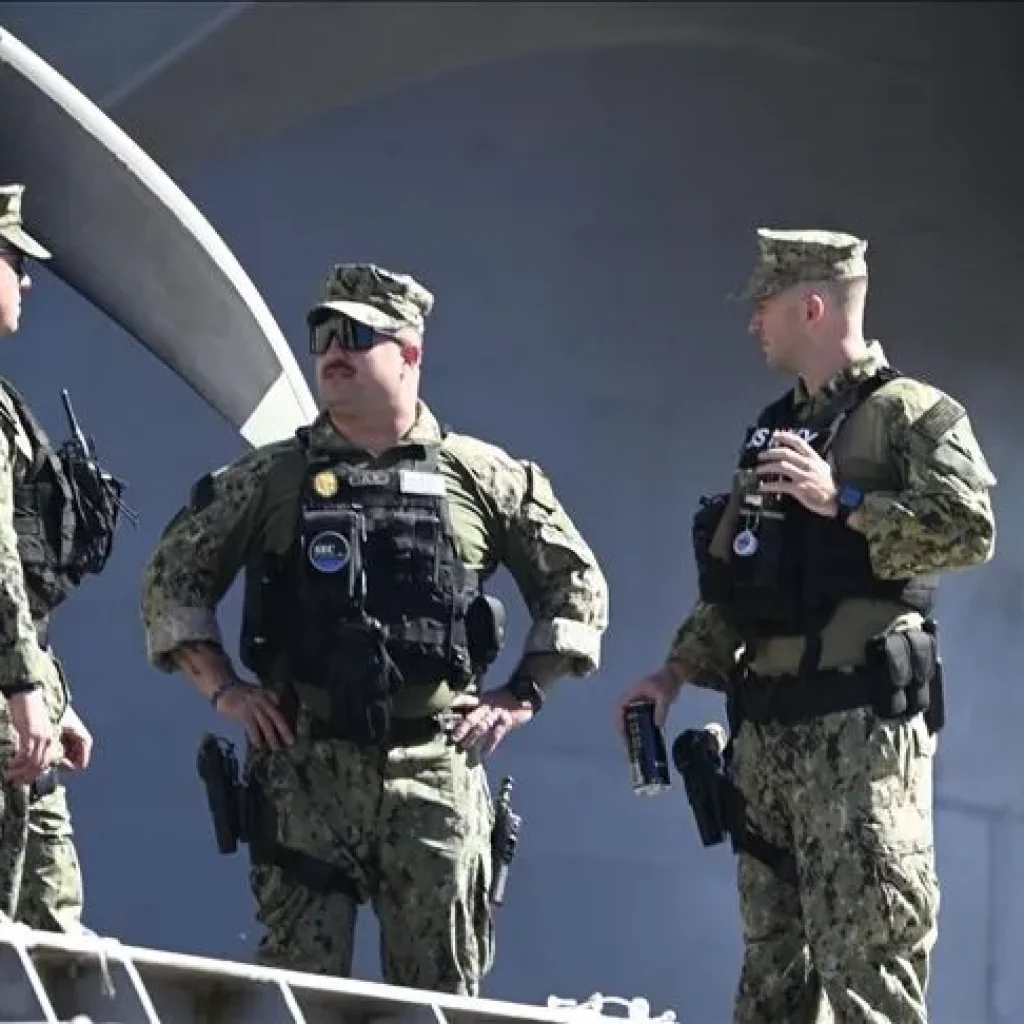
ICE memo expands warrantless arrest powers, documents show
A legal memorandum from U.S. Immigration and Customs Enforcement expands the agency's authority to conduct arrests without warrants
© AA
WASHINGTON (MNTV) – A legal memorandum from U.S. Immigration and Customs Enforcement expands the agency’s authority to conduct arrests without warrants, according to documents obtained by the New York Times.
The memo, signed by Acting ICE Director Todd Lyons, authorizes field agents to conduct broader enforcement sweeps and detain individuals suspected of lacking legal immigration status during routine encounters, the Times reported Friday.
This represents a shift from targeted operations where agents execute arrests of specific individuals named in warrants.
Under previous guidance, agents could only make warrantless arrests when they determined an individual posed a flight risk and would likely fail to appear for required court proceedings.
The new memo characterizes that standard as “unreasoned” and “incorrect.” It states agents may proceed with arrests if a suspect is “unlikely to be located at the scene of the encounter or another clearly identifiable location once an administrative warrant is obtained.”
Expert analysis
Scott Shuchart, who led policy operations at ICE during the Biden administration, told the Times the directive appears to grant significant arrest authority to agents.
“This memo bends over backwards to say that ICE agents have nothing but green lights to make an arrest without even a supervisor’s approval,” Shuchart said.
Claire Trickler-McNulty, a former senior ICE adviser under Biden, said the memo’s language “would cover essentially anyone they want to arrest without a warrant, making the general premise of ever getting a warrant pointless.”
Aaron Reichlin-Melnick, senior fellow at the American Immigration Council, said the memo appears designed to circumvent recent court orders requiring the Department of Homeland Security to follow statutory language limiting administrative warrantless arrests to those “likely to escape.”
The memo redefines these parameters so that “anyone who refuses to wait for a warrant to be issued” meets the “likely to escape” threshold, Reichlin-Melnick noted.
Stanford University political scientist Tom Clark questioned the memo’s legal foundation, noting potential conflicts with Fourth Amendment protections against unreasonable searches and seizures.
“People on whom it imposes constraints don’t get to just write themselves a memo saying they don’t have to follow the law,” Clark wrote.
“Maybe I’ll write myself a memo saying that I don’t have to pay my taxes this year.”



Read also