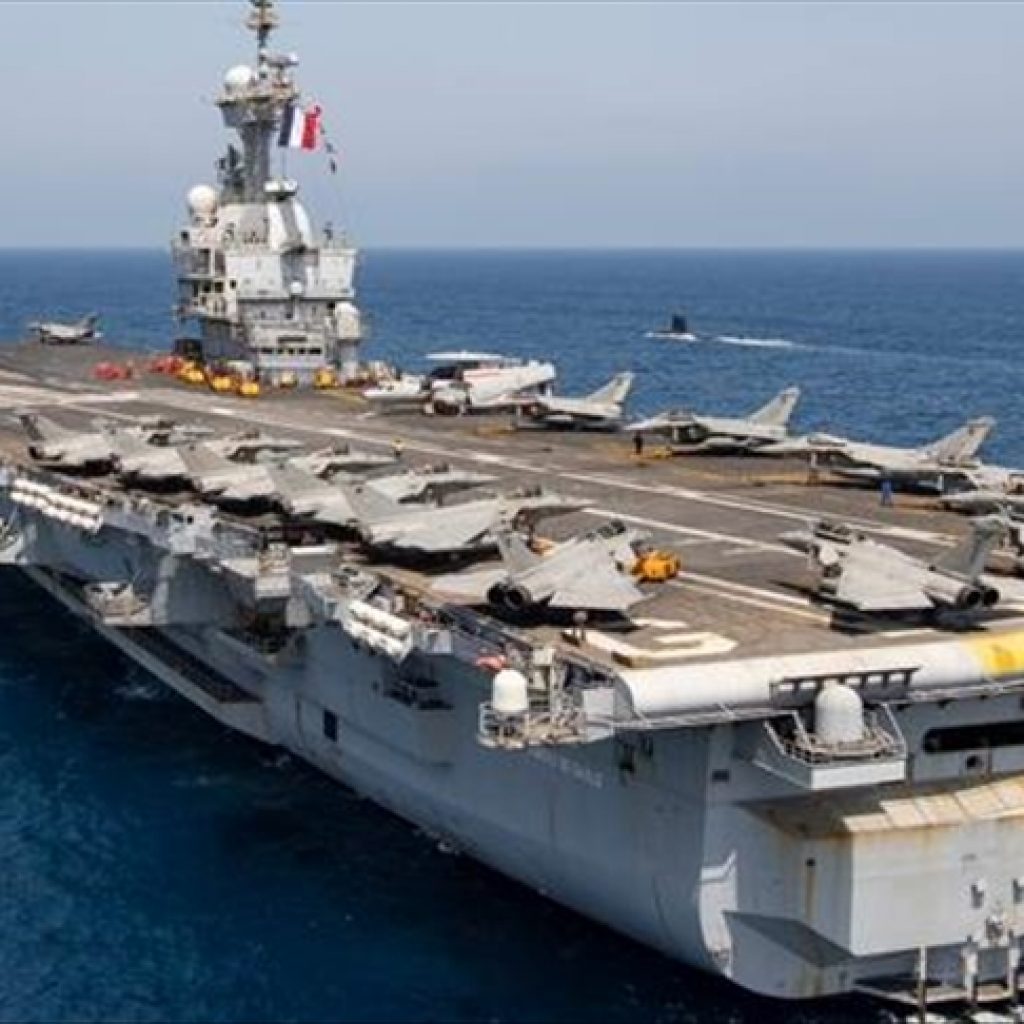
Israel-US War on Iran
Diplomatic push focuses on frozen Iranian assets and the future of the Strait of Hormuz amid mounting regional tensions
DOHA, Qatar (MNTV) — Senior Iranian officials arrived in Qatar for high-level discussions tied to indirect negotiations with the United States as regional powers intensify efforts to contain the conflict between Iran and the US after the country along with Israel started war with Iran in February this year.
Iranian Parliament Speaker Mohammad Bagher Qalibaf and Foreign Minister Abbas Araghchi traveled to Doha alongside Central Bank Governor Abdolnaser Hemmati, according to Iranian and regional media reports.
A source familiar with the negotiations said the delegation’s visit centers on discussions over Iran’s frozen overseas funds, maritime security in the Strait of Hormuz, and the future of Tehran’s enriched uranium stockpile under a possible framework agreement with Washington.
Iran’s state news agency IRNA described the trip as part of an ongoing diplomatic process aimed at advancing ceasefire negotiations and easing regional instability fueled by repeated US and Israeli confrontations with Tehran.
The latest talks come as Pakistan continues mediating between Iran and the United States following the April 8 ceasefire agreement, which temporarily halted weeks of hostilities that threatened to ignite a wider regional war and disrupt one of the world’s most critical energy corridors.
Qatar has increasingly stepped into the mediation process in recent weeks, seeking to prevent further escalation amid fears that US-backed Israeli pressure could once again push the Gulf region toward open conflict.
Earlier this month, Qatari Prime Minister Sheikh Mohammed bin Abdulrahman Al-Thani held meetings with US Secretary of State Marco Rubio and Vice President JD Vance as Doha intensified diplomatic contacts surrounding the negotiations.
The Strait of Hormuz, a strategic waterway through which a significant share of global oil supplies passes, has remained at the center of tensions as Iran repeatedly warned it would resist attempts by the US and Israel to impose military or economic coercion on the country.
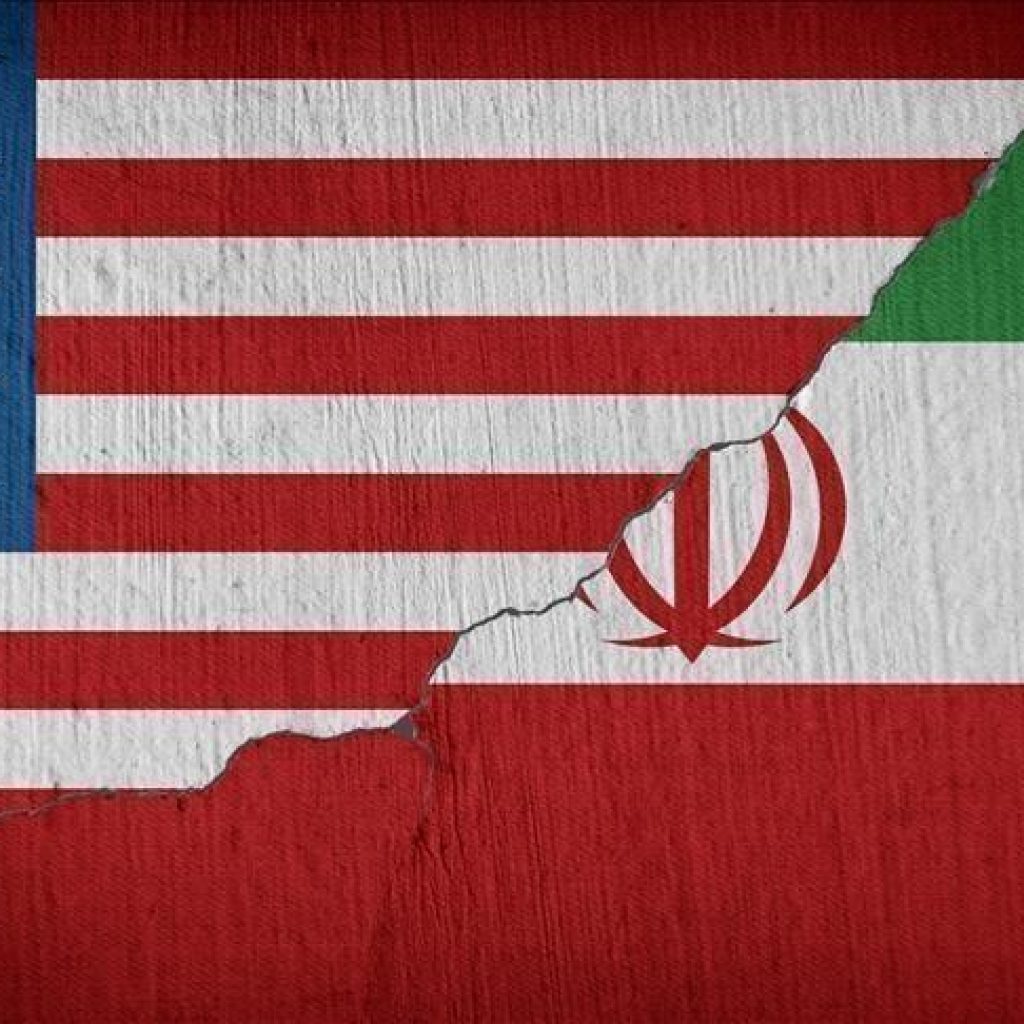
Diplomatic push focuses on frozen Iranian assets and the future of the Strait of Hormuz amid mounting regional tensions
DOHA, Qatar (MNTV) — Senior Iranian officials arrived in Qatar for high-level discussions tied to indirect negotiations with the United States as regional powers intensify efforts to contain the conflict between Iran and the US after the country along with Israel started war with Iran in February this year.
Iranian Parliament Speaker Mohammad Bagher Qalibaf and Foreign Minister Abbas Araghchi traveled to Doha alongside Central Bank Governor Abdolnaser Hemmati, according to Iranian and regional media reports.
A source familiar with the negotiations said the delegation’s visit centers on discussions over Iran’s frozen overseas funds, maritime security in the Strait of Hormuz, and the future of Tehran’s enriched uranium stockpile under a possible framework agreement with Washington.
Iran’s state news agency IRNA described the trip as part of an ongoing diplomatic process aimed at advancing ceasefire negotiations and easing regional instability fueled by repeated US and Israeli confrontations with Tehran.
The latest talks come as Pakistan continues mediating between Iran and the United States following the April 8 ceasefire agreement, which temporarily halted weeks of hostilities that threatened to ignite a wider regional war and disrupt one of the world’s most critical energy corridors.
Qatar has increasingly stepped into the mediation process in recent weeks, seeking to prevent further escalation amid fears that US-backed Israeli pressure could once again push the Gulf region toward open conflict.
Earlier this month, Qatari Prime Minister Sheikh Mohammed bin Abdulrahman Al-Thani held meetings with US Secretary of State Marco Rubio and Vice President JD Vance as Doha intensified diplomatic contacts surrounding the negotiations.
The Strait of Hormuz, a strategic waterway through which a significant share of global oil supplies passes, has remained at the center of tensions as Iran repeatedly warned it would resist attempts by the US and Israel to impose military or economic coercion on the country.
Qatari mediation efforts focus on releasing Iran's immobilized international reserves amid broader peace talks
DOHA (MNTV) - The head of Iran's central banking system undertook a diplomatic visit to Qatar on Monday, Iranian news outlets reported, as multiple parties continue shuttle diplomacy aimed at resolving the standoff between Tehran and Washington.
The journey comes shortly after Qatari representatives traveled to Iran's capital for consultations concerning Tehran's substantial financial holdings locked abroad, according to reporting from IRIB, Iran's government broadcasting corporation, which cited unnamed sources.
Central Bank Governor Abdolnaser Hemmati's travel reflects Iran's sustained efforts to gain access to capital reserves currently held in foreign jurisdictions, including substantial sums in Qatar.
The frozen funds constitute a central element of Pakistan-facilitated talks between Tehran and the American administration, with asset recovery emerging as a key negotiating objective.
The diplomatic activity occurs within a context of escalating regional hostilities. Military confrontations intensified following coordinated American and Israeli air operations launched against Iranian targets in February. In response, Tehran executed retaliatory strikes directed at Israeli installations and American-aligned nations operating in the Persian Gulf region, simultaneously implementing restrictions on maritime commerce through the strategically vital Strait of Hormuz.
A truce arrangement entered into force on April 8, brokered through Pakistani intermediation. American President Donald Trump subsequently extended the ceasefire without temporal limitation, signaling commitment to maintaining the pause in hostilities.
During remarks made Saturday, Trump characterized negotiations aimed at achieving comprehensive conflict resolution as substantially complete, awaiting only concluding formalities before implementation.
Draft understanding ties sanctions reduction to nuclear commitments and staged restoration of Hormuz shipping corridor
WASHINGTON (MNTV) - According to reporting published Monday morning, a provisional accord between Washington and Tehran would establish a graduated timeline for restoring traffic through the Strait of Hormuz, with initial measures centered on asset transfers and mine removal operations.
An Iranian representative, speaking on condition of anonymity to The Washington Post, outlined that the initial stage would encompass unfreezing $12 billion in Iranian funds held by Washington, launching demining efforts within the strait and discontinuing American trade restrictions currently in place.
The Iranian official clarified that the tentative understanding would not serve as a nuclear treaty per se, but rather would establish a pathway for both parties to undertake nuclear-related discussions at a later date. The official indicated a more comprehensive public statement could emerge later that same day.
The reported framework reflects ongoing discussions between Tehran and Washington centered on a transitional accord extending the current truce for 60 days, providing space for parties to work toward a comprehensive settlement designed to terminate hostilities.
According to the proposal, mine-clearing operations would allow commercial shipping to resume passage through the strategic waterway during the temporary period, a senior American administration representative confirmed.
The official cautioned, however, that no formal accord had been finalized as of Sunday evening and that questions persisted regarding the enforceability of the provisional arrangement.
According to a negotiating official acquainted with the discussions, the current proposal awaited Tehran's acceptance and stipulated Iran would immediately unlock the strait corridor following memorandum signature, with commercial activity returning to pre-war patterns within a month's timeframe.
The framework additionally mandates that Iran, America and partner nations discontinue combat actions throughout the broader region, encompassing territories including Lebanon, the official stated.
Regarding nuclear matters, Iran would reaffirm its abstention from atomic weapons development and commit to eliminating its stockpile of advanced uranium through a jointly determined process, the negotiating official said.
A ranking American official confirmed the memorandum obligates Tehran to renounce nuclear weapons possession, including surrendering what he termed "nuclear dust"—describing Iran's deposits of weapons-grade uranium materials.
Both nations would dedicate the subsequent two months to establishing the specific procedures for execution, the official explained.
Uncertainty persists regarding the timeframe for complete strait restoration, the senior official acknowledged. He characterized the emerging framework as providing "relief to American families at the pump," noting that the American embargo would decrease proportionally as maritime passage normalizes according to what he termed a "'trust but verify' on steroids" verification system.
The official emphasized that Iran's immobilized resources would not be returned immediately, underscoring that Tehran would "receive nothing unless they follow through," with sanctions modifications contingent upon fulfilling specific obligations centered on uranium concentration stockpiles.
The negotiating official indicated that unfreezing funds and sanctions modifications would hinge on Iran executing the proposed framework.
The arrangement similarly contemplates mutual "cessation of regional combat activities" while safeguarding Israel's capacity to "respond to direct threats," the reporting indicated.
Reported by Anadolu Agency
Says Iran could one day join the Abraham Accords framework
WASHINGTON, United States (MNTV) - - President Donald Trump has said that negotiations with Iran are “orderly and constructive” but "the Blockade will remain" in place until a final agreement is reached.
"The Blockade will remain in full force and effect until an agreement is reached, certified, and signed. Both sides must take their time and get it right. There can be no mistakes!," Trump said in a post on his social media platform Truth Social.
He also said US-Iran relations are becoming “much more professional and productive,” while warning that Tehran must not develop or acquire a nuclear weapon.
Trump thanked Middle Eastern countries for their “support and cooperation,” saying engagement would be strengthened through broader participation in the Abraham Accords, and suggested Iran could one day join the framework.
He criticized the 2015 Iran nuclear deal, calling it “one of the worst agreements ever made,” and again blamed former President Barack Obama’s administration for what he described as a flawed agreement that opened a path toward nuclear weapons development.
Trump said the current negotiations with Iran are “far better” and part of a more effective approach, insisting the ongoing process will prevent Tehran from obtaining nuclear arms.
Iran’s Revolutionary Guard says commercial shipping continues despite regional tensions and insecurity in Persian Gulf
TEHRAN, Iran (MNTV) — Iran’s Islamic Revolutionary Guard Corps said Thursday that 31 commercial vessels passed through the Strait of Hormuz over the past 24 hours under the coordination and protection of the IRGC Navy, according to the state-run IRNA news agency.
In a statement, the IRGC Navy’s public relations department said the vessels included oil tankers, container ships and other commercial ships transiting the strategic waterway.
“Over the past 24 hours, 31 vessels, including oil tankers, container ships and other commercial ships, transited through the Strait of Hormuz with the coordination and protection of the IRGC Navy,” the statement said.
The IRGC said the transit took place despite what it described as “the aggression of the U.S. terrorist army” and rising insecurity in the Persian Gulf, particularly around the Strait of Hormuz.
The statement added that the IRGC Navy had worked to maintain “a clear and safe passage” for international trade moving through the key maritime corridor.
The Strait of Hormuz, located between Iran and Oman, is one of the world’s most important oil shipping routes, with a significant portion of global crude exports passing through the narrow waterway each day.
Tehran says measures targeting ambassador to Beirut and Lebanese figures are aimed at inciting division and undermining Lebanon’s sovereignty
TEHRAN, Iran (MNTV) — Iran on Friday strongly condemned new U.S. sanctions targeting Lebanese citizens and officials, as well as Iran’s ambassador to Beirut, calling the measures “illegal and unjustified” and accusing Washington of attempting to incite division in Lebanon.
Iran’s Foreign Ministry issued the statement a day after the U.S. Treasury Department imposed sanctions on nine individuals in Lebanon, including Iranian Ambassador Mohammad Reza Sheibani, alleging they were helping the resistance movement Hezbollah “undermine Lebanon’s sovereignty.”
The ministry described the sanctions against Sheibani as “another example of the U.S. ruling administration’s rebellion and disregard for the indisputable principles of international law and the U.N. Charter, especially the fundamental principle of respecting the national sovereignty of states.”
Tehran also condemned sanctions imposed on Hezbollah representatives in the Lebanese parliament, officials affiliated with the Amal movement, and several Lebanese military and security figures.
“These despicable actions are aimed at weakening Lebanon’s national sovereignty and inciting sedition in Lebanese society,” the ministry said. “They are a sign of the continued complicity of the U.S. ruling administration with the aggressor and occupying Zionist regime in continuing military aggression and committing heinous crimes against Lebanon.”
Hezbollah also denounced the latest sanctions announced by the U.S. Departments of State and Treasury.
The Iranian Foreign Ministry said Lebanese groups would continue defending the country’s sovereignty and territorial integrity through national unity and solidarity. It added that the Lebanese people would resist what it described as Israel’s “occupation and aggression.”
The ministry also reaffirmed Iran’s commitment to strengthening its “friendly and historical relations” with Lebanon in various sectors in line with the interests of both nations.
The sanctions come amid continued tensions along the Israel-Lebanon border despite a ceasefire announced on April 17 and extended through May 17.
According to Lebanese and regional reports, Israeli forces have continued carrying out near-daily airstrikes in parts of Lebanon and demolishing homes in several southern villages since the ceasefire took effect.
Lebanese authorities say more than 3,000 people have been killed and about 9,400 wounded in Israeli attacks on Lebanon since March 2.
Israel continues to hold territory in southern Lebanon, including areas occupied for decades as well as zones captured during the 2023-2024 conflict, with reports indicating Israeli forces have advanced deeper into parts of the southern border region during the current hostilities.
Intelligence assessments have revealed a shifting balance in the aerial confrontation over Iranian territory
NEW YORK, United States (MNTV) – Intelligence assessments from U.S. officials suggest that Iranian military commanders have developed increasingly detailed mapping of American air operations over their territory, a development that could significantly raise the risks of renewed escalation if the United States resumes strikes against Iran.
According to reporting citing U.S. officials, Iranian forces are believed to have studied and potentially reconstructed flight patterns used by U.S. fighter jets and bombers during recent operations. This alleged capability is being treated in Washington as a serious variable in military planning, particularly as tensions remain elevated over potential air campaigns against Iranian targets.
The concern reflects a shifting balance in which Iran is no longer viewed solely as a defensive actor under pressure, but as a force increasingly capable of anticipating and adapting to U.S. aerial strategy. U.S. officials warn that Iranian air defenses, while not fully dominant, have demonstrated enough effectiveness to challenge assumptions of uncontested American air superiority.
Trump administration officials have repeatedly asserted that Iran's military capabilities have been severely degraded. However, intelligence assessments and battlefield developments present a more complex picture, suggesting that Iranian forces retain operational depth and resilience despite sustained U.S. and allied pressure.
Reports indicate that Iran managed to shoot down a U.S. F-15E Strike Eagle in recent hostilities, an incident that triggered an extensive U.S. recovery effort and raised concerns about operational security. Military analysts argue that such capability signals that U.S. flight patterns may no longer be as unpredictable as previously assumed.
Additional losses of U.S. unmanned systems, including MQ-9 Reaper drones, have fueled concerns that Iranian air defense systems are actively adapting over time. Earlier reports also suggested that an F-35 aircraft was damaged by Iranian fire, adding to questions about the extent of Iran's defensive reach.
U.S. intelligence sources have pointed to possible external assistance, including alleged Russian support in mapping U.S. operational patterns and providing intelligence on naval and air movements. Iran's long-standing security relationship with Russia has raised concerns in Western defense circles that battlefield data sharing could be enhancing Tehran's ability to anticipate U.S. tactics.
Iran's air defense network combines domestically produced technology with Russian and Chinese-supplied components. Analysts note that this layered structure complicates U.S. planning by increasing uncertainty about detection ranges, response times, and interception capabilities.
Intelligence assessments also indicate that Iran retains a significant portion of its missile infrastructure and stockpiles despite sustained U.S. strikes. Reports suggest that roughly 70 percent of mobile missile launchers and a similar share of missile stockpiles remain intact, challenging claims that Iran's capabilities have been decisively weakened.
These assessments contrast sharply with public statements portraying Iran's military as significantly degraded. Instead, the emerging intelligence picture suggests a force that has absorbed damage but preserved core capabilities, while actively repairing and repositioning key systems during periods of ceasefire.
The combination of adaptive Iranian air defenses, contested U.S. operational security, and fragile diplomatic engagement has created an environment in which any renewed escalation could carry significantly higher risks than previous rounds of confrontation.
Iran’s foreign minister says Tehran gained military experience during recent hostilities and warned that any renewed US-Israeli aggression would trigger stronger response
TEHRAN, Iran (MNTV) — Iranian Foreign Minister Abbas Araghchi warned that Iran has “many more surprises” in store for the United States if Washington resumes military action against the Islamic Republic.
In a post on X, Araghchi said Iran had gained valuable military experience during recent hostilities and cautioned that any return to war would bring “many more surprises” for the United States and its allies.
“Months after initiation of war on Iran, U.S. Congress acknowledges loss of dozens of aircraft worth billions,” Araghchi wrote. “Our powerful Armed Forces are confirmed as the 1st to strike down a touted F-35.”
“With lessons learned and knowledge we gained, return to war will feature many more surprises,” he added.
Araghchi’s remarks followed repeated warnings from Iranian military officials promising a strong response to any renewed aggression as diplomatic efforts to end the conflict continue.
The Iranian foreign minister referred to a reported U.S. congressional assessment detailing losses suffered by the American Air Force during the 40-day conflict involving Iran.
According to the report cited by Iranian officials, the United States lost at least 42 aircraft during the fighting, with estimated material losses reaching about $2.6 billion.
The reported losses included F-15E Strike Eagle fighter jets, an F-35A Lightning II aircraft, an A-10 Thunderbolt II aircraft, KC-135 Stratotanker refueling planes, an E-3 Sentry surveillance aircraft, MC-130J Commando II aircraft, an HH-60W Jolly Green II helicopter, MQ-9 Reaper drones and an MQ-4C Triton drone.
The report also warned that replacement costs could eventually exceed $7 billion because some systems are no longer in production and may require manufacturing lines to restart.
The United States and Israel launched war against Iran on Feb. 28, prompting large-scale Iranian missile and drone strikes targeting Israel and U.S. military assets across the region.
The conflict also led Iran to impose tighter control over transit through the Strait of Hormuz, a key global energy route, contributing to volatility in international energy markets.
Renewed attack on Iran to expand war beyond region: IRGC
Meanwhile, the Islamic Revolutionary Guard Corps warned that any renewed U.S.-Israeli attack on Iran would expand the conflict beyond the Middle East.
In a statement, the IRGC said Iran had not used all of its military capabilities during the previous conflict and warned that future retaliation would target adversaries “in places you cannot imagine.”
“We are men of war, and you will see our power on the battlefield, not in hollow statements and virtual pages,” the statement said.
'I think we're going to be finished with that very quickly, and they won't have a nuclear weapon,' US president says
WASHINGTON, United States (MNTV) -- President Donald Trump said Tuesday that the United States is moving rapidly toward ending the war with Iran.
"We're going to end that war very quickly. They want to make a deal so badly, they're tired of this," Trump said at the White House.
"I think we're going to be finished with that very quickly, and they won't have a nuclear weapon, and hopefully we're going to get it done in a very nice manner," he added.
The president also highlighted the US’s military strength, crediting recent operations with degrading Iranian capabilities.
“Our military is the greatest in the world…We wiped out their navy. Their air force is gone. Their anti-aircraft is gone. All of their material that they use for warfare is gone...I don't want to say their leaders are gone, because it's not very nice, but that happens to be true," he said.
Trump stressed that Iran will not be allowed to develop nuclear weapons under any circumstances.
"We won't be able to put up with that, and we're not going to put up with it," he said.
The developments come as regional tensions have escalated since the US and Israel launched a war on Iran in February. Tehran retaliated with strikes targeting Israel as well as US allies in the Gulf, along with the closure of the Strait of Hormuz.
A ceasefire took effect on April 8 through Pakistani mediation, but talks in Islamabad failed to produce a lasting agreement. Trump later extended the truce indefinitely.
Summary
Popular