Palestinians in Israel have voting rights but remain excluded from political power
Palestinians living under direct Israeli rule account for roughly a fifth of the population and have voting rights, but continue to face political exclusion, discrimination and deep inequalities as Israel heads toward its Oct. 27 election
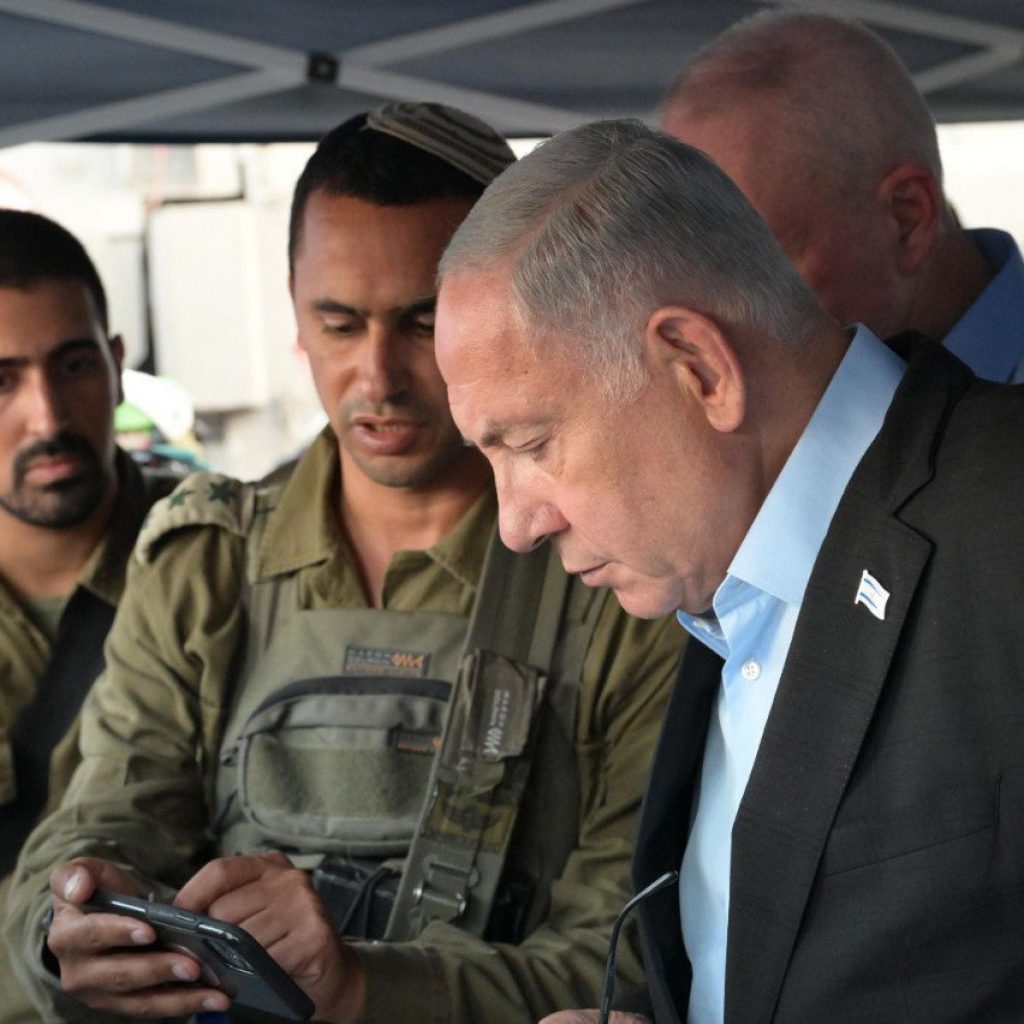
© Kobi Gideon / Government Press Office
By Iftikhar Gilani
Travel north from Tel Aviv toward Galilee, and the Palestinian character of the landscape becomes increasingly visible.
Arabic becomes more prominent on shopfronts and signboards, mosques punctuate the landscape, and predominantly Palestinian towns stretch across the hills and valleys.
Nazareth, Sakhnin, Arraba, Kafr Manda, Shefa-Amr and Tamra are among the towns where Palestinians holding Israeli citizenship live, work and struggle with a political system in which their demographic strength has rarely translated into meaningful power.
Farther south, the Triangle region includes Umm al-Fahm, Tayibe and Tira. In the Negev desert, Bedouin communities live in Rahat and surrounding villages, some of which Israel does not officially recognize.
Together, Arab citizens, most of whom are Palestinians, account for roughly 21% of Israel’s population, numbering more than two million. Muslims alone constitute approximately 18.6% of the country’s residents.
The terms “Arab Israelis” and “Palestinian citizens of Israel” are both used to describe this population.
However, many prefer the latter, arguing that “Arab Israeli” obscures their Palestinian national identity and historical ties to the broader Palestinian people.
Unlike Palestinians living under Israeli occupation in the West Bank and Gaza, Palestinians who hold Israeli citizenship have the right to vote in national elections.
Yet the granting of citizenship and voting rights has not translated into equal political participation, meaningful representation or empowerment.
Palestinian citizens of Israel have long described their position as that of second-class citizens, arguing that their formal political rights coexist with institutional discrimination, unequal access to public resources and the denial of recognition of their collective Palestinian identity.
The European Council on Foreign Relations has acknowledged that Palestinians in Israel regularly complain of being treated as second-class citizens.
As Israel saw parliamentary elections on Oct. 27, the contradiction has become particularly striking. Israel presents itself internationally as a democracy where citizens enjoy voting rights.
But Palestinian citizens continue to face barriers to political influence, unequal public investment and widespread discrimination.
Their votes could prove decisive in determining whether Prime Minister Benjamin Netanyahu remains in office. But even if Netanyahu loses, the larger question remains whether a different government would fundamentally change their position.
The tensions became visible earlier this month when Israel’s Supreme Court considered attempts to exclude leading Arab political formations from the election.
The Central Elections Committee had disqualified the Arab-majority Joint List and the Islamic Ra’am party, also known as the United Arab List.
It also sought to exclude individual candidates, including Hadash lawmaker Ofer Cassif and Balad leader Sami Abu Shehadeh.
The Supreme Court overturned the bans on the two political lists, allowing them to participate.
Cassif was also permitted to contest, while Abu Shehadeh withdrew his candidacy after it became clear that the court would not approve it.
Outside the court, Arab lawmakers and their supporters protested against efforts to silence their political voices.
Cassif, a Jewish member of the predominantly Arab Joint List, told protesters they would fight for “all our children, Palestinians and Israelis, Jews and Arabs.”
Israel’s National Security Minister Itamar Ben-Gvir appeared in a lawyer’s robe to argue for Abu Shehadeh’s exclusion.
The human rights organization Adalah criticized the disqualification attempts, arguing that they imposed discriminatory standards on Arab political representation while allowing far-right Jewish parties to participate.
Adalah described the proceedings as an illegitimate political process aimed at excluding Palestinian representation.
Mickey Gitzin, chief executive of the New Israel Fund, said the participation of Arab parties was fundamental to Israeli democracy.
“There is no Israeli democracy without full Arab participation,” he said.
The controversy raised a fundamental question: If a country’s principal minority parties must repeatedly defend their right to appear on the ballot, how equal is its democratic system?
Voting rights without political empowerment
Israel’s parliamentary system should, in theory, provide minorities with considerable political influence.
Unlike countries that elect representatives from geographical constituencies, Israel treats the entire country as a single electoral district. All 120 members of the Knesset, Israel’s parliament, are elected through proportional representation.
Parties receiving at least 3.25% of valid votes qualify for parliamentary seats.
With Arab citizens accounting for roughly one-fifth of the population, simple demographic arithmetic might suggest approximately 24 seats in parliament.
But Arab-majority political parties have never reached that figure.
Their strongest performance came in 2020, when the Joint List secured 15 seats after Arab voter turnout approached 65%.
In the 2022 election, Arab turnout stood at 53.2%, considerably below Jewish participation.
Several factors explain this gap. Palestinian citizens of Israel are not politically homogeneous. Many boycott national elections because they believe participation legitimizes a system that does not recognize their collective Palestinian identity.
The electoral threshold also penalizes divided parties. Votes cast for a party that fails to cross the threshold do not produce parliamentary representation.
But perhaps the most important barrier comes after the votes have been counted.
Arab parties may win seats, but Jewish-led political parties have often refused to accept them as full governing partners.
This produces an unusual democratic contradiction: Palestinians living under direct Israeli rule can participate in elections, elect representatives and even hold the balance of power, yet remain politically unacceptable to much of the country’s governing establishment.
Murder crisis grips Palestinian communities
Political exclusion is only one part of the story.
For many Palestinian citizens of Israel, the most urgent issue is not the composition of Israel’s next government but the fear of being murdered in their own neighborhoods.
Tal Schneider, political correspondent for The Times of Israel, told an international journalists’ webinar ahead of the election that violent crime has become the overriding concern of Arab voters.
“The murder rate in Arab society and villages is unbelievable,” Schneider said.
She described communities where fear of shootings and killings has become so widespread that residents hesitate to leave their homes.
“It’s very harsh on their lives, almost to the point where they cannot get out of the house,” she said.
Schneider made an especially disturbing comparison.
“The murder rate in Israel’s Arab society is much higher than the murder rate in the areas controlled by the Palestinian Authority,” she said.
Schneider rejected suggestions from right-wing political circles that the violence reflected something inherent in Arab society.
“They kill each other because that’s their culture. No, that’s not true,” she said.
Instead, she pointed to poverty, inadequate policing, weak public services and years of government neglect.
Schneider directly criticized the government and its national security minister for failing Arab communities.
“The current minister really neglected their service to the common citizen of Israel, which is an Arab citizen,” she said.
Arab communities also need schools, youth centers, sports facilities, employment opportunities and access to the technology sector.
Schneider described the economic divide between Jewish and Arab communities in stark terms.
“The gap between the Jewish society and the Arab society, I mean, poverty and everything is just horrible,” she said.
Ra’am leader Mansour Abbas has repeatedly raised the issue of organized crime and the failure of state institutions to protect Arab citizens.
“We suffer from lots of crime. There are criminal organizations who take over our lives, our economy, even part of the local municipalities in Arab towns,” Abbas said.
For residents of Palestinian towns, the struggle for equality extends well beyond parliamentary representation.
It includes the right to safe streets, functioning public institutions, adequate housing, municipal services and opportunities for young people.
The crime crisis has consequently become a political test.
An Israel Democracy Institute survey conducted in September found that 53.5% of Arab respondents identified crime as one of the two most important issues influencing their vote. Economic concerns came next, cited by 46%.
Muslims among Palestinian residents of Israel
Israel’s Arab population includes Muslims, Christians and Druze, as well as Bedouin communities, most of whose members are Muslim.
According to Israel’s Central Bureau of Statistics, the Muslim population stood at approximately 1.849 million at the end of 2025, representing 18.6% of all Israeli residents.
This makes Muslims by far the largest religious community within Israel’s Arab population.
Druze citizens have historically followed different patterns of political participation, including representation within Jewish-majority parties.
Muslim citizens are concentrated in Galilee, the Triangle and Bedouin communities in the south. Their concerns range from Palestinian national identity and religious freedom to housing, education, employment and protection from organized crime.
They possess Israeli citizenship and voting rights, unlike most Palestinians in the occupied West Bank and Gaza. But citizenship has not guaranteed equality of political influence or public services.
For Muslim voters, the election therefore presents two overlapping questions: how to defend their Palestinian identity and how to secure the everyday rights and protections that should accompany citizenship.
Despite their political marginalization, observers say Palestinian voters with Israeli citizenship could play a decisive role in the Oct. 27 election.
Their ballots could help decide Netanyahu’s political future.
But the deeper question is whether Palestinians who have been granted the right to vote will ever secure equal inclusion, meaningful political power and the full rights of citizenship under Israeli rule.
Their struggle for equality is also inseparable from the broader Palestinian struggle for self-determination, as their political future remains tied to the unresolved question of Palestinian national rights and statehood.

Read also