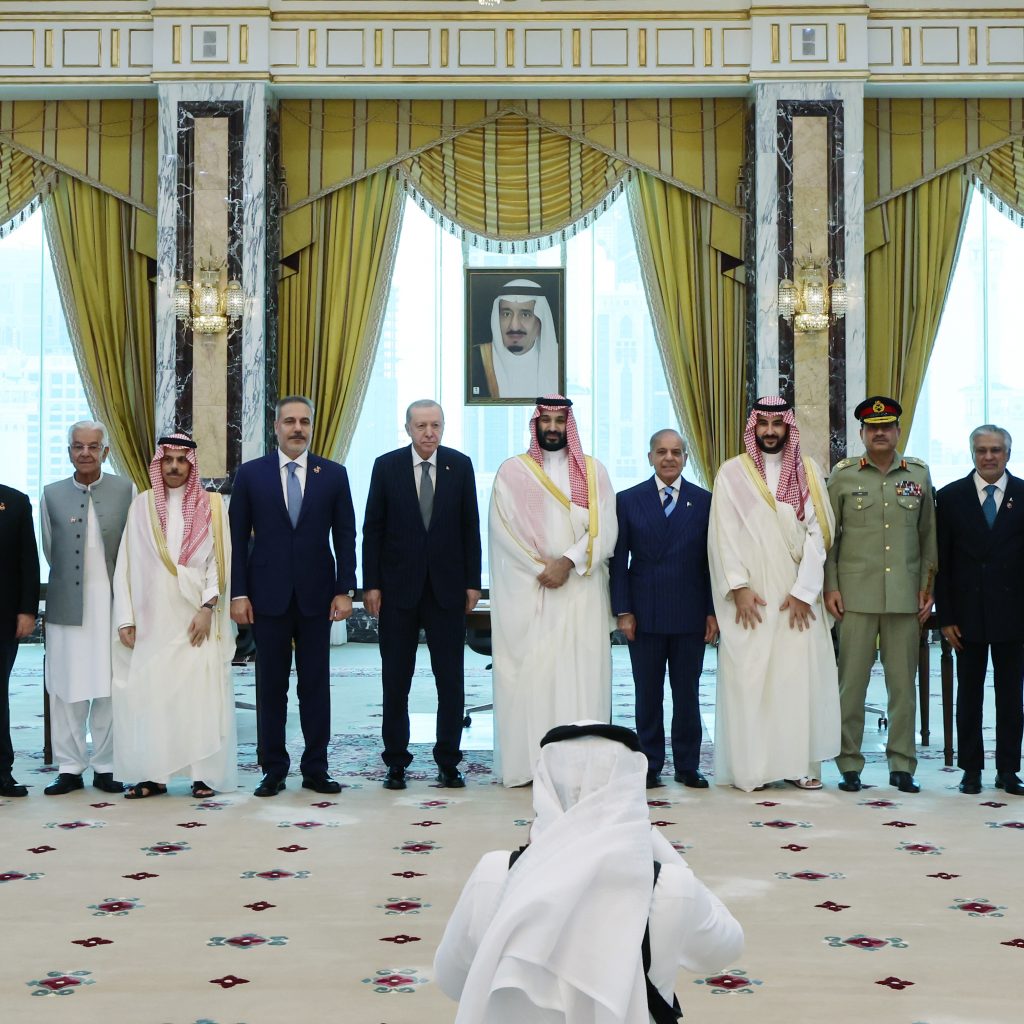
Makkah defense pact is not aimed at any country, says Türkiye
Turkish sources say agreement strengthens collective defense, military cooperation, and regional security while complementing NATO and existing Gulf security arrangements
© Anadolu Agency
ANKARA, Türkiye (MNTV) — The Makkah Joint Defence Agreement, signed by Türkiye, Pakistan and Saudi Arabia in Makkah, is a defensive security partnership that does not target any country and is intended to strengthen regional peace, stability and collective security, according to Turkish government sources.
Explaining the agreement, Turkish government sources said the three countries signed the pact after long consultations aimed at creating a common framework to address growing regional and international security threats.
The sources said the initiative is based on the principle of regional ownership and is designed to strengthen commitments to preserving regional and global peace, stability and prosperity through burden-sharing and collective security.
The agreement commits the three countries to collective deterrence against any act of aggression. It stipulates that an armed attack against one of the three states will be regarded as an attack against them all.
Turkish officials said this provision reaffirms the right of collective self-defense in accordance with Article 51 of the United Nations Charter and demonstrates the three countries’ commitment to mutual security.
The sources stressed that the agreement is entirely defensive in nature. It is not an aggressive military bloc, an encirclement initiative or a mechanism for offensive military planning.
They said it neither targets any state nor closes existing channels of dialogue with any country. Instead, it is intended to reduce security risks through stronger deterrence and closer defense cooperation.
According to the Turkish government, the agreement goes beyond mutual defense commitments by providing a framework for expanding defence industry cooperation, increasing military interoperability, and improving coordination among the armed forces of the three countries.
Officials said closer defence industrial collaboration and interoperability will enhance their ability to respond collectively to emerging security challenges.
The sources also rejected suggestions that the agreement represents a shift away from Türkiye’s existing security commitments. They said the Makkah Joint Defence Agreement does not replace or compete with any existing alliance or defence arrangement. Rather, it complements existing partnerships and strengthens regional security by adding another layer of cooperation.
Turkish officials underlined that Türkiye’s NATO membership and its regional partnerships are complementary, not competing, frameworks.
They said Ankara continues to fulfil all its obligations within NATO, while consultation mechanisms with Allied countries remain fully operational. The new agreement, they added, does not alter Türkiye’s commitments to the Alliance.
The officials also said the Makkah Agreement is not an alternative to the existing security architecture in the Gulf. Instead, it is designed as a complementary arrangement that contributes to regional stability while remaining consistent with existing regional and international security mechanisms.
Turkish government sources further said the agreement reinforces the deep-rooted bonds of brotherhood among Türkiye, Pakistan, and Saudi Arabia.
They described it as a supporting pillar of peace, stability and security that will contribute not only to the national defense of the three signatory states but also to wider regional and global security.
The sources added that the framework remains open to broader regional cooperation, saying the agreement provides a platform that other countries in the region could join in the future if they share the same objectives of collective security, peace and stability.


Read also