OIC hails Makkah defence pact as Türkiye, Saudi Arabia and Pakistan forge NATO-style Muslim alliance
Three countries signed Makkah Joint Defence Agreement on Friday, pledging that attack on any one of them will be treated as attack on all — landmark commitment struck against backdrop of widening regional war with Iran
© AA
RIYADH (MNTV) — The Organisation of Islamic Cooperation has welcomed a newly signed trilateral defence pact between Türkiye, Saudi Arabia and Pakistan as a “historic” and strategically significant step for the security of the wider Muslim world.
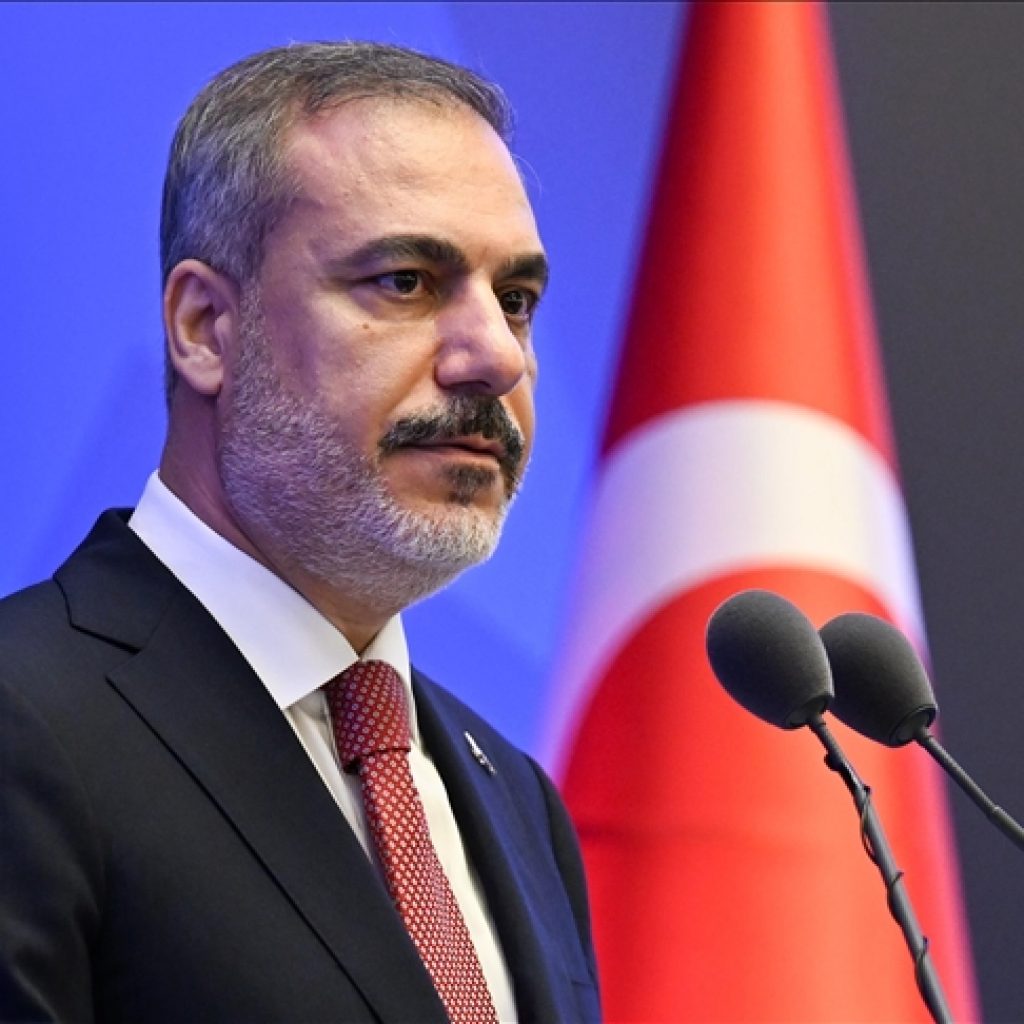
The Makkah Joint Defence Agreement was signed on Friday at Al-Safa Palace in the Saudi holy city by Turkish President Recep Tayyip Erdoğan, Saudi Crown Prince Mohammed bin Salman, and Pakistani Prime Minister Shehbaz Sharif, during a trilateral summit hosted at the invitation of King Salman bin Abdulaziz.
At its core, the agreement establishes a collective-security commitment familiar from Western military alliances: an armed attack against any one of the three states is to be regarded as an attack against all three.
The three governments said in a joint statement that the pact is intended to strengthen collective deterrence against any act of aggression.
OIC’s endorsement
OIC Secretary-General Hissein Brahim Taha expressed what the organisation described as his strong appreciation and support for the agreement, calling it an important strategic step that reflects the three countries’ commitment to strengthening regional and international cooperation.
Taha described the pact as a fundamental pillar for supporting security and stability across the region and the Muslim world, and said it embodied a shared determination to confront growing security challenges and deepen solidarity among OIC member states.
He praised the leadership of the three countries and voiced hope that the agreement would contribute to peace and prosperity in the region and beyond.
Signed in shadow of Iran war
While Turkish officials stressed that the agreement targets no specific country and is designed to reinforce commitments to regional and global peace through burden-sharing and a common security approach, the timing leaves little doubt about the strategic anxieties driving it.
The pact was concluded against the backdrop of the wider regional war involving Iran that began in February 2026, when the United States and Israel attacked the country.
Since then, Iran and its allies — including the Houthis in Yemen and Shia armed groups in Iraq — have repeatedly struck Saudi Arabia and other Gulf states with missiles and drones, imperilling Saudi oil exports and raising serious questions about the reliability of the kingdom’s longstanding US security umbrella.
Türkiye and Pakistan, while spared major direct attacks, have both been eager to contain conflicts that threaten their own security and economies.
The agreement followed nearly a year of negotiations and its signing in Makkah — home to Islam’s holiest site — lent the pact a symbolic weight that the three governments were keen to emphasise.
Building on existing ties
The trilateral pact did not emerge from nothing.
It builds directly on the bilateral Strategic Mutual Defence Agreement signed by Saudi Arabia and Pakistan in September 2025, which formalised decades of close military cooperation between the two countries — including Pakistan’s longstanding provision of training and technical assistance to Saudi forces.
The new agreement extends a comparable mutual-defence commitment to include Türkiye.
Ankara and Islamabad had separately deepened their own defence relationship in recent years, exchanging warships and training aircraft, while Saudi Arabia agreed in 2023 to purchase Turkish-made drones in what was then described as Türkiye’s largest-ever defence export contract.
The new framework knits these overlapping bilateral ties into a single collective structure.
Shifting security architecture
Analysts have described the agreement as a potential turning point in the security order of the Middle East and South Asia.
The Atlantic Council characterised it as an inflection point in an emerging multipolar order, noting that for Ankara it broadens a protective umbrella already extended to allies such as Qatar, Syria and Libya — adding significant new resources to what amounts to an emerging Muslim collective-defence mechanism.
Abdulaziz Sager, chairman of the Saudi-based Gulf Research Center, said the political symbolism of three of the Muslim world’s most influential states convening at a moment of heightened uncertainty was significant in itself, demonstrating a growing willingness among regional powers to coordinate more closely on security.
If institutionalised and translated into concrete cooperation, he argued, the framework could strengthen the three countries’ collective diplomatic and defence weight and contribute to a more regionally driven security architecture — one less dependent on outside powers.
For the three governments, and for the OIC that has now blessed the arrangement, that may be precisely the point: at a moment when the region’s traditional security guarantees look increasingly uncertain, three major Muslim states have chosen to bind their defence together — and to do so in Islam’s holiest city, where the symbolism could hardly be clearer.
Read also