Israel monopolizing archaeology to seize West Bank land
Palestinian residents and Israeli rights groups warn that archaeological development plans are being used to expand Israeli control over historic sites
© Anadolu Agency
SEBASTIA, Palestine (MNTV) — Palestinian residents and Israeli rights activists describe that Israel is exploiting archaeology to expand control over land in the occupied West Bank.
According to a BBC report, Israeli authorities move to expropriate hundreds of acres around ancient sites and restrict Palestinian access to areas they have cultivated and inhabited for generations.
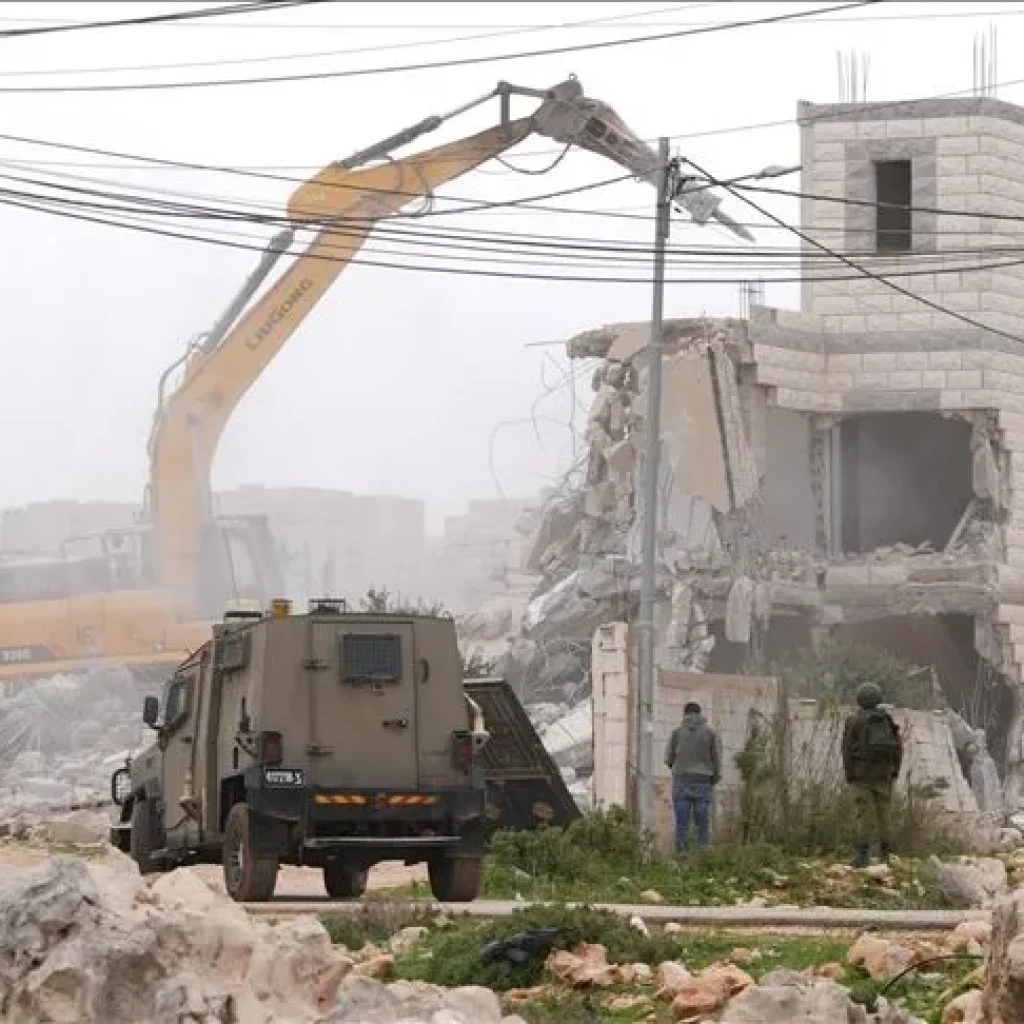
In Sebastia, near Nablus, Palestinian landowners say Israeli authorities have notified them that roughly 450 acres of privately cultivated land will be taken for the development and protection of a proposed national park.
Residents say the measures threaten their livelihoods and could sever the surrounding Palestinian community from an archaeological site that contains remains from Jewish, Roman, Byzantine, Crusader and Ottoman periods.
The dispute has intensified after UNESCO placed Sebastia on its World Heritage List and the List of World Heritage in Danger, citing concerns over planned land expropriation and the proposed “Samaria” national park. UNESCO warned that the project could divide the archaeological property and affect its integrity.
Palestinian residents say restoration and excavation activities have already begun, while landowners have been told they will no longer be permitted to cultivate their fields.
Local businesses are also facing threats of demolition as Israeli authorities plan to relocate the principal entrance to the archaeological complex away from the Palestinian village and its existing commercial area.
Israeli activist Alon Arad of Emek Shaveh, an organization that campaigns for shared access to the region’s archaeological heritage, said the development plans were being advanced without meaningful consultation with the Palestinian municipality or residents.
He argued that the site should be developed with the local community rather than used to strengthen Israeli control over Palestinian land.
The Israeli government has also allocated about 113 million shekels ($27.8 million) for expanding control over archaeological sites across the West Bank, including locations in areas administered partly by the Palestinian Authority.
Palestinian officials have called on UNESCO recognition to strengthen international opposition to land seizures and restrictions surrounding Sebastia.
Israeli Foreign Minister Gideon Saar, however, rejected criticism of Israel’s policies and said international decisions could not alter what he described as historical Jewish connections to the West Bank.
Similar land expropriation is taking place around Herodium, a major archaeological site south of Jerusalem associated with King Herod. Israeli authorities have moved to take control of roughly 80 acres, describing the measure as necessary for the preservation and development of the ancient complex.
Israeli settlement-monitoring organization Peace Now has argued that such expropriation raises serious legal concerns because international law and Israeli court rulings restrict the seizure of private Palestinian land for settlement purposes or exclusively for the benefit of Israeli citizens.
The organization said authorities could seek to justify the measures by presenting the projects as serving both Palestinian and Israeli populations.
The controversy has also reached Israel’s parliament, where a proposed law would have transferred greater authority over West Bank archaeological sites to the Israeli Heritage Ministry and expanded its ability to acquire land for archaeological preservation.
The legislation passed a preliminary reading but has since been placed on hold ahead of elections.
Critics say the proposed legislation illustrates a broader effort to turn archaeology into an instrument of territorial control. Arad said archaeological excavations and historical narratives were being used not only to promote particular interpretations of the region’s past but also to facilitate the transfer of Palestinian land to Israeli control.
Israeli officials and archaeologists supporting the policy argue that Israel has a responsibility to protect sites associated with its historical and religious heritage.
Palestinian residents, however, fear that archaeological projects carried out without their participation will gradually separate them from historic sites embedded in their communities and accelerate the loss of land under occupation.
The dispute over Sebastia has therefore become part of a wider struggle over land, historical narrative and political control in the occupied West Bank, with Palestinian residents warning that the preservation of ancient heritage cannot be separated from the rights and livelihoods of the communities living around it.
Read also