Gaza ceasefire fragile amid Israeli attacks, UN warns
Humanitarian crisis deepens as UN calls for full aid access, implementation of ceasefire, and accountability for escalating Israeli airstrikes killing civillians
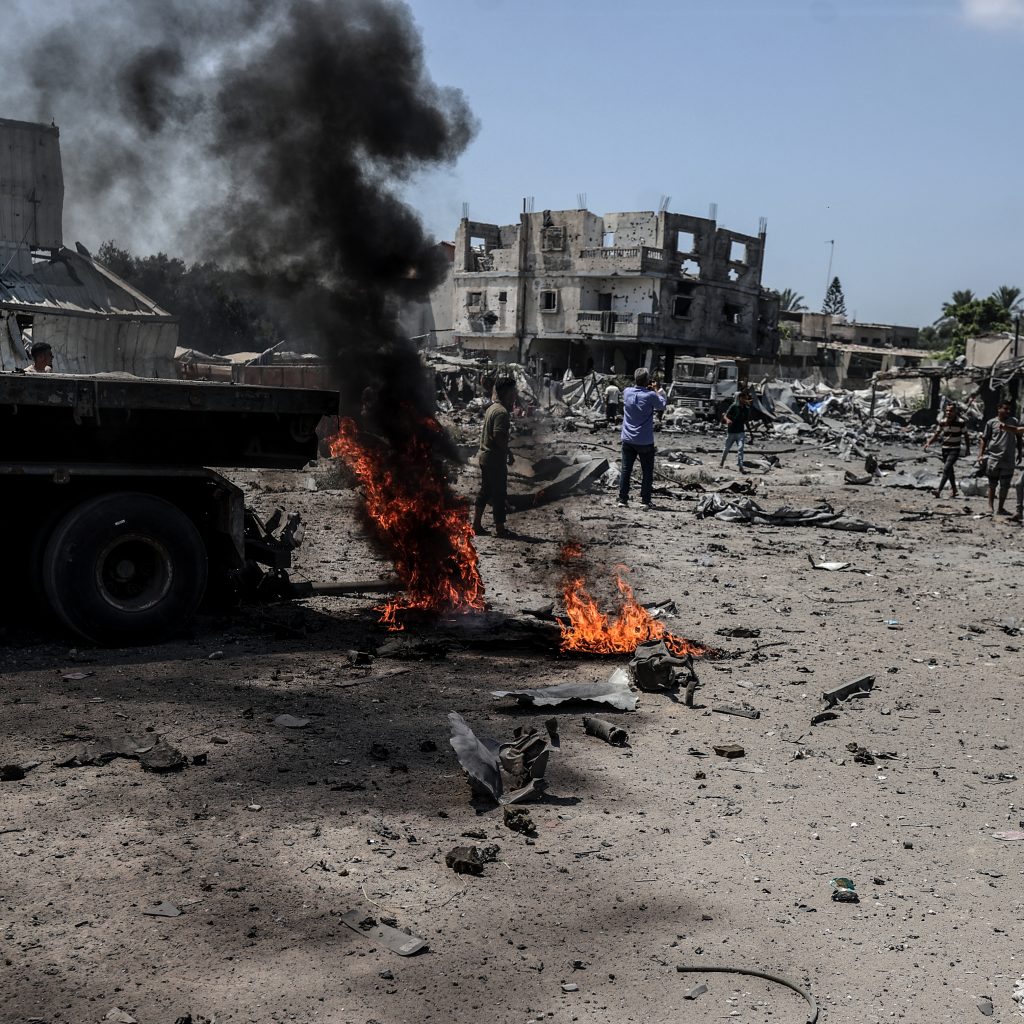
NEW YORK (MNTV) — The fragile ceasefire in Gaza faces a critical test as Israeli military strikes continue, humanitarian aid remains obstructed, and violence intensifies in the West Bank, U.N. officials told the Security Council.
Ramiz Alakhbarov, the U.N.’s deputy special coordinator for the Middle East peace process, warned that millions in Gaza remain dependent on humanitarian assistance, with approximately 1.5 million displaced Palestinians living in inadequate shelters exposed to worsening winter conditions.
Despite some deliveries through Egypt, Jordan, Israel, and Cyprus, aid volumes remain a fraction of what is needed.
Restrictions on construction materials, fuel, medical supplies, and technical personnel have left emergency sites below international standards, he said.
“Nearly the entire population in Gaza remains in urgent need of humanitarian assistance,” Alakhbarov stated, highlighting that Israeli airstrikes, and shelling persist despite the truce, resulting in hundreds of deaths, including women and children.
He also condemned Israel’s suspension or review of dozens of international NGOs, warning that curtailing their operations undermines the humanitarian response.
Turning to the West Bank, Alakhbarov described “entrenched” negative trends, including intensified Israeli military raids in Jenin, Nablus, Hebron, and Ramallah, large-scale arrests, settler violence, and settlement expansions.
Entire Palestinian communities have been displaced, notably in Khirbet Yanun and Ras Ein Al-Auja, while demolitions and land seizures exacerbate fragmentation.
He warned that rapid settlement expansion, including over 4,700 planned housing units in Area C and thousands in the sensitive E1 zone, threatens to sever the geographic link between northern and southern West Bank.
Palestine’s ambassador to the U.N., Riyad Mansour, called the situation in Gaza an “unprecedented catastrophe” and criticized Israel for obstructing humanitarian operations, targeting UNRWA facilities, and violating international law.
He stressed that more than 500 Palestinians have been killed in Gaza since the truce and that continuing Israeli actions, coupled with withheld clearance of Palestinian revenues totaling nearly $2.5 billion, are deepening fiscal and social crises.
Mansour condemned what he called punitive measures against humanitarian organizations, noting that the targeting of UNRWA compounds, health facilities, and aid agencies endangers civilians and violates global conventions.
He demanded full and unrestricted aid access, implementation of the next phase of the ceasefire, and the disarmament of Hamas as part of a transition to Palestinian Authority governance.
He also emphasized escalating West Bank violations, including Israeli airstrikes, settler violence, and settlement expansions, urging the international community to uphold Palestinian self-determination, territorial integrity, and international law.
“Abandoning these rights in Palestine undermines them worldwide,” Mansour told council members, while reaffirming support for a two-state solution and reunification of Gaza with the West Bank under Palestinian Authority governance.
Israeli Ambassador Danny Danon countered, stating Israel’s priorities include the disarmament of Hamas and securing regional security, citing Iranian support for militant groups as a broader threat.
He argued that civilian reconstruction and long-term stability in Gaza depend on dismantling Hamas’ military infrastructure, including weapons stockpiles and tunnels.
The U.N. and international observers called for urgent action to address humanitarian shortfalls, halt ongoing violence, and ensure compliance with ceasefire obligations, warning that continued Israeli policies in Gaza and the West Bank risk unraveling the truce and further jeopardizing regional peace.



Read also