The Muslim World Cup: Players who defined a record-breaking tournament
Record number of Muslim players came to North America. They saved penalties from Messi and Mbappé, broke African records, prostrated on turf in front of billions — and one of them is still standing, 90 minutes from trophy
© AA
By MNTV Staff Writer
When the 2026 World Cup began, it did so with the largest contingent of Muslim players and Muslim-majority nations the competition has ever seen.
As it ends, the scoreboard tells one story — no Muslim-majority nation past the quarter-finals — and the tournament itself tells another, richer one.
These are the Muslim footballers who shaped the summer.
Brahim Díaz — the record-breaker
No Muslim player leaves this tournament with a more historic line in the record books.
Morocco’s creator finished with four assists — level second on the tournament’s assist chart behind only Michael Olise — and no African player has ever recorded more in a single World Cup, nor more across all editions combined.
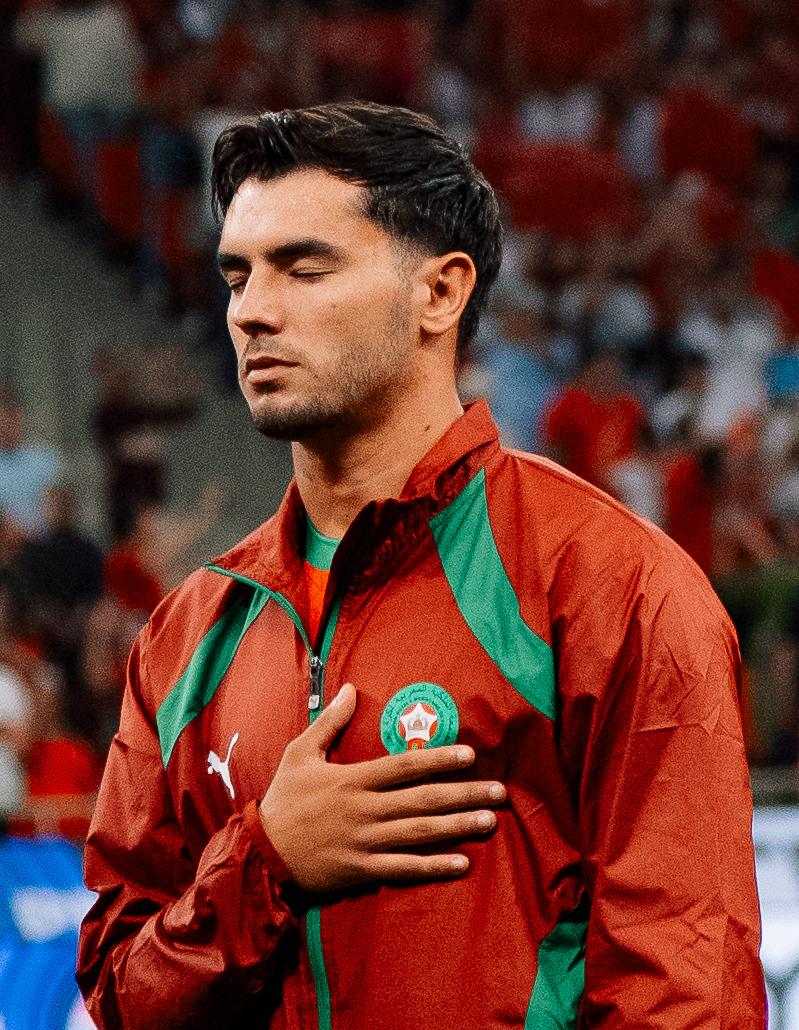
He set up Ismael Saibari against Brazil and again against Scotland, then produced the two that mattered most: a double in the 3-0 dismantling of co-hosts Canada that carried Morocco into the quarter-finals.
Born in Málaga, capped by Spain, he chose Morocco in 2024 — and repaid the choice by becoming the most prolific creator Africa has ever sent to a World Cup.
Ismael Saibari — the breakout
If Díaz supplied, Saibari finished.
Morocco’s Bayern Munich-bound forward opened his tournament with a dinked finish against Brazil, struck the winner against Scotland inside two minutes — the goal that lifted Morocco to a record fifth in the world rankings — and made it three in three against Haiti.
He also scored the penalty that eliminated the Netherlands.
His tournament ended cruelly, a hamstring injury ruling him out of the France quarter-final, and Morocco visibly missed him.
Three goals, a shootout winner, and a move to one of Europe’s giants: not a bad summer’s work.
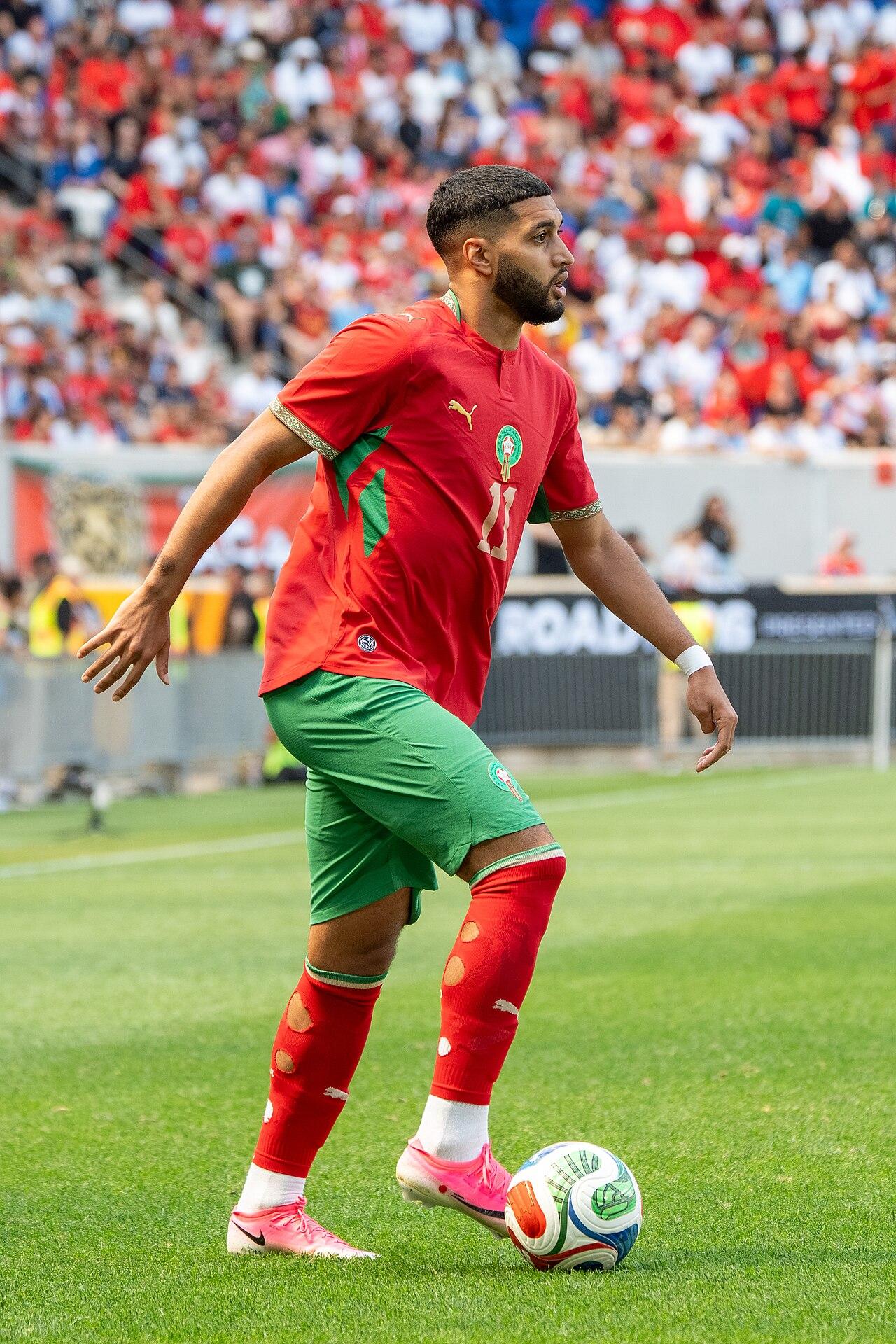
Yassine Bounou and Mostafa Shobeir — the wall
Two goalkeepers, two of the finest individual performances of the knockouts, two saved penalties from two of the greatest players of their generation.
Bounou leaves North America as the most feared penalty goalkeeper in the tournament’s history. He denied Crysencio Summerville to set up the win over the Netherlands, then saved Kylian Mbappé’s spot-kick in the quarter-final after a VAR delay of three minutes and eleven seconds, diving low to his right.
That fourth World Cup penalty save — after Carlos Soler and Sergio Busquets in the 2022 shootout against Spain — drew him level with Harald Schumacher, Sergio Goycochea, Danijel Subašić and Dominik Livaković for the most by any goalkeeper since Opta began tracking the statistic in 1966.
It also made him, per Squadra, the first Moroccan goalkeeper to save a penalty in open World Cup play.
The wider number is the one that should frighten strikers.
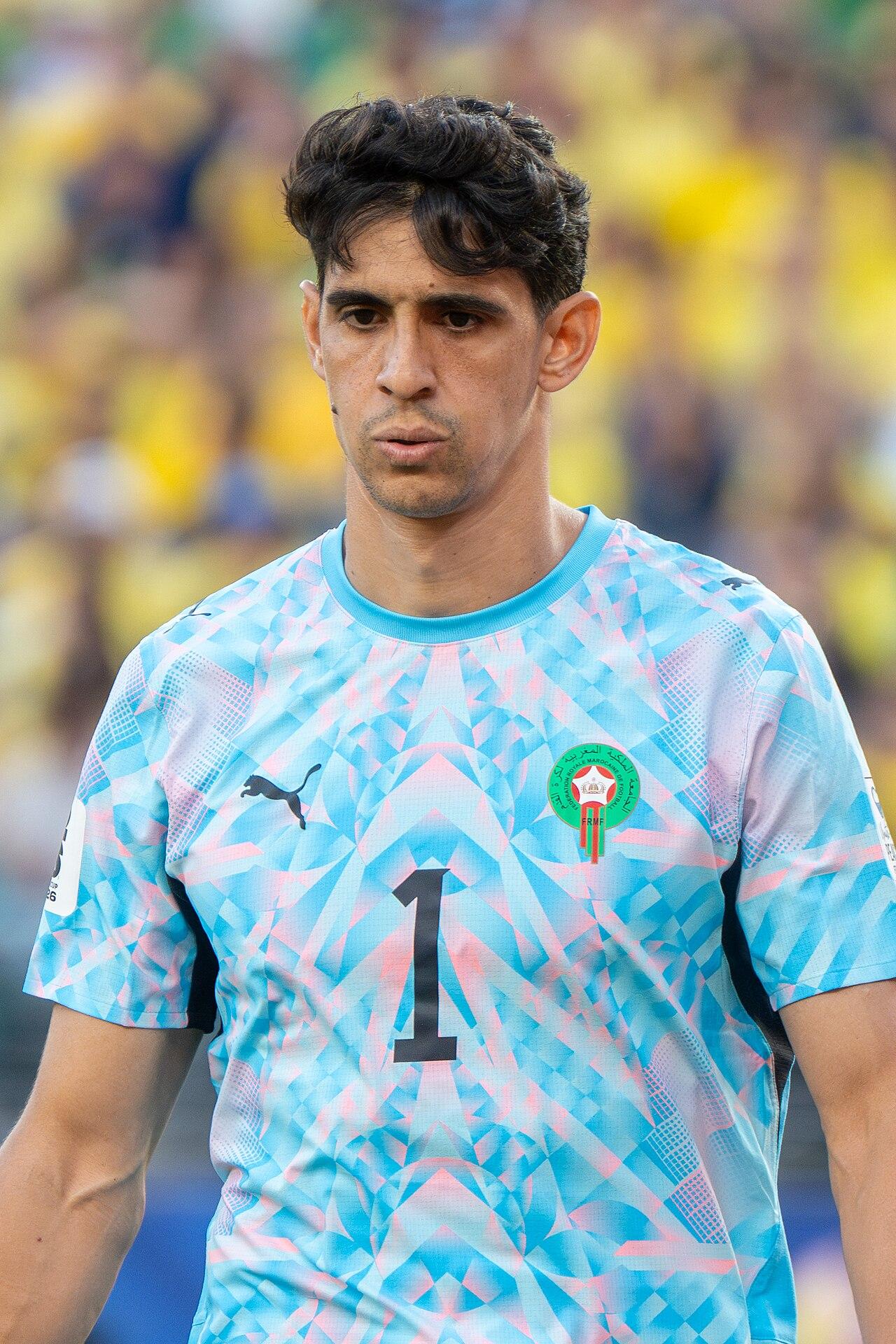
Across his World Cup career Bounou has faced nine penalties and conceded just two: four saved, three missed the target.
Opta described the record in a single word — “intimidating.”
He finished the tournament with 15 saves from 20 shots on target across six matches, and against France he kept Morocco level for an hour with a shot count of 1-13 against them before the Atlas Lions were finally overwhelmed.
Egypt’s Shobeir matched him for drama.
Against Argentina he saved a Lionel Messi penalty, denied Alexis Mac Allister and Julián Álvarez, and dragged the Pharaohs to within eleven minutes of the upset of the century. Argentina went in behind at half-time in a World Cup match for the first time since 2010, and one man was the reason.
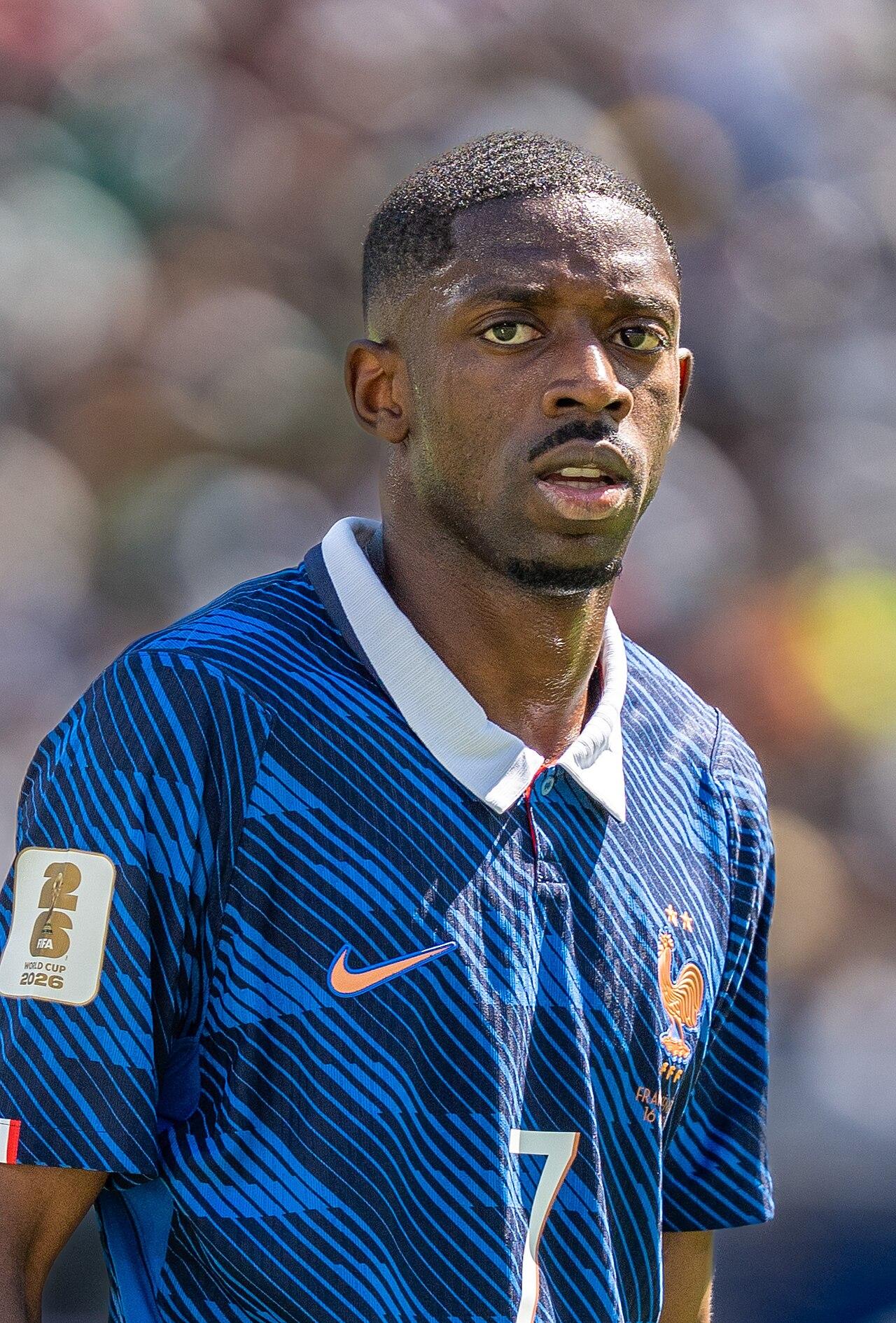
Ousmane Dembélé — the Ballon d’Or
France’s Ballon d’Or holder finished the semi-finals with five goals and two assists — including the strike that ended Morocco’s tournament, a goal that placed him at the strange, poignant intersection this World Cup kept producing.
Dembélé is a practising Muslim who observes Ramadan while competing at the highest level, and who married into a Moroccan family in a traditional ceremony.
He scored the goal that broke Muslim hearts, and did it as one of the Muslim world’s own.
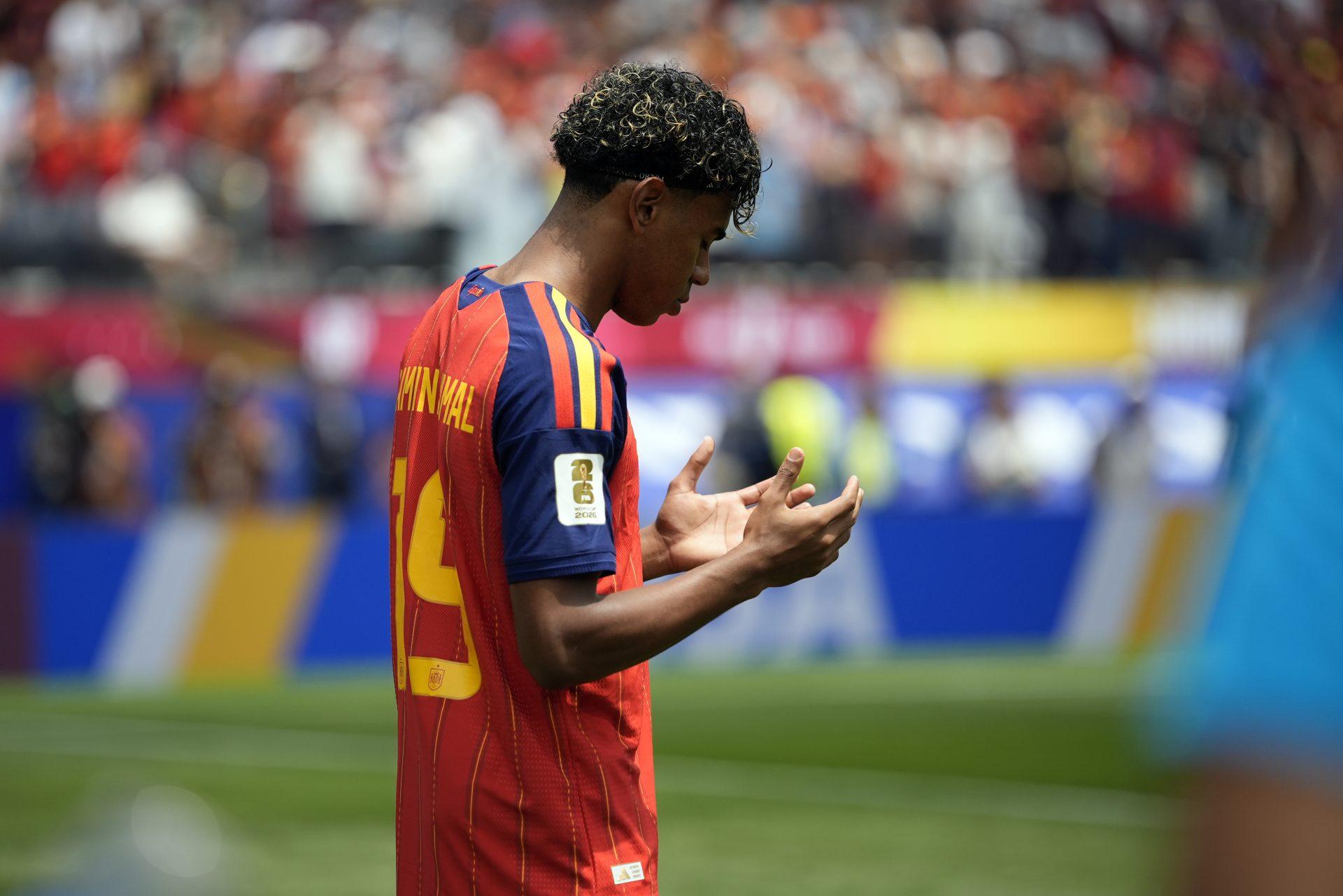
Lamine Yamal — the last one standing
He turned 19 during the semi-finals.
He leads the entire tournament in successful dribbles with 22.
He won the penalty that knocked out France — the third time in three major-tournament meetings that he has been at the heart of a French exit.
And he is, remarkably, still playing.
When Spain face Argentina at MetLife Stadium on Sunday, Yamal — a practising Muslim, son of a Moroccan father, seen raising his hands in dua both before and after Spain’s win over Portugal — will be the last Muslim player left with a chance to lift the World Cup.
Moments that mattered more than goals
Some of the tournament’s defining Muslim images had nothing to do with the scoreline.
Morocco’s players dropping as one into sujood after beating the Netherlands on penalties, and again after Canada.
Bilal El Khannouss lost in a long dua before kickoff in Houston.
Azzedine Ounahi — scorer of a brace against Canada — pointing a finger to the sky.
Soufiane Rahimi’s forehead to the turf.
Egypt’s Hossam Hassan walking onto the pitch in Dallas carrying the Palestinian flag alongside his own, dedicating his team’s first-ever World Cup knockout win to the people of Gaza, as his players prostrated and the crowd chanted.
In Gaza itself, families gathered around screens amid the rubble to watch.
And FIFA, quietly and without announcement, stripping the beer sponsor’s branding from the Player of the Match award whenever a Muslim footballer won it — Saibari, Emam Ashour, Ismaël Koné, Yan Diomande, Ramin Rezaeian, Ali Olwan, Johan Manzambi and others collecting a trophy that, for the first time, did not ask them to choose between recognition and faith.
The nearly men
Spare a thought for those who came closest.
Egypt’s Mostafa Zico scored against Argentina and had another ruled out by a VAR call much of the football world condemned; he left the field in tears, saying his team had been wronged, and reaching for his faith. Mohamed Salah, in what was almost certainly his last World Cup, was left remonstrating with the referee.
Riyad Mahrez struck deep into stoppage time to help drag Algeria into the knockouts. Iran took points off Belgium and New Zealand while commuting across an international border for every single match.
Canada’s Ali Ahmed, who once made his MLS debut while fasting, played a home World Cup in the country that raised him.
And Zidane Iqbal became the first player of Pakistani heritage ever to appear at a men’s World Cup, his boots carrying the flags of both Pakistan and Iraq.
What it added up to
No Muslim-majority nation reached the semi-finals. Morocco, the African champions, came closest, and fell to France for the second World Cup running.
Egypt, Algeria, Senegal, Iran, Iraq, Saudi Arabia, Qatar, Jordan, Türkiye, Tunisia and Uzbekistan all went home. The wait for a first African or Arab finalist goes on.
But the tournament that began with a record Muslim presence produced an African assist record, two of the great goalkeeping displays in knockout history, the most visible collective acts of prayer football’s grandest stage has seen, and a governing body quietly adjusting its own commercial furniture out of respect for the men playing.
And on Sunday, in New Jersey, a 19-year-old Muslim kid from Barcelona will walk out with a chance to win the whole thing.
Related posts


Read also