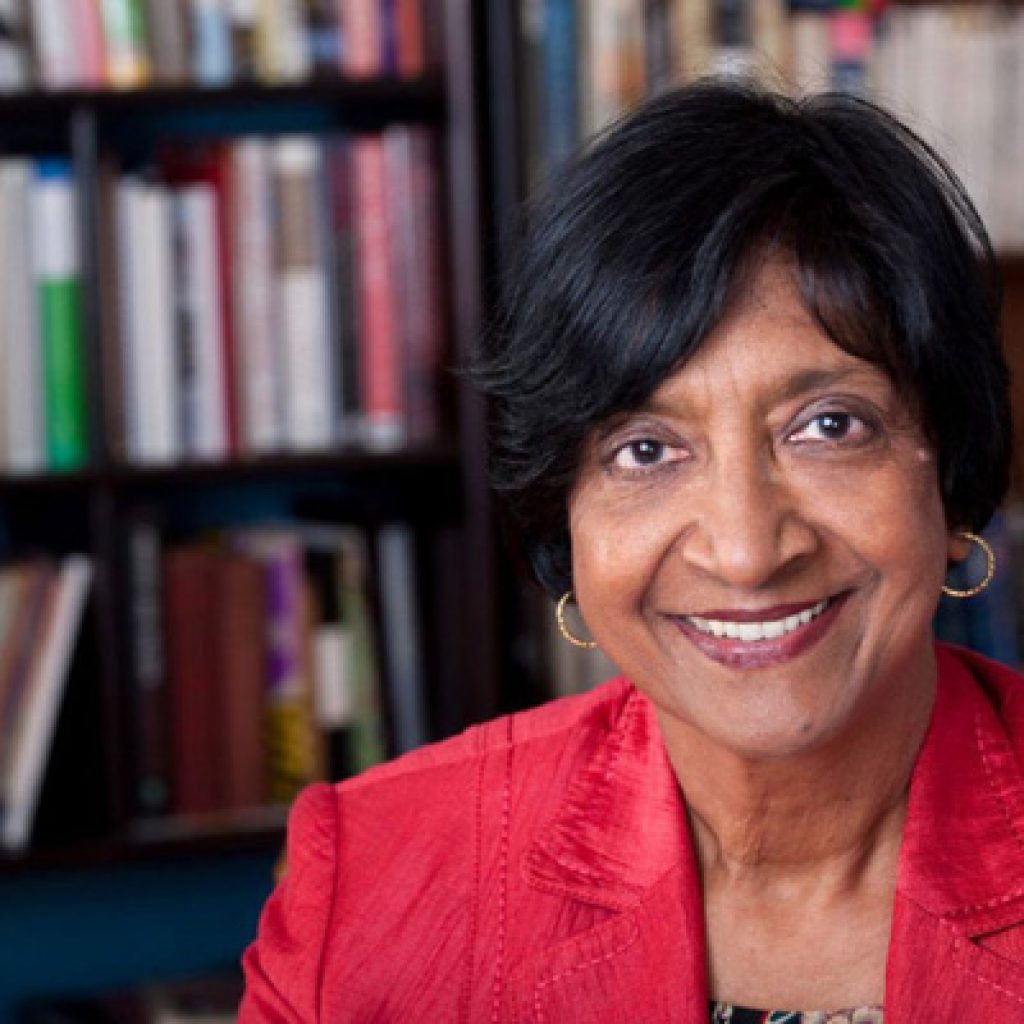
PROFILE: Who is Navi Pillay, the new Nobel Peace laureate?
From a bus driver's daughter in apartheid Durban to the UN inquiry chief who found genocide in Gaza — the life of the 2026 Nobel Peace laureate
By MNTV Staff Writer
When Navi Pillay was five years old, she stood in a Durban courtroom to testify against a man who had robbed her of the money she was carrying home for her father’s wages.
It was, in a sense, the first of a lifetime of appearances before the law — a career that would carry a poor Tamil girl from apartheid South Africa to the presidency of an international war-crimes tribunal, the top human-rights job at the United Nations, and, on Friday, the Nobel Peace Prize.
The Norwegian Nobel Committee awarded Pillay the 2026 prize for her work “to promote peace and international law,” saying she had been “instrumental in ensuring that war crimes, crimes against humanity and genocide are prosecuted.”
For much of the world, though, the award is inseparable from her final and most contested role: chairing the UN commission that in 2025 concluded Israel had committed genocide in Gaza.
Childhood under apartheid
Navanethem Naidoo was born on Sept. 23, 1941, in a poor neighbourhood of Durban, in what was then the Union of South Africa.
She was the fifth of eight children; her grandparents had come from India in the 1890s as indentured labourers on Natal’s sugar plantations, and her father drove a municipal bus.
Money was scarce and apartheid’s colour bar hemmed in every ambition, but her parents insisted their daughters be schooled alongside their sons.
Community donations and a scholarship carried her through the University of Natal, where she earned a law degree in 1965 — even as apartheid rules briefly forced her to transfer to a non-white institution that taught no law.
She later won a place at Harvard Law School, earning a master’s and then a doctorate in juridical science, and is widely described as the first South African to earn a law doctorate there.
Defending accused
In 1967, Pillay opened her own practice, becoming one of the first women admitted as attorneys in Natal and the first non-white woman to open a firm in the province — in part because, as she has recounted, no established practice would hire a non-white woman.
For some 28 years she defended activists of the African National Congress and other anti-apartheid movements, and made her name challenging the state’s treatment of political prisoners.
In 1971 she went to court to stop unlawful interrogation methods used against detainees, including her own husband, Gaby Pillay, held under the Terrorism Act.
Two years later she helped win Robben Island’s political prisoners — among them Nelson Mandela — the right to legal representation.
She co-founded a shelter and advice service for abused women, helped secure an equality clause in South Africa’s post-apartheid constitution, and in 1992 co-founded Equality Now, an international women’s-rights group.
From Durban to world’s courts
When the ANC came to power, Mandela nominated Pillay to South Africa’s High Court in 1995, making her the first non-white woman to sit on it.
Her tenure was brief: that same year she was elected a judge of the International Criminal Tribunal for Rwanda, where she would serve until 2003, the last four as its president and, for its first four years, its only woman.
It was in Rwanda that Pillay helped make legal history. In the 1998 case of Jean-Paul Akayesu, a former mayor, the tribunal ruled for the first time that rape and sexual violence could constitute acts of genocide — a precedent that reshaped international criminal law. She also sat on the landmark “media case” that examined how radio broadcasts and a magazine had incited Rwanda’s genocide.
In 2003 she moved to the newly created International Criminal Court in The Hague, serving on its Appeals Chamber, including in the case of Congolese warlord Thomas Lubanga Dyilo over the use of child soldiers. She left in 2008 to become UN High Commissioner for Human Rights.
Nominated by Secretary-General Ban Ki-moon and confirmed in 2008, Pillay led the UN human-rights office for six years.
She pressed governments on torture, the death penalty and discrimination, and was not afraid to anger powerful states.
Her criticism of Sri Lanka’s conduct in its civil war drew accusations that her Tamil heritage made her biased — a charge she rejected.
Naming genocide in Gaza
In 2021 Pillay was appointed to chair the UN Independent International Commission of Inquiry on the Occupied Palestinian Territory, East Jerusalem and Israel — a standing body with an open-ended mandate.
In June 2024 the commission found that Israel had committed war crimes. By September 2025 it went further, concluding that Israel had committed genocide in Gaza.
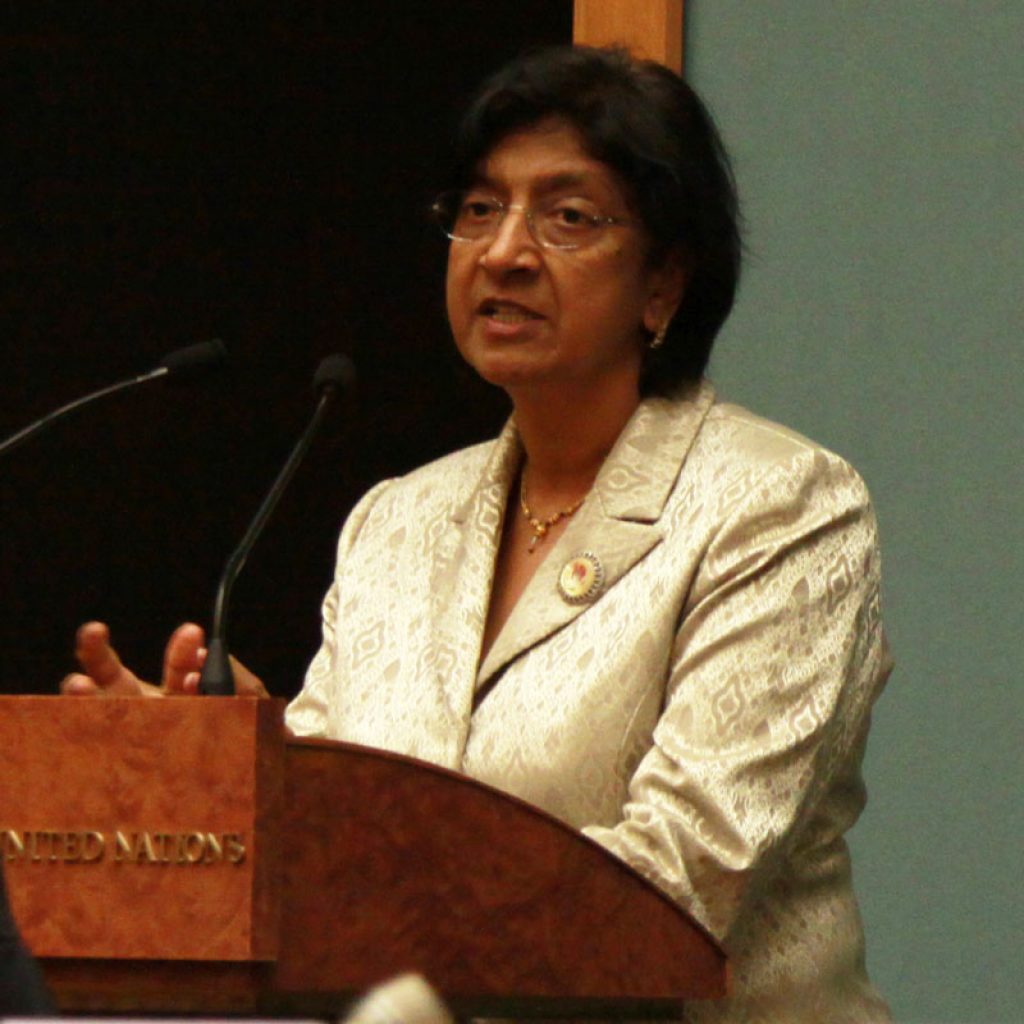
Presenting the findings to the UN General Assembly that October, Pillay said: “We concluded that the State of Israel is responsible for the commission of four genocidal acts in Gaza,” and that Israeli leaders “have incited the commission of genocide.”
She stepped down from the commission in 2025. Asked about the courage her Gaza work required, she pushed the framing aside, telling an audience at the Nuremberg war-crimes courtroom, according to Middle East Eye: “Why would you need courage to speak the truth?”
Capstone and a statement
Now 85, Pillay still serves as an ad hoc judge at the International Court of Justice in The Gambia’s genocide case against Myanmar over the Rohingya.
The Nobel adds to a late-career run of honours — the Sydney Peace Prize in 2025 and Sweden’s Olof Palme Prize in 2026 — and places her among a line of South African peace laureates that includes Mandela and Desmond Tutu.
The Nobel committee framed its choice as a defence of the laws and courts meant to restrain warring states, warning that international law was “under tremendous pressure” and its institutions “under attack.”
For Pillay, who has spent eight decades moving between the courtroom and the cause — first as a child witness, then as apartheid’s defence lawyer, and finally as the jurist willing to use the word genocide — it was of a piece with everything that came before.
Read also