Pakistani doctor’s unlikely journey from ‘Macbeth’ to head of global mental health body
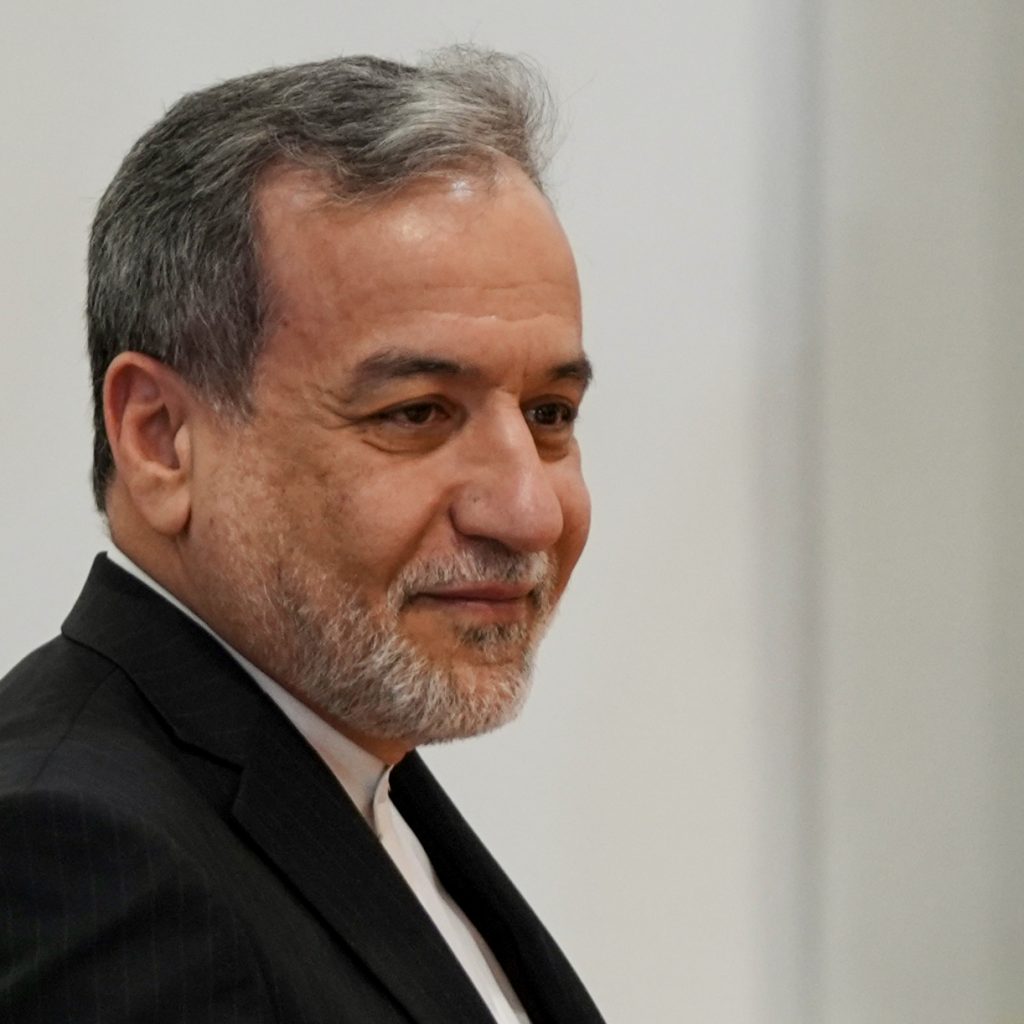
Dr. Mian is the first Pakistani — and the first South Asian — to lead the International Association for Child and Adolescent Psychiatry and Allied Professions
© aku.edu
By Akhtar Pathan
KARACHI, Pakistan (MNTV) — As a teenager reading “Macbeth”, Ayesha Mian found herself captivated not by the tragedy alone, but by what she called the “madness of the human mind.”
Why do people feel what they feel? What makes someone express anger, compassion or fear? How can the same person be capable of kindness and actions seemingly at odds with their nature?
Those questions, first stirred by literature, would eventually take Mian far beyond the pages of Shakespeare.
Today, Dr. Mian is the first Pakistani — and the first South Asian — to lead the International Association for Child and Adolescent Psychiatry and Allied Professions (IACAPAP), serving as its president from 2026 to 2030. Her election also makes her one of only a handful of women to have held the presidency during the organization’s 90-year history.
The achievement is particularly striking in Pakistan, where access to even primary health care remains limited, psychiatric care is scarce and child and adolescent psychiatry is among the country’s most underserved specialties.
When Mian returned to Pakistan from the United States in 2013, she was only the second child and adolescent psychiatrist in Karachi and among just three or four specialists in the country.
She has since become a prominent voice for mental health, while also serving as founder and CEO of Synapse – Pakistan Neuroscience Institute, a social enterprise focused on clinical mental health care, research, education and systemic mental health advocacy.
Yet global leadership was never part of the original plan.
From journalism to psychiatry
Born and raised in Karachi, Mian earned her MBBS from Aga Khan University in 1998. But medicine was initially her parents’ dream, not hers.
She wanted to become a journalist.
She loved literature and was fascinated by the workings of the human mind. Her interest deepened while studying “Macbeth” in high school, when she began wondering about human emotions, behavior and the contradictions within people.
Joining Aga Khan University fulfilled her parents’ wish. Psychiatry, however, became her own choice.
She also wanted a profession that would allow her to remain creative, and she found psychiatry offered a rare opportunity to bring together the science and art of medicine.
She describes the work as a profound privilege: Patients allow psychiatrists to enter their worlds, and over time, doctor and patient piece together stories and life journeys until they begin to make sense.
Even when two people have the same diagnosis — such as depression — the journeys that brought them there are different.
That individuality of the human condition, she says, continues to leave her in awe.
When she told her parents she wanted to specialize in psychiatry, she feared they would “freak out.” But they had already witnessed her struggles through medical school, including moments when she returned home uncertain whether she could continue.
Once she explained that she had found something she genuinely wanted to pursue, they supported her.
Her father offered one piece of advice that stayed with her:
“This is an opportunity to stand with and care for someone in their deep distress. Use this privilege well.”
Choosing what felt right
After medical school, Mian moved toward the United States, where her fiancé — a year ahead of her — had begun his PhD.
She took the USMLE examinations, spent a year completing interviews and eventually began her psychiatry residency.
During the application process, she was offered a pre-match position at the Mayo Clinic program, then considered one of the top four psychiatry training programs in the United States.
But by then, she and her fiancé were married, and his PhD at Baylor College of Medicine meant they were tied to Houston.
Accepting Mayo would have put them on opposite sides of the country.
She turned it down.
Instead, she matched at the University of Texas Health Science Center at Houston, where she had already completed electives and knew the program and faculty.
At the time, she worried that walking away from such a prestigious opportunity might damage her career.
Looking back, she believes she made the right choice.
Her life, she says, has been shaped by decisions that intuitively felt right, which is why she has become a strong believer in listening to one’s “gut feeling.”
Her passion for mental health soon became evident. During residency, she built new initiatives, sought leadership opportunities and became increasingly involved in organized psychiatry, working across both adult and child psychiatry before eventually serving as chief resident.
A demanding education in human suffering
Mian completed both her general psychiatry residency and child and adolescent psychiatry fellowship at the University of Texas in Houston.
The training was rigorous and demanding, but it also gave her lasting relationships with mentors who would influence the physician and leader she became.
Residents rotated through the Harris County Psychiatric Center, a 700-bed hospital. Overnight calls meant caring for roughly 15-20 new admissions while remaining responsible for hundreds of hospitalized patients — every fourth night.
The scale was enormous compared with her experience at Aga Khan University Hospital, where she later served as chair of the Department of Psychiatry from 2013 to 2021.
The shifts were physically and emotionally exhausting.
But Mian believes the experience provided unparalleled clinical training, exposing her to the breadth and severity of psychiatric illness in a way few programs could match.
Her fellowship was equally rewarding. She was supported by mentors who, she says, had more faith in her than she had in herself.
That experience shaped her own approach to leadership. Today, she considers mentorship and active sponsorship among her prime responsibilities.
A generation waiting for help
Mian’s work has also brought her face to face with the scale of Pakistan’s mental health crisis.
Women and young people have been particularly affected in recent years. The pandemic intensified anxiety and depression and contributed to increases in domestic violence and child abuse. Financial hardship, unemployment and economic uncertainty have further compounded psychological distress in Pakistan.
She points to another, less visible problem: cultural expectations surrounding men and emotional expression.
Many boys and men are not taught how to express sadness, fear or anxiety. Instead, distress may emerge as anger, aggression or violence, leaving depression or anxiety hidden because emotional vulnerability is rarely accepted or openly discussed.
For children and adolescents, the shortage of care is especially alarming.
About 60% of Pakistan’s population is under 30, yet only a handful of specialists are trained to provide child and adolescent mental health care.
The treatment gap is particularly troubling. On average, a child experiencing symptoms of a mental health disorder waits nearly 8-10 years before receiving professional help, Mian says.
During that period, conditions including anxiety, depression, ADHD and trauma-related disorders can worsen.
Even when children eventually receive care, they may be treated by people without specialized training, increasing the risk of delayed diagnosis or inappropriate treatment.
Learning to notice the child behind the behavior
Mian believes parents have a crucial role to play.
Parenting has changed, she says. Extended families that once provided guidance and support have increasingly given way to nuclear households, while both parents may be working. At the same time, children have unprecedented access to information through the internet and social media.
That makes parental presence more important, not less.
Children ask difficult questions. If parents dismiss those questions or avoid uncomfortable conversations, children may turn to the internet rather than trusted adults for answers.
Mian advises parents to look for changes in patterns of behavior rather than focusing on isolated incidents.
A child who was once cheerful but suddenly becomes withdrawn, irritable, unusually quiet or increasingly isolated deserves attention. Persistent sadness, spending excessive time alone and noticeable declines in academic performance can also be warning signs.
Such changes do not automatically mean a child has a psychiatric disorder.
But they can signal that something is wrong.
The response, she says, should begin with conversation and support and, when necessary, consultation with a trusted health care professional.
Mian deliberately maintains an active presence on social media because she wants families to see psychiatrists — and good-quality care — as approachable and accessible.
Many people who seek her opinion, she says, simply need to be heard or reassured. Behaviors that worry parents can often fall within the normal range of child and adolescent development.
Treatment should generally begin with a primary care approach unless the severity or nature of an illness requires otherwise.
Stress management, counseling, mindfulness, lifestyle changes and emotional support can often make a significant difference, she advises.
The principle is similar to treating any other medical illness: Begin with the most appropriate intervention and escalate treatment when necessary.
The courage to care
Mian does not believe good doctors should become emotionally detached.
She believes the opposite.
Compassion is essential.
During her fellowship, she spent time in pediatric oncology, helping children receiving palliative care and their families understand death and dying.
Those conversations remain among the most difficult moments of her career.
Often, the children simply wanted to know whether dying would hurt.
Being able to reassure them that they would be supported and ease their fears, she says, made an immeasurable difference during some of the most vulnerable moments of their lives.
Medical training teaches doctors how to manage emotions, she says — not by suppressing them, but by responding professionally.
A psychiatrist cannot break down in front of a patient, but neither should the physician become detached.
Compassion, she believes, is what defines a good physician.
A good psychiatrist, she says, needs both a high IQ and a high EQ. Clinical knowledge alone is not enough; the ability to connect emotionally matters just as much.
And psychiatry is not confined to the consulting room. It offers opportunities in advocacy, leadership, capacity building and public health for those who want to create broader change.
Work-life integration not balance
Mian does not believe in the idea of work-life balance.
Her work, she says, is an integral part of her life, and her life is deeply informed by the work she does.
She credits her husband as a consistent and solid source of support.
The pathways for women are not always easy, she says, but traditional and culturally informed roles have not defined their lives. She has made her own decisions, and her husband has stood by them, just as she has stood by his decisions throughout his own journey.
When their children were younger, the family built a strong support network of relatives, friends and trusted caregivers.
Together, they created the “village” that became their solid rock.
Her experience as a child psychiatrist has reinforced her belief that children benefit from healthy relationships with many caring adults rather than depending exclusively on their parents.
Learning to trust others, adapt to new environments and seek support can help build grit and independence.
She also made a conscious effort to involve her children in her professional life.
Rather than presenting work and family as competing priorities, she wanted her children to understand why her work mattered and appreciate the larger mission of improving mental health.
A country in need of specialists
Mian says the shortage of trained mental health professionals remains one of Pakistan’s greatest challenges.
Mental health disorders are highly prevalent, but access to qualified psychiatrists remains limited. Patients can wait two to three months for an appointment — far longer than appropriate for those needing urgent psychiatric care.
She points out conservative estimates suggest that 20% to 30% of Pakistan’s population experiences some form of mental health problem. While not every case represents a diagnosed disorder, emotional distress and symptoms can still be serious enough to require professional help.
For a country of Pakistan’s population, even those percentages represent an enormous number of people.
The urgency is particularly acute among young people. An estimated 32 million young people are living with mental health distress or mental illness — more than the entire population of Australia, she warns.
When millions of young Pakistanis cannot function at their best because of untreated mental health problems, Mian argues, the consequences extend beyond individuals and families to the country’s broader progress.
Suicide further underscores the urgency. It is among the leading causes of death for Pakistanis under 30.
Yet mental health remains under-addressed in government policy and public health planning and continues to carry heavy stigma.
The shortage of child and adolescent psychiatrists is particularly stark.
When Mian returned to Pakistan in 2013, she was only the second such specialist in Karachi and among just three or four nationwide. Today, she says, there are still only about 8-10 child and adolescent psychiatrists serving the entire country.
The crisis is not limited to Pakistan.
A Lancet analysis reported covering 204 countries and territories a 25% increase in anxiety and depression, with the greatest impact among people under 30 and women — patterns that Pakistan reflects as well.
‘Treat every patient encounter as your best ever’
For aspiring psychiatrists, Mian’s advice is straightforward: Treat every patient encounter as your best ever.
Each consultation should reflect the best care a physician can provide.
Not every interaction will end perfectly. Some patients will remain dissatisfied. At other times, doctors themselves may not be at their best.
What matters, she says, is what comes next.
Physicians should reflect on what happened, identify what could have been done differently and continue learning.
For Mian, that habit of reflection — combined with genuine pride in working with patients as equal partners in their care — is what defines good, considerate medicine.
Her message extends beyond future psychiatrists.
She urges all medical students to take mental health seriously because, regardless of specialty, they will care for patients with psychiatric disorders.
Mental health does not exist in isolation from the rest of the body.
A surgeon may perform a technically flawless operation, but if a patient’s depression is untreated, recovery may be slower and outcomes poorer. Anxiety and depression can similarly affect patients receiving cardiology and cardiothoracic care.
Mental health, Mian argues, deserves the same attention as any other organ system because it profoundly shapes overall health.
For someone who once imagined herself becoming a journalist, it is an unlikely destination.
But perhaps the questions that began with “Macbeth” never really changed.
Mian simply spent a lifetime finding better ways to ask them — and, for thousands of children and families, helping find the answers.


Read also