Oman FM urges new Gulf security order after devastating Iran war
Foreign minister says conflict exposed failures of decades-old containment policy and calls for an inclusive regional security framework beyond military alliances
© Anadolu Agency
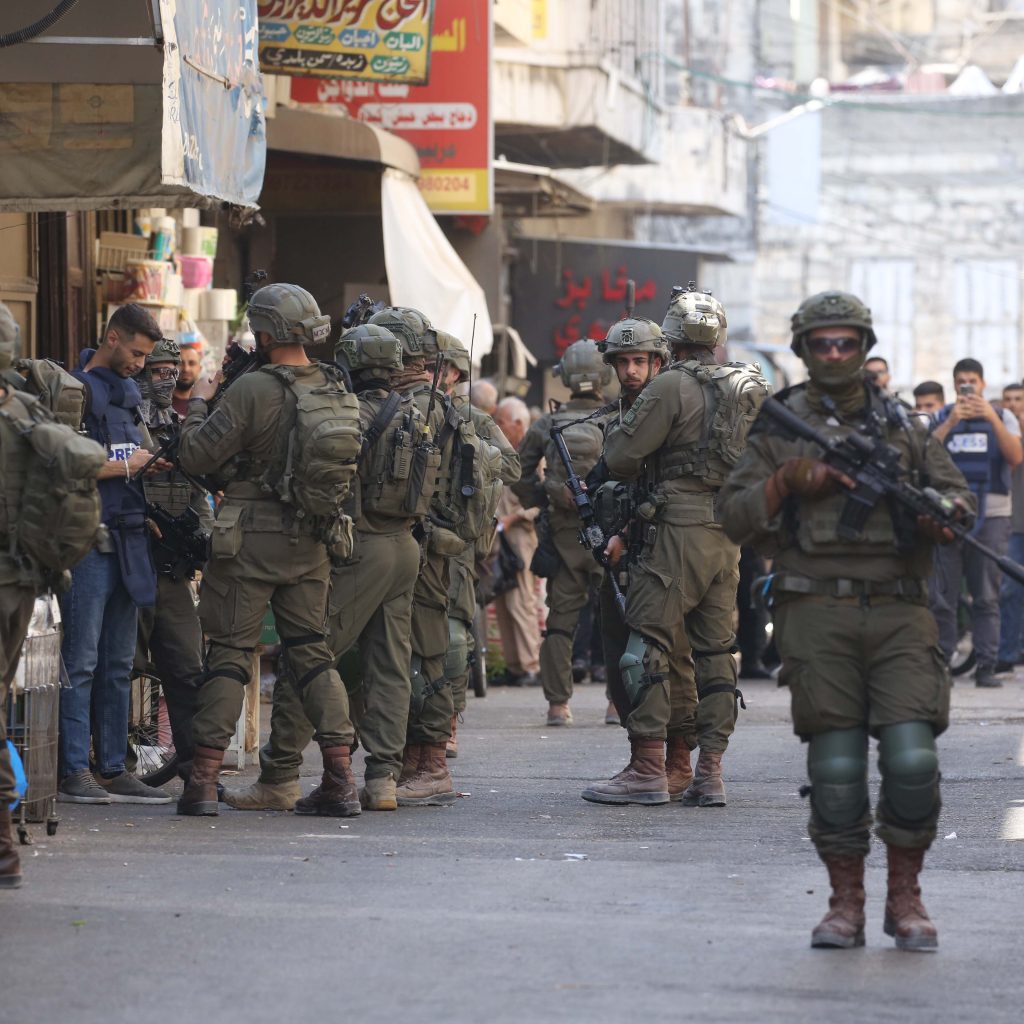
MUSCAT, Oman (MNTV) — Oman’s Foreign Minister Badr bin Hamad Al Busaidi has described the recent war involving Iran, the United States, and Israel as “a disaster.”
He argued that the conflict exposed fundamental flaws in the Gulf’s longstanding security doctrine and demonstrated the urgent need for a new regional security architecture based on inclusion, cooperation, and shared responsibility.
Writing in an opinion article published in the French newspaper Le Monde, Al Busaidi said the conflict had failed to achieve its declared objectives while inflicting severe consequences on the region.
He argued that Gulf states should focus on building a more sustainable security framework rather than returning to policies that have shaped the region for decades.
“This war is a catastrophe,” he wrote, adding that it lacked “a mandate from the United Nations” and “has achieved none of the objectives officially assigned to it.”
The article comes as military tensions between Washington and Tehran continue to escalate despite the Islamabad Memorandum of Understanding, signed last month with mediation by Pakistan and Qatar, which had sought to establish a ceasefire and lay the groundwork for a permanent peace agreement.
The truce effectively collapsed after renewed military exchanges and President Donald Trump’s declaration that the ceasefire was “over.”
Al Busaidi said the people of Oman and neighboring Gulf countries were now living with the consequences of a conflict that should never have occurred, stressing that the region’s overriding priority should be securing a genuine and lasting end to the fighting rather than another temporary pause.
“Their most ardent wish is that we truly witness the end of this conflict [pitting the United States and Israel against Iran], and not merely a suspension of the fighting,” he wrote.
The Omani foreign minister urged regional leaders to draw lessons from the conflict instead of focusing solely on the events that triggered it, warning that renewed military confrontation would only deepen instability.
“Even if the war is not over and one of the parties commits the madness and recklessness of rekindling it, we must try to draw lessons from it. Rather than dwelling on the recent past, on the mistakes and errors of judgment that led to this crisis, we must now turn our gaze towards the future,” he said.
Al Busaidi identified freedom of navigation through the Strait of Hormuz as an immediate strategic priority, arguing that Oman, as one of the two countries bordering the vital waterway, has a special responsibility to work with Iran and the wider international community to guarantee maritime security in accordance with international law.
He said protecting navigation through the strait remains essential to international trade and the global economy.
While acknowledging France’s diplomatic role in discussions surrounding the waterway, he argued that regional governments should look beyond the Strait of Hormuz alone and develop a broader security framework capable of addressing long-term strategic challenges.
He argued that the Gulf’s security doctrine, built since the 1979 Iranian Revolution around the principle of containing Iran, had failed to deliver lasting stability.
According to Al Busaidi, the recent conflict demonstrated that decades of military spending, the expansion of U.S. military bases across the Gulf, and reliance on external security guarantees had imposed enormous costs without producing genuine regional security.
“The war has revealed just how much the policy of containment was a myth,” he wrote.
Al Busaidi also argued that the region’s greatest security threats originate outside the Gulf rather than from within it.
“The most serious threats weighing on the security of the Gulf do not come from the region itself, but from decisions taken outside it, above all in Tel Aviv,” he wrote.
Calling for a fundamental reassessment of Gulf security, the foreign minister said every country bordering the Gulf—including Oman, Saudi Arabia, Bahrain, the United Arab Emirates, Kuwait, Qatar, Iran, and Iraq—should participate equally in designing and implementing any future regional security arrangement.
“All must be involved in its design, participate in its implementation, and share the responsibilities that it entails,” he wrote.
Al Busaidi stressed that such reforms would not require abandoning longstanding international partnerships but instead rebalancing them to better reflect the strategic realities exposed by the recent conflict.
He added that Gulf security should also be viewed within a wider regional context encompassing the northwestern Indian Ocean, the Bab al-Mandab Strait, and access to the Red Sea, arguing that a broader legal and operational framework would better safeguard maritime trade and promote long-term regional prosperity.
Concluding his article, the Omani foreign minister said the devastating conflict could still become a turning point if it encouraged governments to abandon outdated security doctrines and pursue a more balanced regional order.
“Nevertheless, if it finally allows the myth of containment in the Gulf to be buried, then there is reason for hope: the hope of seeing the emergence of a system that is fairer, more realistic and more effective, thus correcting nearly half a century of strategic errors,” he wrote.

Read also