New legal report casts Indian-ruled Kashmir as a settler-colonial siege
Istanbul-based lawyers' association documents mass detention, home demolitions and demographic engineering since 2019 revocation of Kashmir's special status, and argues violations amount to war crimes
© AA
By MNTV Staff Writer
A new report by an international association of lawyers describes India’s rule over Jammu and Kashmir as having shifted from prolonged military occupation into a “structural settler-colonial project,” documenting mass detention, the demolition of homes and the engineering of the territory’s demographic and political makeup since New Delhi stripped the region of its special status in 2019.
The 94-page report, titled “Longest Siege: Settler Colonialism and Structural Violence in Indian Occupied Jammu Kashmir,” was published by the Worldwide Lawyers Association (WOLAS), a human rights body of legal professionals and academics headquartered in Istanbul.
It traces what it calls a transformation set in motion on Aug. 5, 2019, when the Indian government revoked Articles 370 and 35A of the constitution and, through an accompanying reorganization act, split the state into two centrally administered union territories without the consent of any representative body.
A toll compiled across three decades
Drawing on figures from the Kashmir Media Service and the Jammu Kashmir Coalition of Civil Society, the report puts the cumulative human toll between January 1989 and August 2026 at 96,502 people killed, more than 184,000 civilians arrested, over 110,000 homes and structures destroyed or damaged, and nearly 23,000 women widowed.
It records more than 8,000 enforced disappearances and over 11,000 incidents of sexual violence.
A 2011 inquiry into unmarked graves, it notes, recorded 2,730 bodies across 38 sites in north Kashmir, of which 2,156 were never identified.
Much of that violence, the report argues, has been shielded from accountability by the Armed Forces (Jammu and Kashmir) Special Powers Act (AFSPA), which requires prior central-government sanction before soldiers can be prosecuted in civilian courts.
Citing UN findings, the report says that in nearly three decades the central government has not sanctioned a single such prosecution.
Settler-colonial case
The core of the report is its argument that the post-2019 order is colonial in character rather than merely repressive.
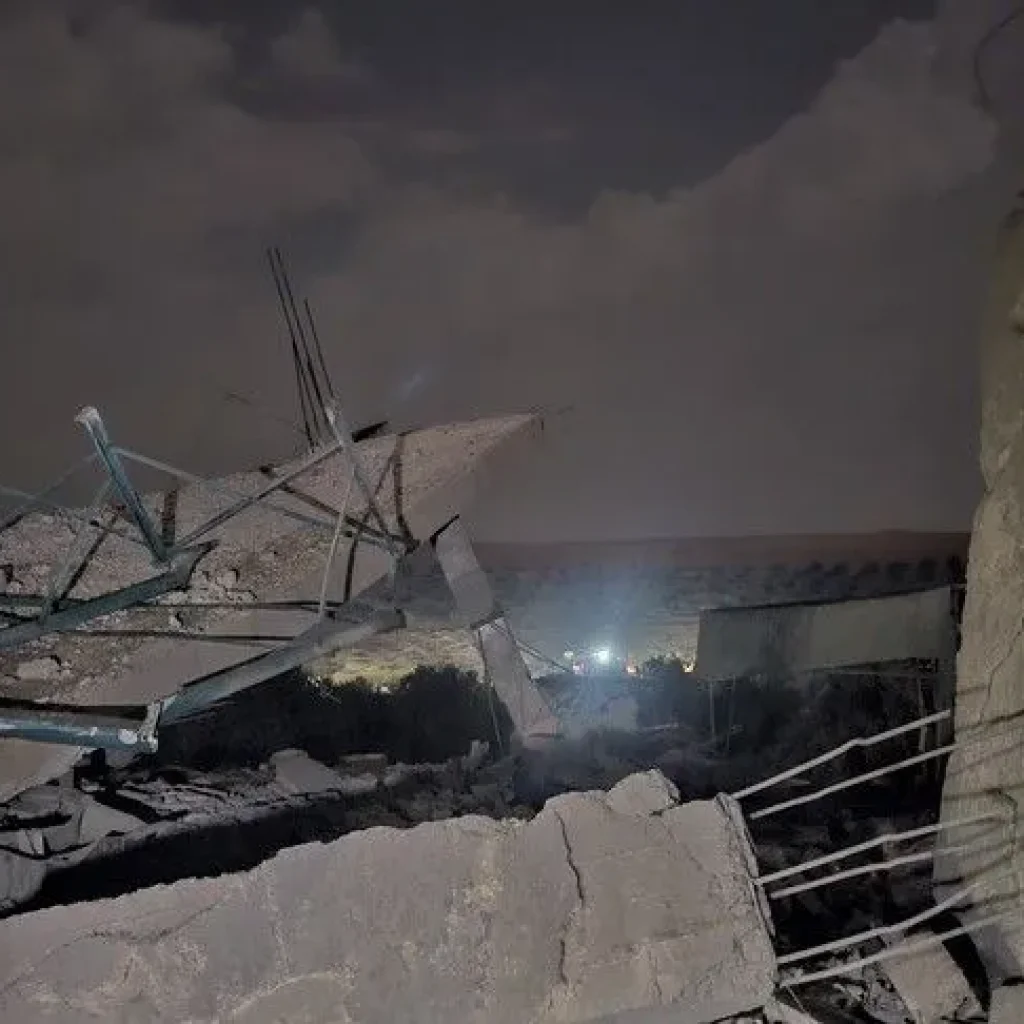
It points to new domicile laws that allow non-residents to acquire land and settle, a 2023 eviction campaign, and the renaming of institutions and places.
It documents the end of Urdu’s status as the sole official language, the expansion of schools run by groups affiliated with the Hindu nationalist Rashtriya Swayamsevak Sangh, and repeated restrictions on religious life — including Eid prayers barred at Srinagar’s Jamia Masjid and Eidgah for several consecutive years, and the repeated house arrest of the region’s chief cleric, Mirwaiz Umar Farooq.
The report assesses these practices against the prohibition in Article 49(6) of the Fourth Geneva Convention on an occupying power transferring its own population into occupied territory.
Detention and ‘erasure of leadership’
A substantial section examines the detention and death of Kashmiri political figures.
It records that veteran leader Syed Ali Shah Geelani died in 2021 after years under house arrest, that Muhammad Ashraf Sehrai and Altaf Ahmad Shah died in custody, and that the National Investigation Agency has pursued the death penalty against Yasin Malik, already serving a life term.
It cites a May 2026 Indian Supreme Court case in which the conviction rate under the Unlawful Activities (Prevention) Act in Jammu and Kashmir was found to run below 1%, reaching zero in 2019 — a pattern the report says shows that prolonged pre-trial detention “has, in practice, amounted to the sanction itself.”
The report also tracks the scale of that detention year by year. Drawing on data compiled by the Legal Forum for Kashmir and, from mid-2024, the Kashmir Law and Justice Project, it records 26,129 arbitrary arrests under the two preventive laws between 2019 and 2026:
| Year | Arrests under the PSA and UAPA |
|---|---|
| 2019 | 13,000 |
| 2020 | 2,773 |
| 2021 | 1,197 |
| 2022 | 382 |
| 2023 | 567 |
| 2024 | 2,410 |
| 2025 | 2,800 |
| 2026 | 3,000 |
| Total | 26,129 |
By far the largest spike, the report notes, came in 2019 — the year of the revocation — before the figure climbed again from 2024, a rise it links in part to the roughly 2,800 civilians detained after the April 2025 attack in Pahalgam.
The same section documents women imprisoned under the law, noting that in March 2026 Asiya Andrabi received a life sentence and two associates 30 years each, which the report characterizes as punishment for political expression rather than any documented violent act.
Among prisoners held longest, it cites Ashiq Hussain Faktoo, detained since 1993; the report says he was made to sign a blank paper later used as his confession, saw a 2008 recommendation for his release rejected, and now suffers untreated glaucoma and partial blindness, having completed a doctorate and written more than 20 books in prison.
India-Israel chapter
In a chapter likely to draw particular attention, the report details what it calls an India-Israel nexus underpinning the security architecture in Kashmir, citing Israeli-supplied Heron drones, Tavor rifles and guided munitions, and annual Indian defense spending with Israel it estimates at about $1 billion, double its 2014 level.
It references testimony collected by the London-based firm Stoke White Investigations alleging the presence of Israeli intelligence operatives during interrogations, and the work of journalist Azad Essa, who has argued that Hindutva and Zionism share structural features as exclusionary, homeland-based ideologies.
Findings and recommendations
The report concludes that the documented conduct — torture, arbitrary detention, home demolition and population transfer — engages grave breaches of the Fourth Geneva Convention and amounts to war crimes and crimes against humanity under the Rome Statute, arguing that prohibitions on torture and crimes against humanity bind all states regardless of which treaties they have ratified.
Noting that India is not a party to the Rome Statute, it points to an “accountability gap” and recommends sustained UN engagement, a commission of inquiry, universal-jurisdiction filings against named commanders in third states, targeted sanctions, and a UN General Assembly request for an advisory opinion from the International Court of Justice on the legality of the 2019 revocation.
Its title, the authors explain, refers not only to the physical blockade of the territory but to an information siege — what they call the longest of its kind — that has made the scale of what is happening there steadily harder to see.
Complete report is accessible here.
Read also