Anti-Muslim hostility moves from Republican campaign rhetoric into everyday life in Texas
Muslim Texans report escalating discrimination as Republican politicians mainstream anti-Muslim narratives
© AA
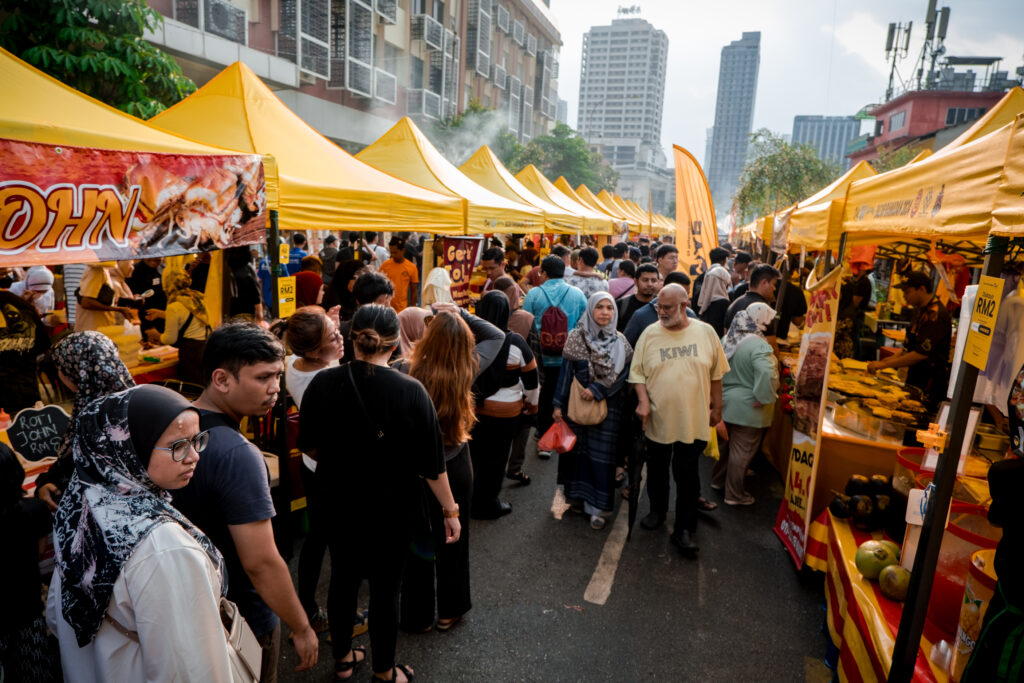
HOUSTON, United States (MNTV) – Anti-Muslim hostility is no longer confined to campaign season in Texas. Muslim residents and community leaders say language used by Republican politicians and party activists has seeped into schools, workplaces, grocery stores, and public spaces — creating a climate of harassment and social exclusion that follows Muslim Texans through daily life.
The pattern sharpened after a Republican primary runoff and the Texas Republican Party convention, where Islam and immigration were treated as interchangeable threats. At the convention itself, Muslim delegates and attendees reported being called terrorists and told to convert to Christianity or leave the country.
The incidents are specific and documented.
At the University of Houston, a man approached Muslim students during prayer and burned a copy of the Qur’an. Muslim women have reported verbal abuse for wearing hijab or traditional Islamic clothing.
In one widely circulated encounter, a woman confronted two Muslim women in a grocery store, declaring Islam “a terrorist organization” and insisting that the United States was a Christian nation. A fundraising campaign supporting the woman attracted substantial donations and received public endorsement from Republican Representative Nancy Mace.
Dallas resident Naila Syed, who serves on the Islamic Center of North America Council for Social Justice, said anti-Muslim talking points now circulate in classrooms. One of her young daughters was asked by a classmate whether Muslims oppressed women — a question that did not come from a child’s curiosity but from political messaging absorbed at home and repeated at school.
Some Muslim Texans say the atmosphere has grown hostile enough that they avoid going out alone or speaking publicly about their experiences. Others requested anonymity for this article because they had previously received threats after discussing discrimination.
Republican Representative Brandon Gill of Texas has been among the most vocal in framing Muslim immigration as a cultural and security threat.
In public communications and media appearances, Gill has warned that immigration from Muslim-majority countries could “fundamentally alter” communities in the Dallas-Fort Worth region and has linked it to concerns about public education and social integration — language that treats Muslim families as a problem to be managed rather than neighbors and citizens.
Gill and Mace have supported proposals to suspend or restrict immigration from several Muslim-majority countries, including Somalia. They frame these measures as national security policy. In practice, the proposals single out people by religion and national origin rather than individual conduct — the textbook definition of discriminatory targeting.
The Texas Republican Party has also written anti-Sharia language into its official platform, calling for preventing Sharia law from influencing Texas governance.
There is no organized effort to replace American law with Sharia in Texas — legal scholars and constitutional experts have said so repeatedly. Sharia itself is a broad moral and ethical framework governing personal religious practice, not a rival legal code seeking to displace the Constitution. The platform plank exists not to address a real threat but to signal hostility toward Islam.
One Muslim Republican convention attendee, identified by the pseudonym Omar because of subsequent online harassment, said that although several Republicans defended him during the event, he was shaken by the open hostility. Omar stressed that Muslim Americans share the same family, professional, and civic concerns as everyone else — and rejected the premise that they are outsiders who must prove their belonging.
Broader consequences
The consequences extend beyond personal encounters. Shehla Faizi, the Green Party candidate for Texas Comptroller, said anti-Muslim hostility discourages political participation and contributes to the underrepresentation of Muslims in public office — Texas currently has only two Muslim state legislators.
Persistent discrimination, she said, creates psychological pressure that pushes Muslims to reduce their public visibility simply to avoid becoming targets.
The hostility has also surfaced in debates over Texas social studies standards. The Republican-controlled State Board of Education has advanced curriculum changes emphasizing American exceptionalism and Judeo-Christian influences while reducing instruction on slavery, civil rights, world cultures, and comparative religion.
At one public hearing on the proposed standards, Syed said multiple speakers opposed teaching about Islamic civilizations and the historical role of Islam. Several presented distorted interpretations of the Qur’an while Muslim attendees sat in the audience, largely excluded from the discussion.
Stripping Islamic civilization from curricula does not strengthen civic education — it impoverishes it. Students who learn nothing about one of the world’s major civilizations and one of America’s own religious communities are not being educated; they are being insulated from reality.
Syed said she has repeatedly sought a meeting with Representative Keith Self, who helped establish the congressional “Sharia-Free America” caucus, hoping to explain the religious meaning of Sharia and encourage dialogue. Those requests have gone unanswered.
Interfaith caucus
Texas State Representative Dr. Suleman Lalani, one of the state’s two Muslim legislators, has responded by creating an interfaith caucus in the Texas House. During a public discussion in Houston on the politicization of religion, leaders from Muslim, Jewish, and Christian communities participated in conversations aimed at building understanding.
Lalani argued that ignorance generates fear and fear generates hatred — and that sustained engagement between communities is more effective than rhetoric built on suspicion.
Democratic State Representative Christian Manuel put it more bluntly: elected officials are exploiting public misunderstanding about Islam for political advantage, transforming ignorance into an instrument of division.
The pattern is clear.
When politicians mainstream anti-Muslim rhetoric — when they write it into party platforms, campaign on it, and defend those who act on it — the consequences land on Muslim families in grocery stores, classrooms, university prayer spaces, and convention halls. The question is not whether the hostility is real. It is whether anyone with political power in Texas intends to stop it.


Read also