UN says human rights in Burma have fallen to new low
UN documents escalating military violence, systematic abuses against Rohingya and expanding illicit industries that are financing armed groups
© File Photo
GENEVA (MNTV) — Burma’s human rights situation has plunged to a “new low” as military violence, systematic abuses against Rohingya and expanding illicit economies deepen an already severe humanitarian crisis, the United Nations has warned.
A new report by the U.N. Human Rights Office paints a nationwide picture of killings, displacement and repression, while warning that illegal mining, drug production, human trafficking and rapidly expanding scam centers are generating money that helps sustain the country’s conflicts.
The report, covering June 1, 2025 to May 31, 2026, said the military continued to attack civilians through airstrikes and arson while using increasingly sophisticated surveillance technology to spread fear and tighten control over the population.
Burma has been engulfed in conflict since the military seized power on Feb. 1, 2021, overthrowing the elected government of Aung San Suu Kyi. More than 100,000 people are estimated to have been killed across all sides of the conflict over the past five years as the military battles pro-democracy forces and numerous ethnic armed groups.
“The military’s persistent quest for control and legitimacy has only deepened the suffering,” the report said, pointing to multiple threats facing civilians across the country.
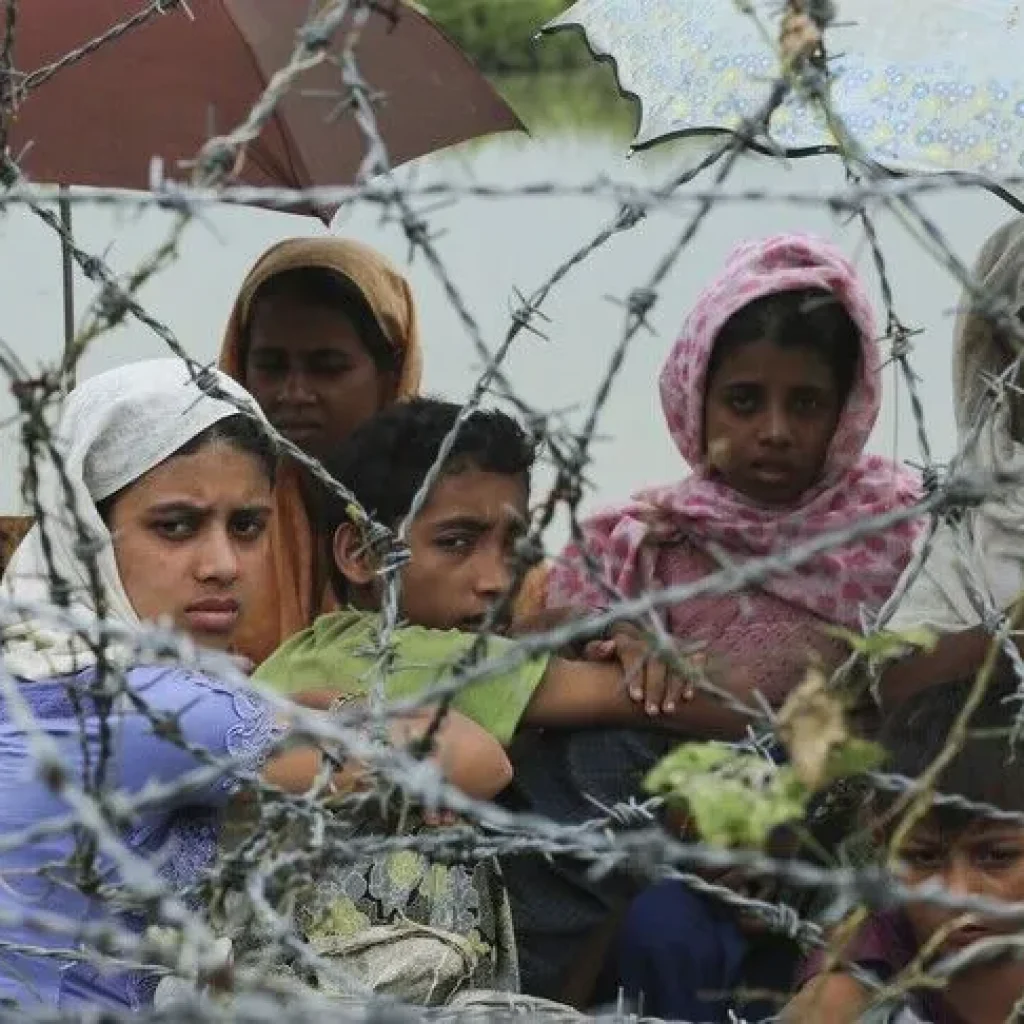
The U.N. raised particular alarm over what it described as the “ever-worsening brutal abuse” of Rohingya Muslims.
It said both the military and the Arakan Army, which now controls much of the Rohingya homeland in western Arakan state, were responsible for widespread and systematic abuses against the persecuted minority.
Hundreds of thousands of Rohingya fled Burma following the military’s brutal 2017 crackdown and remain in neighboring Bangladesh. Renewed fighting and abuses in Arakan have driven another wave across the border since 2024.
The U.N. report also drew attention to the growing role of illicit businesses in Burma’s war economy, saying illegal mining, narcotics, human trafficking and online scam compounds were simultaneously generating revenue and creating new human rights crises.
Rare-earth mining has emerged as a particular concern. The U.N. said available evidence indicated much of the extraction was destined for neighboring China, with trade flows reaching an estimated $1.4 billion at their peak in 2023.
Mining operations were also releasing “massive volumes” of hazardous chemicals into waterways, causing severe pollution and posing risks to reproductive health, according to the report.
Scam centers, meanwhile, have continued to expand despite international efforts to dismantle them. Such compounds have drawn people from numerous countries through deceptive job offers, with trafficking victims forced to carry out online fraud under threats and violence.
U.N. human rights chief Volker Türk said the report depicted suffering and cruelty “on multiple levels and across the country” and urged governments, companies and investors to examine whether their actions — or failure to act — were contributing to the crisis.
The warning comes as military leader Min Aung Hlaing seeks greater international acceptance for Burma’s post-coup authorities, undertaking a series of diplomatic visits in the region.

Read also