Türkiye marks 10 years since the failed coup as Erdoğan hails ‘a great victory of democracy’
On tenth anniversary of failed coup, Turkish president returned to bombed parliament to honour resistance he says has no parallel in history of world democracy
© AA
By Qasim Ahmad
MNTV – Ten years to the night after warplanes bombed the Turkish parliament and tanks rolled into Ankara and Istanbul, President Recep Tayyip Erdoğan returned to that same chamber on Wednesday to mark what he describes as one of the defining moments of the country’s modern history: the defeat of the July 15 coup attempt by ordinary citizens who came out into the streets to stop it.
The anniversary, observed officially as the Day of Democracy and National Unity, was commemorated with the most extensive programme yet staged — parliamentary ceremonies, prayers, memorial visits, exhibitions, and vigils across the country, all centred on the 251 people killed while confronting the plotters.
President’s message
In an article written for the occasion, Erdoğan described the events of July 15, 2016 as one of the most ruthless episodes in Turkish political history. He said the coup was orchestrated by a network that had covertly embedded itself within state institutions over decades, with the aim of pushing Türkiye into prolonged chaos and taking control of the nation’s future.
What unfolded, he argued, went well beyond a conventional military coup and constituted an attempt at occupation that threatened the country’s independence.
But the heart of his message was about the public response. “Ten full years have passed since that ominous night, when a great nation fought at the cost of its life for its independence and future,” Erdoğan wrote, describing July 15 as a great victory of democracy in which the people defended their will and their country.
He said the Turkish nation had delivered one of the greatest lessons in history to those who sought to occupy the country and to their collaborators.
Erdoğan said the foresight, courage, and wisdom shown by Turkish citizens that night were, in his words, unparalleled in the history of world democracy — a nation that, standing up for its independence, demonstrated to the world that the will of the people cannot be overridden.
Recalling his own call for people to take to the streets and to the airports as the coup unfolded, he said it had reflected his trust in the nation’s democratic awareness and courage. “Our nation did not betray this trust,” he wrote.
Ten years on, a stronger country
In a message sent to a symposium in Ankara examining the coup’s political and legal dimensions, Erdoğan argued that Türkiye had opened a new chapter in the years since, saying the reforms that followed had strengthened the country’s democratic and institutional resilience.
He said the true intentions of the network behind the coup became unmistakable on the night itself, accusing it of having spent four decades exploiting people’s religious and charitable sentiments under the guise of service, donations, and education.
On the international front, the president said counterterrorism cooperation between states remained central to his government’s approach.
He noted that the movement’s overseas networks had shown signs of internal decline in recent years, but said some countries continued to quietly shelter its members. He called for continued vigilance, describing the organisation as one willing to invoke the language of democracy and human rights to serve its own ends.
Recalling the 251 lives lost, Erdoğan said Türkiye’s principal expectation of the international community was support for its fight against terrorism — arguing that lasting global security depends on a consistent stand against terrorist groups, without exception.
The night itself
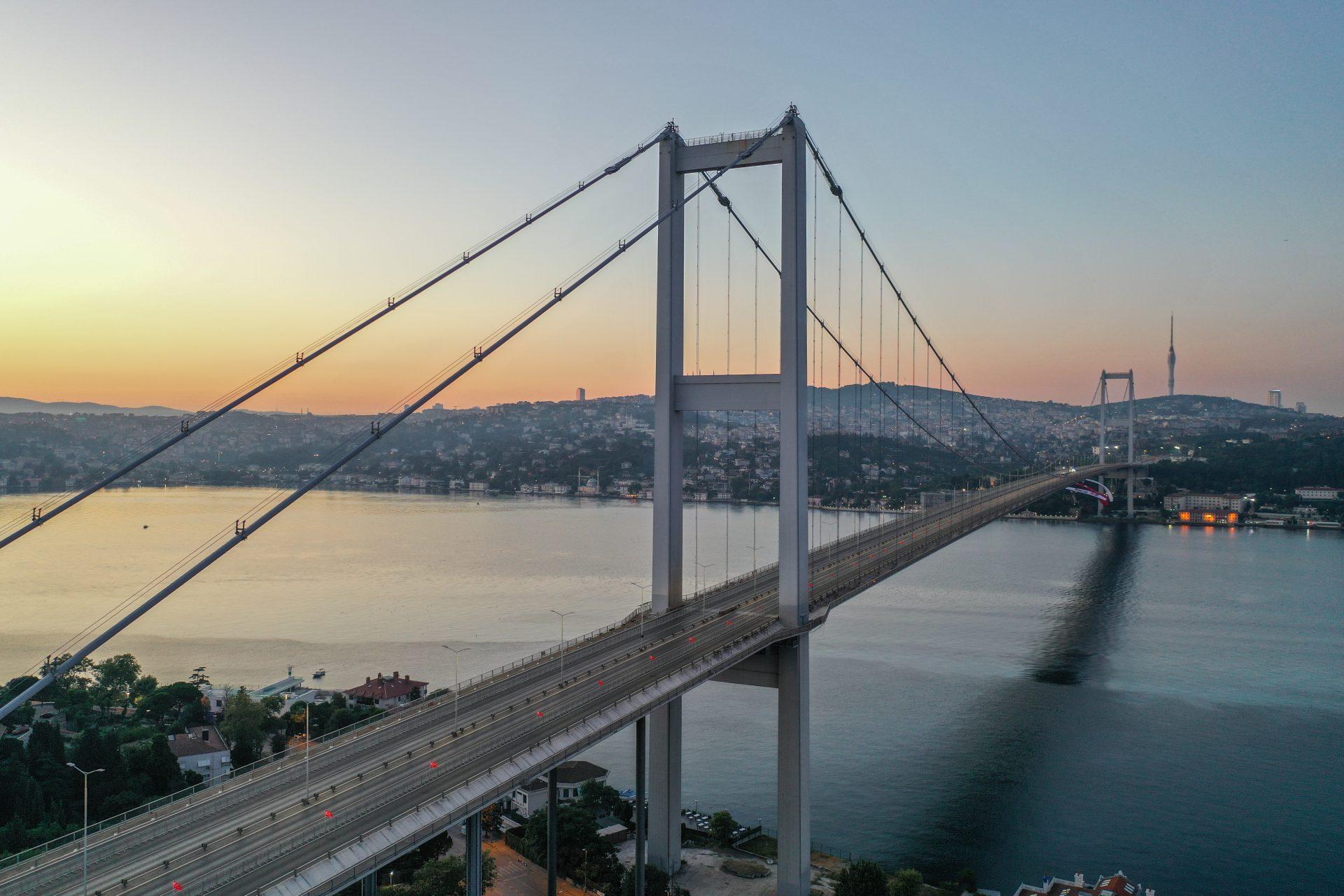
On the evening of July 15, 2016, a faction within the armed forces moved to seize control of key locations in Ankara, Istanbul, and elsewhere. They blocked the Bosphorus Bridge, occupied a broadcaster, and struck the parliament building and the presidential complex from the air. Tanks entered city streets; helicopters and military vehicles opened fire.
The attempt collapsed within hours as security forces and civilians confronted the plotters. Alongside the 251 dead, roughly 2,200 people were wounded. In the weeks that followed, citizens maintained nightly democracy vigils in public squares for 29 consecutive nights, and an enormous cross-party rally at Istanbul’s Yenikapı brought together political leaders from rival parties and religious communities in a shared denunciation of the coup — a moment the government still holds up as the high-water mark of national unity.
Sites across the country were renamed to mark what happened. The Bosphorus Bridge became the July 15 Martyrs Bridge. Ankara’s Kızılay Square became July 15 Kızılay Democracy Square.
The town of Kazan became Kahramankazan — “hero Kazan” — in recognition of its residents’ resistance.
Parliament that would not adjourn
Wednesday’s central ceremony took place in the Grand National Assembly, a building that holds the honorary title of “Ghazi,” or war veteran, earned for coordinating the War of Independence in its earliest days. It earned the title anew on the night of July 15, when lawmakers refused to leave the chamber despite repeated airstrikes that partially destroyed the building.
Erdoğan and Parliament Speaker Numan Kurtulmuş addressed a memorial event there, while lawmakers across the political spectrum held a “National Will Watch,” delivering speeches on the defence of democracy against military intervention.
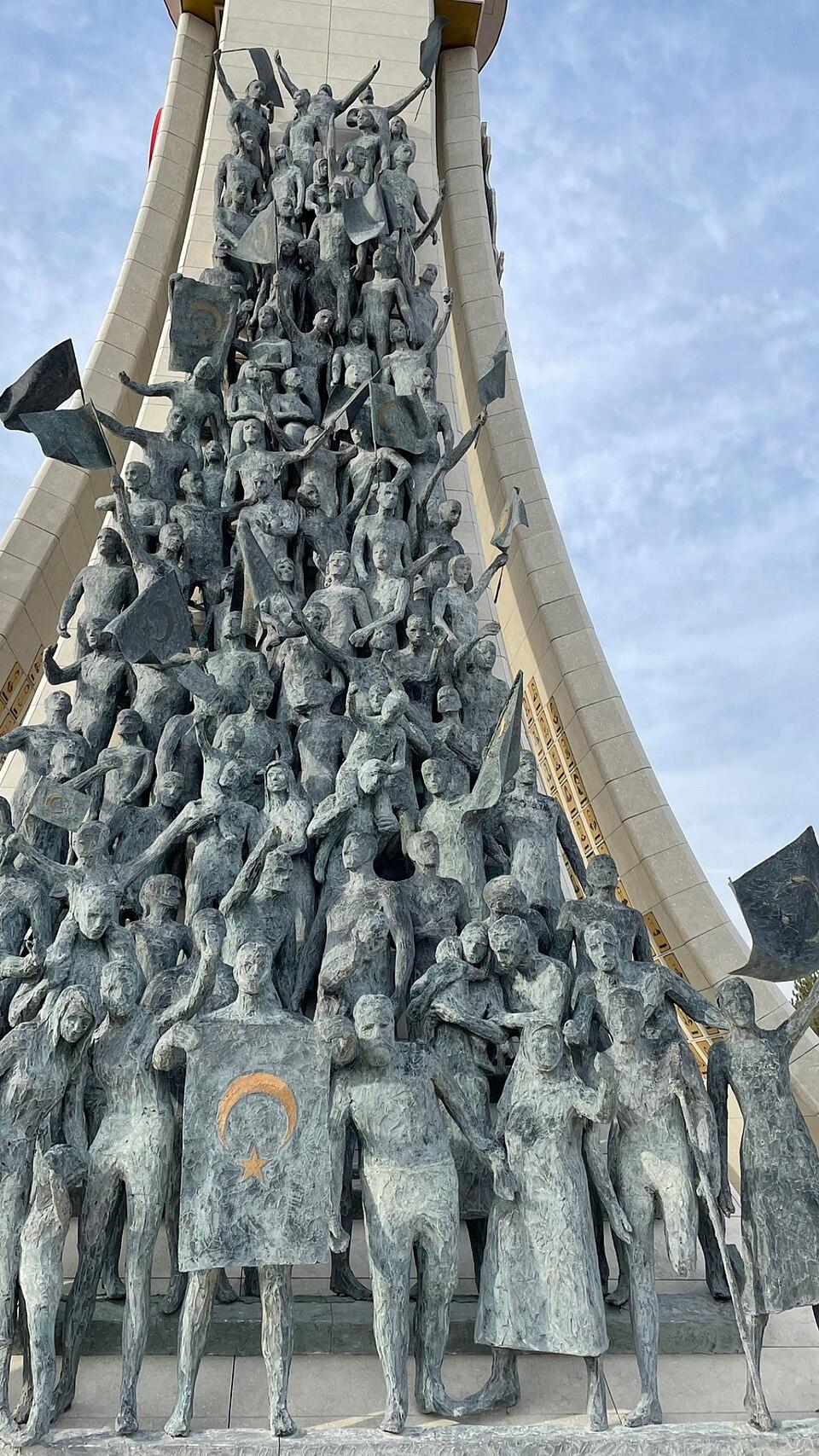
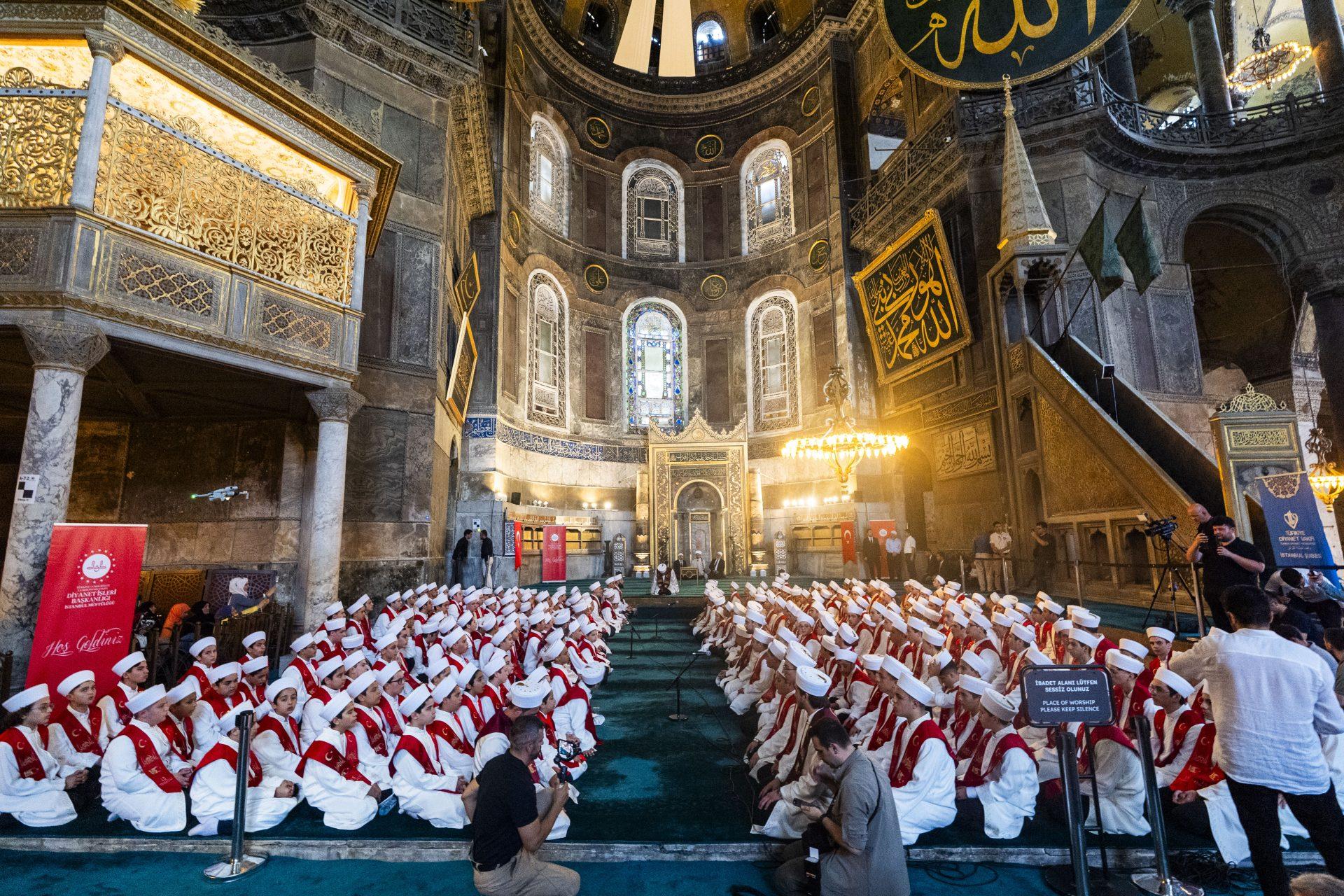
Parliament’s mosque hosted prayers in memory of those killed, a commemoration was held at the monument erected outside the building, and three exhibitions opened for the occasion.
Deputy Parliament Speaker Bekir Bozdağ, speaking at a forum earlier in the week, said the bombing of parliament amounted to an attack on every one of the country’s citizens.
He credited Erdoğan’s call for the public to resist as the decisive turning point of the night, noting that the president travelled to Istanbul with his family despite the danger.
“If the leader of a country is willing to risk the lives of his entire family for democracy and the national will, then the nation that elected him will follow him,” he said.

Keeping memory
Across Istanbul, the anniversary programme included visits to martyrs’ cemeteries, mevlids, Quran recitations, performances by mehter military bands, photo exhibitions, panel discussions, marches, and democracy vigils in public squares.
At a commemoration in Ankara, Deputy Police Chief Mustafa Çalışkan described the scale of the infiltration the state had faced. Among the most affecting testimony came from a woman who lost both her father and her husband on the night of the coup. “I stand before you as someone from a family with two martyrs and two veterans,” she said.
“Ten years have passed, but we have never forgotten that day.” Her foundation, she added, was established so that no relative of a martyr would be left in sorrow and no veteran would ever stand alone.
Hasan Mert Kaya, a writer and curator who helped establish Istanbul’s July 15 Memory Museum — which has drawn close to two million visitors since opening — said commemorative work is essential to ensuring the memory does not fade.
In a region where the agenda shifts constantly, he argued, remembering what happened and passing its lessons to the next generation is a matter of loyalty to those who died. Art and culture, he said, have a particular capacity to preserve collective memory because they cross language and reach people across different backgrounds.

Image that endures
For those who gathered this week, the defining image of July 15 was not the tanks or the warplanes but the people who stood in front of them — a coup halted not by another faction of the military, as had happened repeatedly in Türkiye’s twentieth-century history, but by unarmed civilians who left their homes after midnight and refused to move.
That, in Erdoğan’s telling, is what makes the date singular.
Ten years on, the government’s message is that the night belongs not to any one leader or party but to a nation that, when its institutions came under attack, decided the question of who governs Türkiye was theirs alone to answer.
Related posts


Read also