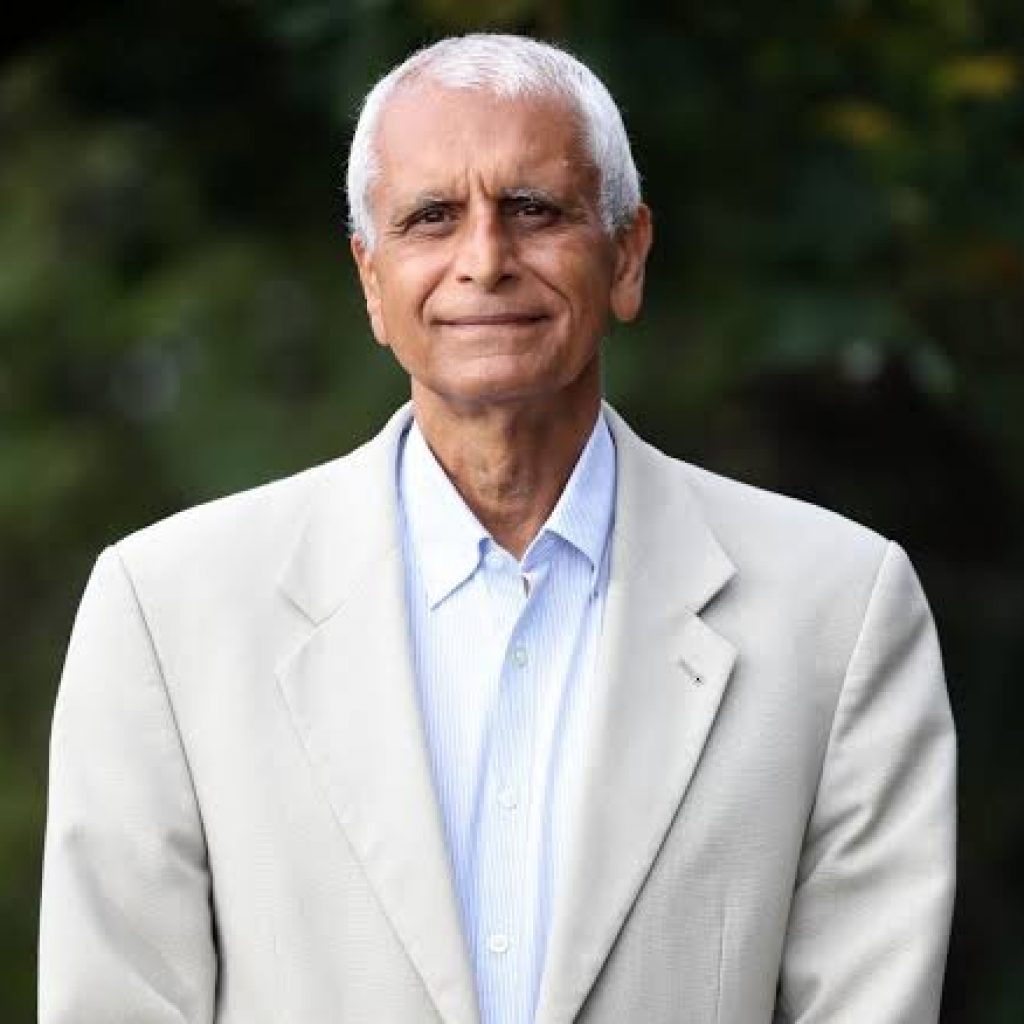
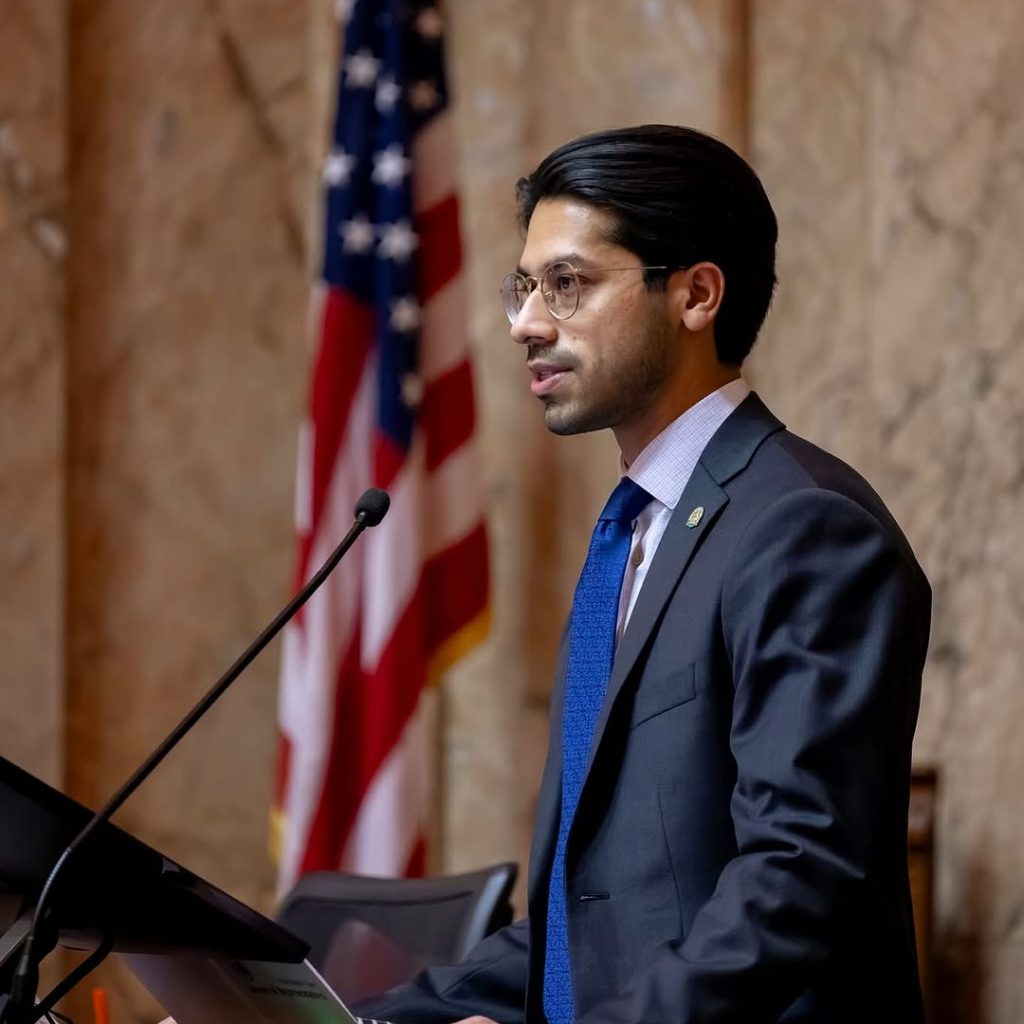
Profile: Adam Hamawy, surgeon who treated Gaza’s wounded and now runs for Congress
Dr Adam Hamawy spent decades stitching together wounded in world's war zones — from Baghdad to Bosnia to operating tables of Gaza, now he is poised to become New Jersey's first Muslim member of Congress
© 314 Action
By MNTV Staff Writer
When Tammy Duckworth’s helicopter was torn apart by a rocket-propelled grenade over Iraq in 2004, costing her both legs and the partial use of an arm, the surgeon who kept her alive was a young Army doctor from New Jersey named Adam Hamawy.
Twenty years later, Duckworth — now a U.S. senator — would work the phones with the Biden administration and the Israeli ambassador to try to rescue that same surgeon, trapped under fire in Gaza.
That improbable arc — from a field hospital in Baghdad to a besieged ward in Rafah to the threshold of the U.S. Capitol — is the story of Dr Adam Hamawy, the Democratic nominee for New Jersey’s 12th Congressional District.
Having won a crowded twelve-candidate primary in June, he is heavily favoured to win the solidly Democratic seat on November 3, which would make him the first Muslim ever to represent New Jersey in Congress.
From Old Bridge to operating theatre
Hamawy, 56, was born in Egypt to immigrant parents and brought to the United States as a baby, growing up in Old Bridge Township, New Jersey. He earned his undergraduate degree at Rutgers University in 1989 before attending Rutgers New Jersey Medical School, becoming a doctor in 1996.
He completed his general-surgery residency at Weill Cornell Medicine and a fellowship in plastic and reconstructive surgery at the University of Texas Southwestern Medical Center.
He enlisted in the New Jersey National Guard and served eight years on active duty in the Army Medical Corps — as a general surgeon, reconstructive surgeon and flight surgeon — completing his military medical training at Madigan Army Medical Center in Washington state.
It was his deployment to Baghdad, from May 2004 to February 2005 with the 31st Combat Support Hospital, that set the course of his medical life.
“We were dealing with trauma and devastating injuries that changed the way people look,” he later told Rutgers Business School, explaining his decision to specialise in plastic surgery.
“We wanted to make them feel like themselves again.” He left the Army a lieutenant colonel, decorated with a Meritorious Service Medal and three Army Commendation Medals.
Back home, Hamawy built a civilian life that would later anchor his political identity as a “small business owner”: in 2013 he founded his own practice, Princeton Plastic Surgeons, and from 2014 spent more than a decade working New Jersey emergency rooms as an attending surgeon at Penn Medicine Princeton Medical Center and Robert Wood Johnson University Hospital.
In 2018, while running the practice and raising four children with his wife, he added an MBA from Rutgers–Camden — a degree he said took 70 Saturdays.
He was also a 9/11 first responder, treating the wounded in the attacks’ immediate aftermath.
Three decades in world’s disaster zones
What sets Hamawy apart is a parallel career spent volunteering wherever catastrophe struck.
Over 30 years, by his own account, he has treated patients in war and disaster zones across Bosnia, Haiti, Sudan, Colombia, Belize, Syria, Lebanon, Türkiye, Jordan and Palestine — beginning with his first humanitarian mission as a medical student in 1994, and including repeated trips to assist Syrian refugees.
But it was Gaza that changed everything.
Hamawy travelled there in May 2024 as part of a 19-member medical team, performing 120 surgeries over three weeks — more than half of them on children.
While he was there, Israel seized the Rafah crossing, trapping the doctors.
Speaking by video call from Rafah, he described colleagues and patients at risk, and recounted how a nurse’s wife and children had been sent to a “safe area” that was in fact barren desert, where they waited eight hours for a jug of water not meant for drinking, which they drank anyway because they had no choice.
His evacuation — secured in part through Duckworth’s intervention — turned him into a national voice on Gaza.
“The level of civilian casualties is something that I’ve never seen before,” he told a congressional briefing in June 2024.
On New Jersey television, he gave voice to a quieter despair: “What surprised me is that we continue just to watch… we’ve placed red lines that don’t mean anything.”
He returned to Gaza for a second mission in 2025, and in March that year was invited by Congresswoman Bonnie Watson Coleman as her guest to President Trump’s address to Congress.
‘Politics was never my plan’
Hamawy has been candid that public office was not an ambition but a consequence.
“Politics was never my plan,” he says in his campaign launch video.
“But I’ve lived these struggles hands-on. I’m running for Congress to fight for health care, for our veterans, for all of us here at home — and to put humanity first.”
He cites Watson Coleman, whose seat he hopes to fill, as his inspiration, calling her “one of those fearless people in Congress who’s not afraid to speak up.”
His platform is unambiguously progressive: Medicare for All, abolishing ICE, taking on corporate interests — and, most strikingly, an end to U.S. military aid to Israel, a full arms embargo, and the right of return for Palestinian refugees.
His candidacy, lifted by the pro-Palestinian super PAC American Priorities, drew endorsements from progressive figures and, this week, the New Jersey Working Families Party.
The campaign has not been without its attacks — including attempts to link him to a convicted extremist cleric from decades ago, which Hamawy dismissed as the kind of smear Muslim candidates routinely face.
He has been careful to condemn antisemitism, telling the Jewish Telegraphic Agency that the safety of Muslims and Jews is “intertwined.”
On the night he won his primary, he framed his victory as a generational turning point.
“There was once a time when this may have worked, where racist and anti-Muslim attacks could swing an election,” he told supporters in Princeton.
“That era of American politics is over.”
Read also