Pentagon watchdog lays out costs of US war on Iran
First official accounting puts war's four-month cost at $33.4 billion and details damaged bases, depleted munitions, and US casualties — with much still classified
© AA
WASHINGTON (MNTV) — A Pentagon watchdog has produced the first comprehensive official accounting of the U.S.-Israeli war on Iran, documenting billions of dollars in costs, widespread damage to American bases and diplomatic sites, depleted weapons stocks, and mounting casualties over the war’s opening months.
The Defense Department Inspector General’s first quarterly report on the operation — code-named Operation Epic Fury and launched Feb. 28 — covers the period through June 30 and was released Sept. 14. It put the war’s cost at about $33.4 billion through late June, of which $22.3 billion was expended munitions, $7.4 billion operations, and $3.7 billion equipment losses.
Because Congress had not passed a separate appropriation before combat began, the Pentagon drew on funds meant to train and maintain the force; the White House submitted a $67 billion supplemental request for the war on June 24.
The inspector general cautioned that most of its figures were supplied by government agencies and not independently audited, and noted that the operation’s full mission statement remains classified — even as the White House has described destroying Iran’s nuclear, missile, and naval capabilities as central goals.
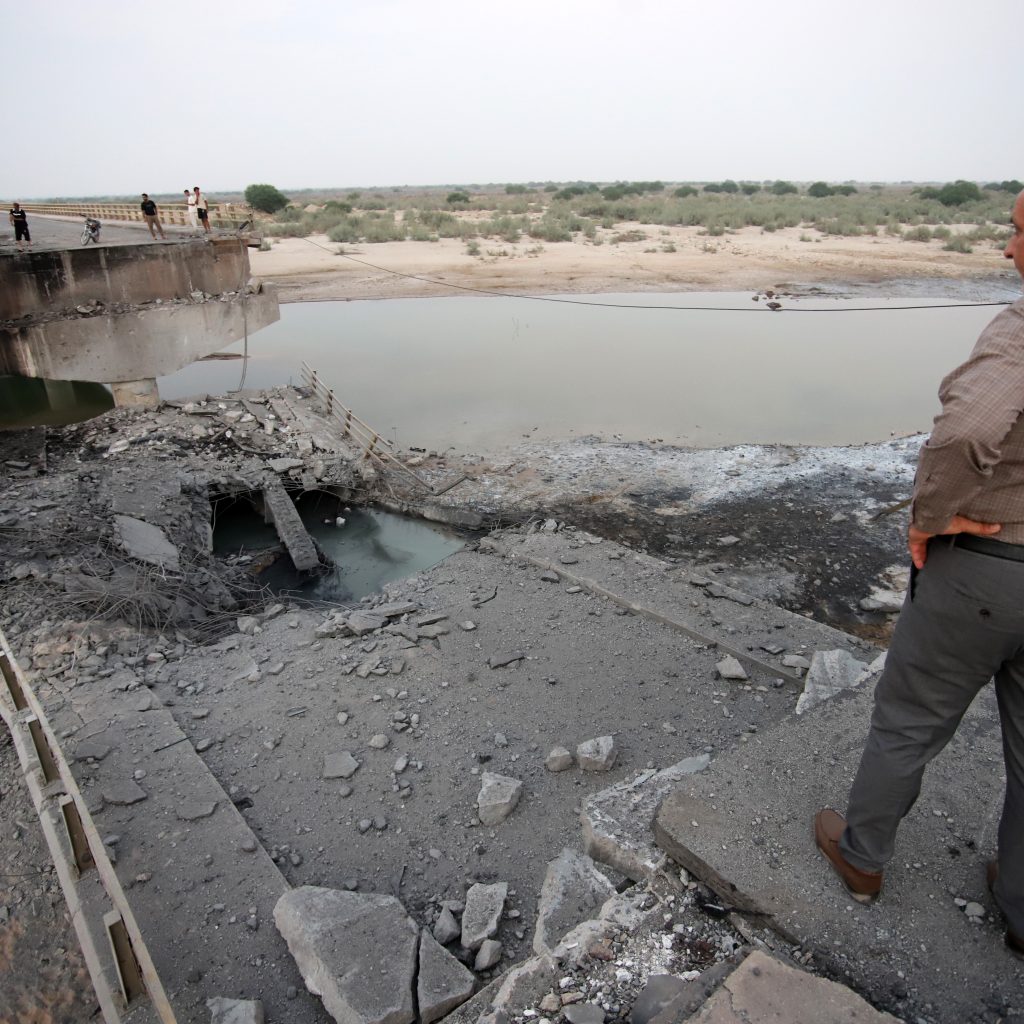
The report detailed heavy physical damage. Iranian strikes damaged or destroyed hundreds of buildings and structures at US bases across eight countries — Bahrain, Iraq, Jordan, Kuwait, Oman, Qatar, Saudi Arabia, and the UAE — while the State Department estimated about $184 million in damage to U.S. embassies and consulates, more than $157 million of it at the mission in Iraq, which it said was hit by over 600 attacks.
Dozens of U.S. aircraft were damaged or destroyed, including Reaper drones and KC-135 refueling planes, and the destruction of the Navy’s main logistics hub in Bahrain forced a costly rerouting of supplies through the remote island of Diego Garcia.
On munitions, the Pentagon’s acquisition office told investigators the scale of use had produced “strategic inventory shortfalls,” warning that ramping up production faces bottlenecks in solid rocket motors, explosives, and propellants — though the Pentagon has publicly disputed claims of ammunition shortages.
About 50,000 U.S. troops have supported the war. The report recorded 18 U.S. service members killed; its accounting of the wounded was less clear, with independent defense outlets noting the report’s casualty tally appeared to conflict with its own text, citing figures of more than 400 wounded.
With key details classified and repair and replacement costs still uncalculated, the report makes clear that much of the war’s true burden — now in its seventh month — remains unresolved and out of public view.
Related posts

Read also