Pakistan’s political spectrum unites with Iran against U.S.-Israel axis
Pakistan’s political and social voices align in condemning Israeli aggression
© Anadolu Agency
ISLAMABAD, Pakistan (MNTV) — Despite complex ties with Tehran, Pakistan has openly sided with Iran against Israeli strikes on Iranian nuclear sites.
This move has drawn surprise both regionally and domestically, while forging a rare consensus across Pakistan’s fragmented political spectrum.
Officially, Islamabad has condemned the attacks as violations of sovereignty and threats to regional stability. Beyond government statements, a broad coalition of political parties and civil society groups has rallied in support of Iran.
The Pakistan People’s Party (PPP), representing the center-left, Pakistan Tehreek-e-Insaf (PTI) on the center-right, and the Sunni religiously conservative Jamiat Ulema-e-Islam-Fazl (JUI-F) have each voiced condemnation, warning of escalating tensions in the Middle East.
Former Foreign Minister and PPP Chairman Bilawal Bhutto Zardari criticized the strikes during a National Assembly session.
“This attack violated Iran’s sovereignty and endangered millions across the region,” Bilawal said.
“Israel’s accusations are baseless. If we don’t raise our voice now, who will speak up when we become the target?”
Barrister Gohar Ali Khan, Chairman of Imran Khan’s PTI, echoed similar concerns:
“The first direct strike on Iran risks destabilizing the region. We urge an immediate end to hostilities. Iran has every right to defend itself.”
Leaders from the far-right JUI-F, including Maulana Rahim Haqqani and former Finance Minister Muzaffar Said, went further, calling for stronger government support for Iran. Speaking at a gathering in Lower Dir, Haqqani declared:
“After killing thousands in Gaza, Israel has attacked Iran. The government must support Iran to teach Israel a lesson.”
Muzaffar Said elaborated, emphasizing that Pakistan’s solidarity with Iran was rooted in shared struggles against foreign aggression. “Iran has stood firm in the face of imperialist designs. Supporting them now is a matter of principle and survival for the region,” he said.
Dr. Ammar Ali Jan, historian and member of the leftist Haqooq-e-Khalq Party, criticized Islamabad’s diplomatic contradictions, particularly its decision to nominate former U.S. President Donald Trump for the Nobel Peace Prize just days before condemning U.S. aggression.
“On one hand, we condemn Israel when Iran is attacked—and then we nominate Trump for the Nobel Peace Prize,” Jan said to MNTV. “That kind of vacillation reflects both internal chaos and external dependencies.”
He added that the move misunderstood the nature of U.S. imperialism.
“If you think it’s about one person’s ego, you don’t understand the system. You can’t flatter your way out of being bombed.”
Jan also warned about Pakistan’s precarious balancing act in global politics.
“The people are with Iran. That’s clear. The state can’t keep walking a tightrope between China and the U.S. forever. The hour to decide has arrived.”
Sohaib Kakakhel, Vice President of Jamaat-e-Islami’s Khyber Pakhtunkhwa chapter, shared frustrations after leading a solidarity delegation to the Iranian consulate in Peshawar.
“Our purpose was to offer condolences and express solidarity. Iranian officials were grateful and acknowledged Pakistan’s support,” he said to MNTV.
Kakakhel recounted how Iranian diplomats appreciated both the Pakistani public and government’s unified stance against aggression. “They were clear that this support was critical at such a difficult time for Iran,” he added.
On the Trump nomination, Kakakhel was blunt:
“Now that the U.S. is fully involved in this war, Pakistan should rescind that nomination. It sends the wrong message. We cannot celebrate someone whose government just bombed our neighbor.”
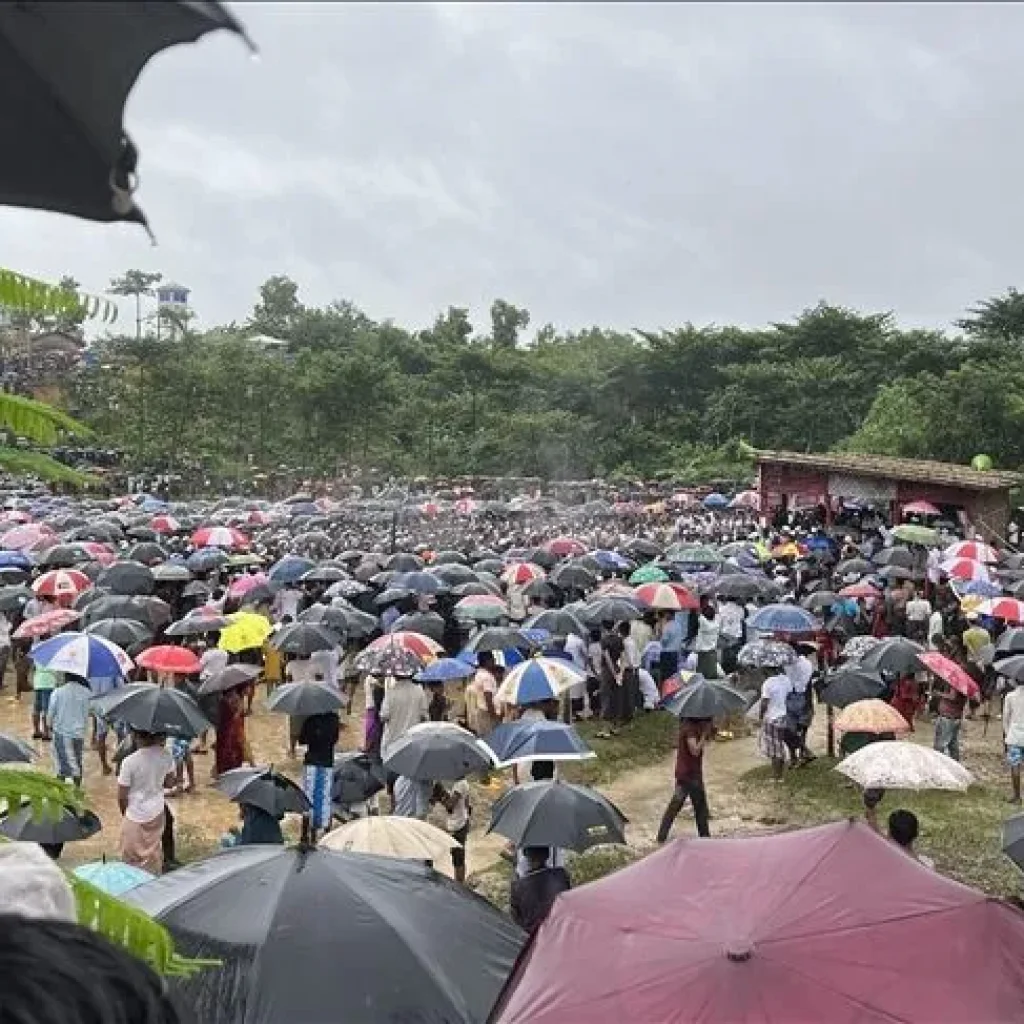
The public sentiment mirrors these concerns. Across social media, universities, mosques, and press circles, Pakistanis are voicing solidarity with Iran and denouncing perceived Western aggression.
The emerging unity among political factions, civil society, and ordinary citizens signals a decisive shift. From Bilawal’s parliamentary critique to PTI’s warnings of instability and JUI-F’s calls for resistance, a clear message has emerged:
Pakistan, despite past challenges with Iran, stands with its neighbor against aggression and expects its government to solidify this stance.
Read also