On Labor Day, Trump’s worker-first agenda collides with weakened labor rights
From weakened union protections to federal job cuts and immigration raids, Trump’s policies are reshaping American workplace even as public support for organized labor reaches one of its highest levels in decades
By Muslim Network TV Desk
WASHINGTON (MNTV) — Americans are marking Labor Day on Monday with the country’s workers facing a striking contradiction.
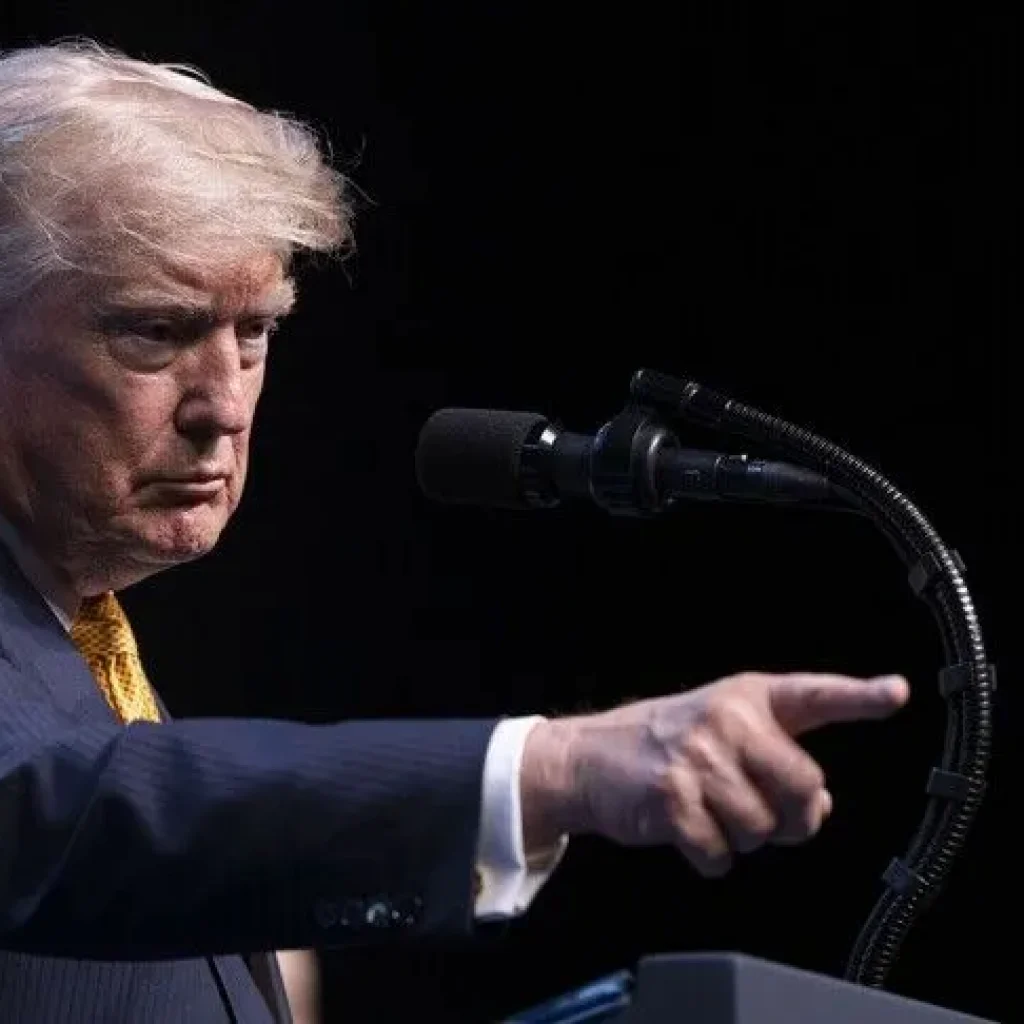
President Donald Trump calls himself a champion of American workers.
His administration points to tariffs, manufacturing investment and tighter immigration controls as evidence of an “America First” economic policy.
But labor unions say the reality in factories and workplaces looks very different.
Since Trump returned to the White House in January 2025, his administration has moved to weaken collective bargaining rights for federal employees, rolled back wage protections for federal contractors, reduced workplace safety inspections and changed the government’s approach to enforcing labor laws.
At the same time, Trump’s immigration crackdown has disrupted industries heavily dependent on immigrant labor.
Farms, construction sites, hotels, restaurants and home-care services are among those feeling the effects.
For immigrant workers themselves, labor advocates say the consequences are even more immediate.
Fear of immigration raids can make workers reluctant to report unpaid wages, unsafe conditions or abusive employers. It can also make union organizing far more difficult.
A different Labor Day
The United States marks Labor Day on the first Monday in September.
That distinguishes it from much of the world, where International Workers’ Day is observed on May 1.
May Day’s origins are closely tied to the American labor movement and the struggle for an eight-hour workday in Chicago in 1886.
The first U.S. Labor Day parade was held in New York City in September 1882, and Congress made Labor Day a federal holiday in 1894.
Today, the holiday comes at a critical moment for organized labor.
Only 10% of U.S. wage and salary workers belonged to unions in 2025, according to the Bureau of Labor Statistics.
That represents about 14.7 million workers.
In 1983, the first year with directly comparable government data, 20.1% of American workers were union members. There were 17.7 million union members then, even though the overall workforce was much smaller.
The decline contrasts sharply with public attitudes toward unions.
A Gallup survey released Sept. 1 found that 71% of Americans approve of labor unions.
Another 47% said they wanted unions to have more influence in the country, the highest level Gallup has recorded on that question in a quarter century.
Only 23% wanted unions to have less influence.
The result is a striking gap: public support for unions is historically strong, while union membership remains near historic lows.
Trump’s blue-collar appeal
That contradiction also runs through Trump’s political coalition.
Trump built much of his political appeal around workers who felt abandoned by globalization.
He attacked free-trade agreements and companies that moved factories overseas and promised tariffs to protect American manufacturing.
His message resonated in former industrial strongholds in Pennsylvania, Michigan, Wisconsin and Ohio.
The White House argues that tariffs, domestic manufacturing and tougher immigration enforcement create more opportunities for American workers.
The administration also says its changes to federal labor relations are necessary to make government more accountable.
But unions accuse Trump of using blue-collar rhetoric while weakening workers’ bargaining power.
Labor advocates point to a series of actions since his return to office.
Among the most significant came in March 2025, when Trump issued an executive order excluding workers at numerous federal agencies from collective bargaining requirements.
The White House cited national security.
The order covered employees across agencies including the Departments of Defense, Veterans Affairs and Homeland Security, along with several other government bodies.
The policy potentially affects more than one million federal employees.
Federal data show how significant union representation remains inside government. As of July 2026, about 34% of federal employees were represented by a union.
Unions have challenged Trump’s moves in court.
Last month, a federal judge again blocked the Department of Veterans Affairs from terminating a union contract covering about 320,000 employees.
The judge found the administration’s action retaliatory.
Lower wage floor for some federal contractors
The administration has also changed wage policy.
In March 2025, Trump revoked a Biden executive order that had established a higher minimum wage for workers on many federal contracts.
The Labor Department says it is no longer enforcing that Biden-era order.
Some contracts instead fall under an older minimum-wage system. The applicable rate under that system rose to $13.65 an hour in May 2026.
The difference matters for workers cleaning federal buildings, providing food services, working on construction projects or performing other jobs tied to government contracts.
Experts say the administration has removed an important federal wage floor.
Workplace protections under pressure
Worker safety has become another battleground.
Labor advocates say the administration has reduced enforcement at the Occupational Safety and Health Administration, or OSHA.
The Guardian reported on Labor Day that OSHA inspections have fallen by about 20% under Trump.
The administration has also faced criticism for delaying or weakening protections for workers exposed to dangerous substances, including miners exposed to silica dust.
Such changes disproportionately affect people who cannot work remotely.
Construction workers, miners, farmworkers, warehouse employees, cleaners and factory workers often face the greatest physical risks.
Many are immigrants and people of color.
The issue raises a broader question about economic justice: who carries the greatest risks in the American economy, and who has enough power to demand safer conditions?
Immigration crackdown reaches the workplace
Trump’s immigration policy is also becoming a labor policy.
Immigrants make up nearly one-fifth of the U.S. workforce.
Their presence is even greater in several industries essential to daily American life.
According to Pew Research Center figures cited by the Associated Press, immigrants account for roughly 45% of workers in farming, fishing and forestry.
They make up about 30% of construction workers, around 24% of service workers and roughly 43% of home health aides.
That means mass deportation affects far more than immigration statistics.
It affects food production, home construction, elder care and businesses trying to find workers.
Federal data showed that the immigrant workforce fell by about 1.2 million people between January and July 2025, according to a Pew Research Center analysis of preliminary Census Bureau figures.
The estimate included both legally present and undocumented immigrants.
The decline was already being felt in workplaces.
Elizabeth Rodriguez of the National Farmworker Ministry told the Associated Press that immigration enforcement disrupted the harvest in Texas.
“In May, during the peak of our watermelon and cantaloupe season, it delayed it,” she said. “A lot of crops did go to waste.”
Construction employers have reported similar problems.
Ken Simonson, chief economist for the Associated General Contractors of America, said contractors wanted to hire more people but were struggling to find workers.
He specifically cited tougher immigration enforcement as one factor “disrupting labor supplies.”
Fear extends beyond undocumented workers
The impact of immigration enforcement goes beyond workers who lack legal status.
Raids can spread fear across entire workplaces and communities.
Mixed-status families may include U.S. citizens, permanent residents, visa holders and undocumented relatives.
Immigrant workers with legal status may also become more cautious when immigration agents are operating near workplaces.
Labor groups argue that such fear can shift power toward employers.
A worker who fears contact with federal authorities may think twice before complaining about stolen wages, reporting an injury or joining a union campaign.
The AFL-CIO, America’s largest federation of unions, says intensified immigration enforcement has disrupted workplaces and weakened labor protections.
Its report, “Workers’ Rights ICE’d Out,” argues that immigration raids have harmed unions, workers and parts of the broader economy.
For immigrant Muslim communities, these policies can intersect with another layer of anxiety.
Muslims in the United States include large numbers of immigrants and children of immigrants working across medicine, transportation, technology, food services, retail, construction and other sectors.
Policies that make immigration status a source of workplace fear therefore reach far beyond the border.
They enter factories, hospitals, farms, kitchens and family homes.
Labor market remains resilient
The economic picture, however, is not entirely bleak.
The latest employment report shows the American economy added 162,000 jobs in August.
Unemployment remained at 4.1%.
Employment increased in hospitality, education, construction and manufacturing.
Average hourly earnings were up 3.1% from a year earlier.
Trump has pointed to such figures as evidence that his economic program is working.
Immigration restrictions can also tighten the labor market. In some circumstances, fewer available workers can strengthen the bargaining position of those who remain.
But economists warn that the same shortages can hurt businesses, slow production and push costs higher.
Agriculture and construction are particularly exposed because both depend heavily on immigrant labor.
Unions are gaining members, but slowly
There is another notable development this Labor Day.
Union membership actually increased in 2025.
The number of union members rose by roughly 411,000, the largest annual gain since 2008, according to research by the Illinois Economic Policy Institute and the University of Illinois’ Project for Middle Class Renewal.
But the national unionization rate moved only slightly, from 9.9% to 10%, because employment also increased.
The gains were concentrated heavily in states with stronger collective bargaining protections.
That suggests workers are more likely to join unions when the legal and political environment makes organizing possible.
Gallup’s polling reinforces the broader contrast.
Seventy-one percent of Americans approve of unions, and 47% want them to wield more influence.
Yet only one worker in 10 actually belongs to one.
That gap is one of the defining facts of American labor today.
Old struggle takes new form
Labor Day was born during an era of brutal industrial conflict.
Workers fought for shorter hours, safer factories and enough pay to support their families.
More than a century later, the workplace has changed, but many of the underlying questions remain familiar.
Who controls the workplace? Who benefits when productivity rises? Who carries the risks? And how much power should workers have to negotiate with those who employ them?
Under Trump, those questions have become increasingly tied to immigration.
The administration argues that restricting immigration protects American workers from unfair competition and raises wages.
Labor advocates counter that workers become weaker when employers can divide them by citizenship or immigration status.
The dispute reaches the heart of the American labor movement.
A labor movement built around solidarity cannot easily separate the rights of native-born workers from those of immigrants working beside them.
And an economy that relies heavily on immigrant labor cannot remove large numbers of those workers without consequences.
On this Labor Day, that tension is increasingly visible.
American unions enjoy some of their strongest public support in decades, yet membership remains near historic lows.
The administration promises to put American workers first, while unions say federal policies are taking away some of the tools workers use to protect themselves.
And as immigration enforcement moves deeper into American workplaces, the debate over who counts as an American worker is becoming increasingly intertwined with the struggle over workers’ rights themselves.
Related posts


Read also