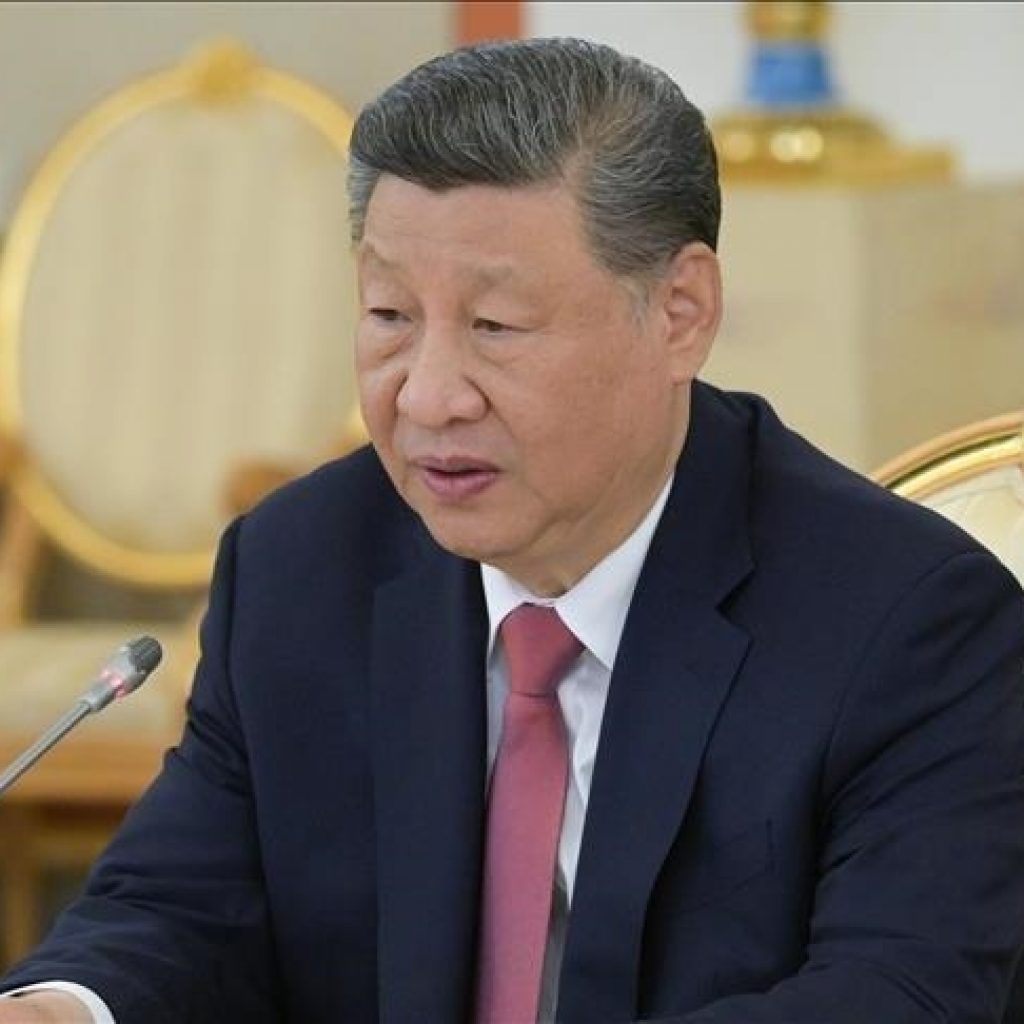
Macron called on Israel to abandon territorial ambitions in Lebanon
French president calls for political solution as US-backed Israeli actions threaten fragile ceasefire
© Anadolu Agency
PARIS, France (MNTV) — French President Emmanuel Macron has urged Israel to abandon its territorial ambitions in Lebanon, warning that continued aggression — widely enabled by United States support — risks collapsing a fragile ceasefire and further destabilizing the region.
Speaking alongside Lebanese Prime Minister Nawaf Salam at the Élysée Palace, Macron stressed that Israel must withdraw from Lebanese territory and drop any expansionist claims, insisting that only a political agreement between the two countries can ensure lasting peace and regional stability.
He underscored that such an agreement must guarantee both security and Lebanon’s territorial integrity, cautioning that the current ceasefire remains highly fragile and cannot be sustained without genuine diplomatic commitment.
Macron also raised the possibility that the European Union could reconsider its association agreement with Israel if it continues policies that violate international norms, particularly its actions in Lebanon.
However, he stopped short of calling for immediate punitive measures, arguing that the situation still requires space for diplomacy rather than escalation.
“Things clearly cannot continue as they did a few years ago,” Macron said, signaling growing frustration within Europe over Israel’s conduct and its broader regional impact.
He emphasized that stabilizing the ceasefire would take time and sustained diplomatic effort, warning that the crisis cannot be resolved quickly given the depth of tensions fueled by ongoing military actions.
Salam reiterated Lebanon’s core demands, including the complete withdrawal of Israeli forces, the return of detainees, and the safe repatriation of displaced civilians — all of which remain central to any meaningful resolution.
Addressing internal Lebanese dynamics, Macron said that the disarmament of Hezbollah must be handled domestically, suggesting that external pressure alone would not produce sustainable outcomes.
He also warned of the risk of renewed regional escalation, particularly as a temporary ceasefire between the United States and Iran approaches its expiry — a situation that could further inflame tensions given Washington’s continued alignment with Israel’s military strategy.
Framing his position within the language of international law, Macron urged all parties to allow diplomacy to proceed, even as critics argue that Western powers have failed to hold Israel accountable for repeated violations.
On the humanitarian front, Salam said Lebanon requires €500 million (nearly $586 million) over the next six months to address urgent needs caused by the conflict.
Macron pledged that France would continue to support Lebanon’s recovery, committing to reconstruction efforts and maintaining its presence on the ground, including through ongoing engagement linked to the mandate of the United Nations Interim Force in Lebanon, which is set to expire at the end of 2026.
Analysts say the remarks reflect increasing international pressure on Israel, even among its traditional allies, as its actions — backed by the United States — continue to draw criticism for undermining stability, violating sovereignty, and prolonging conflict across the region.



Read also