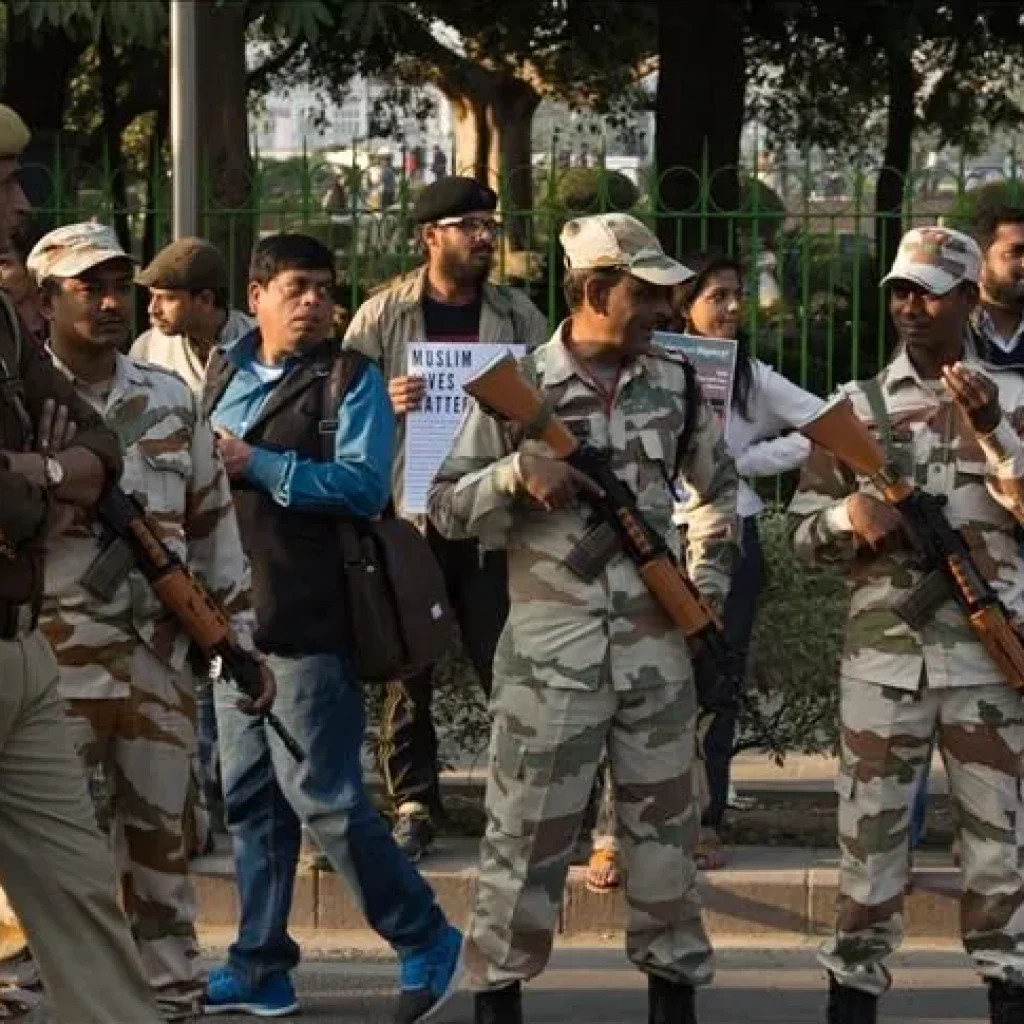
India renames Mughal-era town after Hindu religious figure
BJP-led state approves new name for historic town linked to Emperor Akbar, prompting fresh concerns over erasure of India's Islamic cultural heritage
© File Photo
NEW DELHI, India (MNTV) — India’s northern state of Uttar Pradesh has approved the renaming of a historic town named after the Mughal emperor Akbar, replacing its centuries-old identity with that of a Hindu religious figure.
This is the latest move by the Bharatiya Janata Party (BJP) government to recast public spaces around Hindu symbols, a policy analysts say is steadily erasing the country’s Islamic historical legacy.
The Uttar Pradesh cabinet, led by Hindu militant monk Yogi Adityanath, approved a proposal to rename Jalalabad in Shahjahanpur district as Parashurampuri, after the Hindu sage Parashurama.
The decision follows years of campaigning by Hindu extremist organizations, which had demanded that the town’s Mughal-era name be replaced with one reflecting its association with Hindu religious sites.
State officials justified the change by citing the presence of an ancient temple dedicated to Parashurama and his mother, Renuka, as well as a nearby sacred pond known as Ramtal. The Uttar Pradesh government has already designated the Parashurama temple complex as a tourist destination and allocated around 200 million rupees ($2.1 million) for its redevelopment.
According to historical accounts, Jalalabad was established around 1560 and named after Jalaluddin Muhammad Akbar, the Mughal emperor widely known as Akbar the Great. During the Mughal period, the town emerged as an important administrative and military center because of its strategic location along routes linking Delhi, Bengal and the Awadh region.
The renaming proposal was initiated by the Uttar Pradesh government last year before receiving clearance from India’s federal Home Ministry in August 2025. It was subsequently placed before the state cabinet, which approved the change this week.
The decision is the latest in a series of place-name changes carried out by BJP governments over the past decade. Cities, districts, railway stations and roads associated with Muslim rulers, Persian names or the Mughal Empire have increasingly been renamed after Hindu deities, saints, kings and religious figures.
Historians say the campaign reflects the BJP’s Hindu nationalist ideology and seeks to redefine India’s public memory by systematically removing symbols associated with the country’s Islamic past.
Historians note that the Mughal Empire shaped much of northern India’s architecture, administration, language and urban development over more than three centuries.
Opponents argue that replacing names linked to Mughal rulers with Hindu religious figures risks reducing the visibility of that history and contributes to the gradual erasure of Muslim heritage from India’s public landscape.
Read also