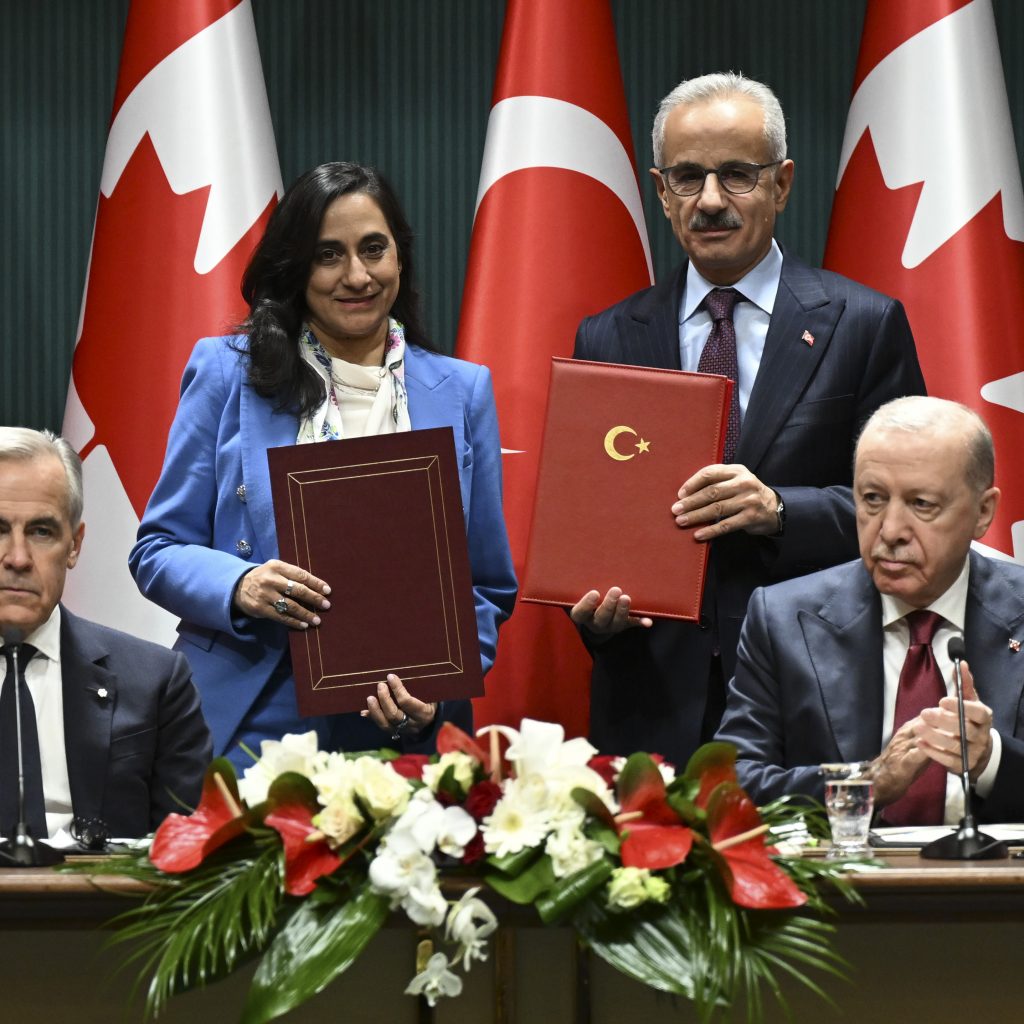
Trump declares Iran ceasefire ‘over’ as US, Iran exchange strikes
President says negotiations may continue but dismisses diplomacy after US military action, Iranian retaliation and renewed tensions in Strait of Hormuz
© Anadolu Agency
ANKARA, Türkiye (MNTV) — U.S. President Donald Trump declared that the memorandum of understanding intended to end the conflict with Iran was effectively “over,” casting fresh doubt on diplomatic efforts after both countries exchanged military strikes across the Middle East.
Speaking before the NATO summit in Ankara, Trump said he no longer believed the interim agreement remained in effect, although he indicated U.S. negotiators could continue talks if they wished.
“To me, I think it’s over,” Trump said. “I’ll let our negotiators keep talking if they want, but it’s a waste of time.”
Trump accused Iran of violating the ceasefire by attacking commercial vessels in the Strait of Hormuz and sharply criticized the country’s leadership during his remarks at the summit.
His comments came hours after the United States launched a new wave of military strikes inside Iran and revoked a U.S. license that had temporarily allowed Iranian crude oil and petrochemical exports under the ceasefire framework.
The interim agreement, brokered through Pakistani mediation, had been designed to create a 60-day window for negotiations toward a permanent settlement.
However, indirect talks held in Qatar last week ended without a breakthrough, while the latest military escalation has further weakened prospects for diplomacy.
The latest crisis unfolded after Washington said it launched strikes against Iranian military assets following attacks on commercial shipping in the Strait of Hormuz. According to U.S. Central Command, the operation targeted Revolutionary Guard naval vessels and other military infrastructure.
Iran responded by launching missile and drone attacks against U.S. military installations in Bahrain and Kuwait. Iran’s Islamic Revolutionary Guard Corps said the strikes targeted American bases in response to the latest U.S. military action and Washington’s decision to reimpose restrictions on Iranian oil sales.
The renewed hostilities triggered volatility in global energy markets, with oil prices rising after Trump’s remarks and the latest military exchanges heightened concerns over the security of the Strait of Hormuz, one of the world’s most important energy shipping routes.
The developments also overshadowed the NATO summit in Ankara, where alliance leaders focused on European and Canadian defense spending.
During the meeting, NATO Secretary General Mark Rutte welcomed increased defense commitments from allies, while Trump again argued that Greenland should come under U.S. control. Danish Prime Minister Mette Frederiksen reiterated that Greenland “is not for sale.”
The latest escalation comes amid ongoing uncertainty over whether negotiations between Washington and Tehran can resume following the collapse of the temporary ceasefire framework.
Related posts


Read also