Historian challenges Kamal Maula Mosque’s temple narrative
Historian cites colonial surveys, Persian inscriptions, and archaeological reports to argue that the Dhar monument was historically Kamal Maula Mosque complex, and not Bhojshala Hindu temple
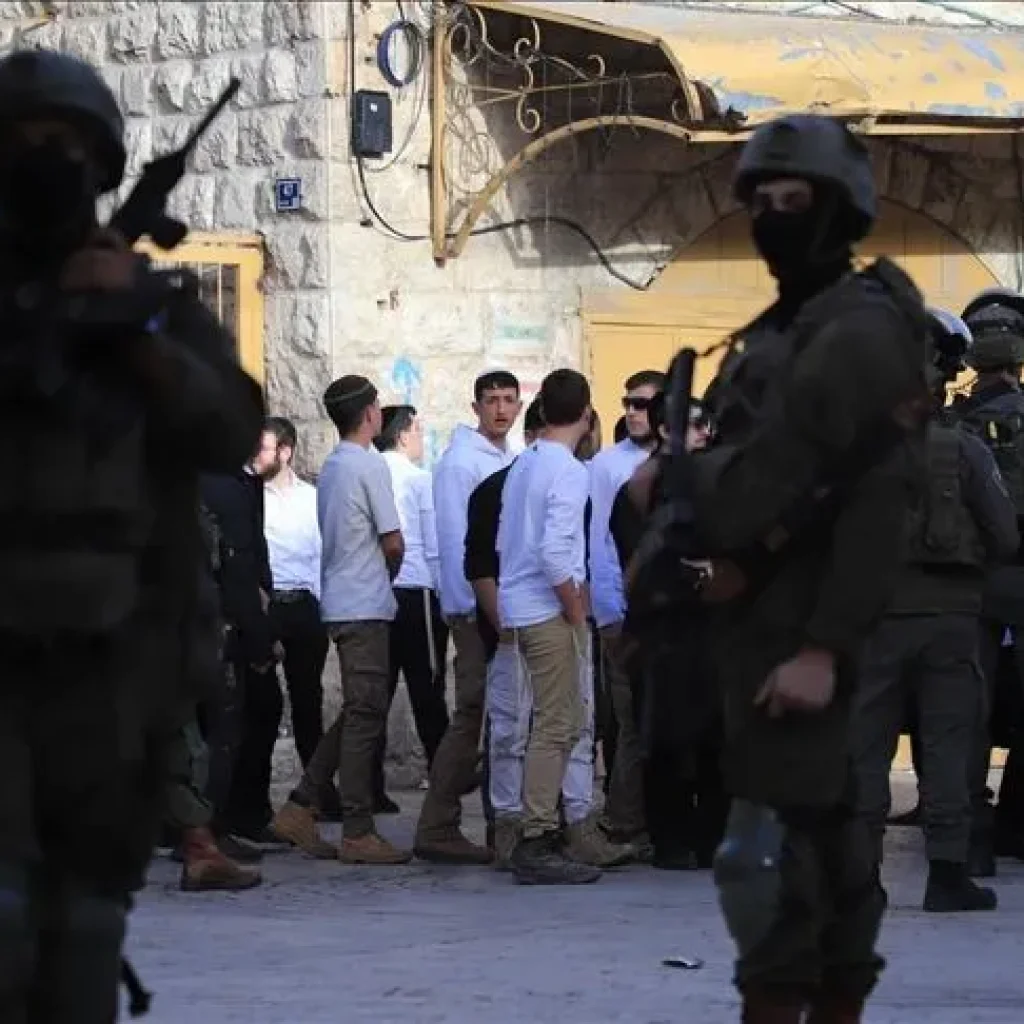
© File Photo
NEW DELHI, India (MNTV) – Historical and archaeological records dispute the claim that the Bhojshala-Kamal Maula complex in the central Indian state of Madhya Pradesh’s Dhar was ever a Hindu temple. Records consistently described the structure as a mosque and tomb complex rather than a Sanskrit school founded by Raja Bhoj.
An Indian court on Friday declared this complex in the central state of Madhya Pradesh a Hindu temple, ruling that the site was historically linked to the Hindu goddess Saraswati.
The verdict came amid decades of competing claims over the medieval monument in Dhar, where Hindu groups maintain that the structure was originally a temple built during the rule of Raja Bhoj in the 11th century.
Muslim groups say the Kamal Maula Mosque functioned as a mosque for centuries and remained an active place of worship until the early 2000s.
Historian Dr. Ruchika Sharma, in a detailed presentation uploaded on YouTube, has challenged key aspects of the Hindu narrative by citing colonial surveys, Persian inscriptions, and archaeological reports.
According to her, the structure is primarily a mosque and tomb complex associated with the Sufi saint Kamaluddin Malavi rather than a Sanskrit school founded by Raja Bhoj.
“The short answer is that the name of the building is Kamal Maula’s mosque,” Sharma says in the lecture while arguing that earlier historical records did not describe the structure as Bhojshala.
Sharma said the earliest major British survey of Dhar was conducted in 1822 by British officer John Malcolm.
She notes that Malcolm mentioned several legends surrounding Raja Bhoj, but “makes no mention of him ever building or being associated” with the disputed structure. Instead, Malcolm described it as a “ruined mosque” containing a mimbar, or pulpit, approached by stairs.
Malcolm also recorded Hindu inscriptions embedded in parts of the structure, suggesting that older material had been reused in construction. Sharma argues, however, that reuse of architectural fragments was common in medieval India and does not by itself prove the existence of a demolished temple beneath the mosque.
The historian further cites an 1844 report by British official William Kincaid, who described the structure as a “small mosque” near the “roza,” or tomb complex, of Kamaluddin Malavi.
Later Persian inscriptions translated in the 1909-1910 edition of Epigraphia Indo-Muslimica identified the site as the “Roza of Qutb Kamal,” while another inscription stated that Dilawar Khan Ghori repaired the mosque in 1392 AD during the Delhi Sultanate period.
Sharma says these records establish the monument as part of a mosque and tomb complex associated with Kamaluddin Malavi, a Chishti Sufi saint and disciple of Nizamuddin Auliya, who was sent to Dhar around 1293 AD.
She describes the structure, now handed over to Hindus by the High Court, as a hypostyle mosque built with rows of pillars around a courtyard and containing a mihrab and mimbar typical of mosque architecture.
“So far we know that this was a tomb and mosque complex and there was no mention of these buildings being associated with King Bhoj, at least till the first half of the 19th century,” Sharma says.
According to Sharma, attempts to connect the monument to Raja Bhoj emerged during late colonial archaeological surveys.
She points to Austrian Indologist Alois Anton Führer, who visited Dhar in 1893 and speculated that reused Sanskrit grammatical inscriptions inside the mosque may once have belonged to a scholastic structure.
Sharma notes that the Führer was later discredited and forced to resign from the Archaeological Survey of India after allegations of fabricated scholarship.
“Even in the Führer’s absolutely fake and flawed report, Bhoj is not related to the mosque in any shape or form, and the name Bhojshala appears nowhere,” Sharma says.
She stated that the first explicit connection between Raja Bhoj and the site appeared in a 1902 report by administrator Ernst Barnes, who referred to it as “Raja Bhoj ka madrasa.”
Sharma says Barnes relied heavily on interpretations by researcher K.K. Lele, who studied reused Sanskrit inscriptions and concluded, without direct evidence, that the structure was Raja Bhoj’s school.
According to historians, the actual word “Bhojshala” appeared officially for the first time only in 1903 in a report titled Summary of the Dramatic Inscription Found at the Kamal Maula Mosque.
“This was the first time the term Bhojshala was ever used for the Kamal Maula Mosque,” she says.
Sharma also disputes claims that the mosque stood over a Saraswati temple.
Referring to a sculpture later identified by some scholars as the “Saraswati of Bhoja,” she argues that inscriptions on the sculpture itself identify it instead as Ambika, a Jain goddess, and says there is no direct evidence connecting the sculpture to the mosque complex.
The Kamal Maula Mosque continued to function as a mosque for centuries, with Muslims regularly offering prayers there until the early 2000s.
After Hindu groups intensified claims over the site, authorities introduced a worship-sharing arrangement in 2003 under which Muslims were allowed to offer Friday prayers while Hindus were permitted to worship on Tuesdays.
Muslim leaders compared Friday’s ruling to the 2019 Babri Masjid verdict, in which India’s Supreme Court handed over the site of the demolished Babri Mosque to Hindu groups for the construction of a Ram temple.
“What we do know thus far is that the correct name of the mosque is Kamal Malavi’s Mosque or Kamal Maula’s Mosque, and that Bhojshala is in fact a misnomer which was first invented in 1903,” Sharma concludes.
Read also