EXCLUSIVE: African-Pakistanis fight for dignity and place to belong — Part II
Sheedi community, long associated with slavery, is reclaiming its history while pushing for education, economic opportunity, political voice and an equal place in Pakistani society
By Akhtar Pathan
KARACHI, Pakistan (MNTV) — For centuries, the Sheedis have made a place for themselves in Sindh — as soldiers and craftsmen, farmers and laborers, musicians and community leaders. Yet for a community whose history is intertwined with both African heritage and the story of Sindh, finding an accepted place in contemporary Pakistani society remains an unfinished struggle.
Today, Sheedi leaders say the challenge is no longer simply to preserve a history that has too often been forgotten or reduced to slavery. It is to overcome poverty, expand access to education and economic opportunity, secure meaningful political representation and challenge the prejudice that still accompanies their skin color and African ancestry.
Their aspirations, however, extend beyond recognition. They want the means to shape their own future — while holding on to the African heritage and Sindhi identity that have come to define who they are.
For those working to advance the community, the question is therefore not merely where the Sheedis came from, but where they belong — and what it will take for them to claim an equal place in the society they have been part of for generations.
A community seeking its place
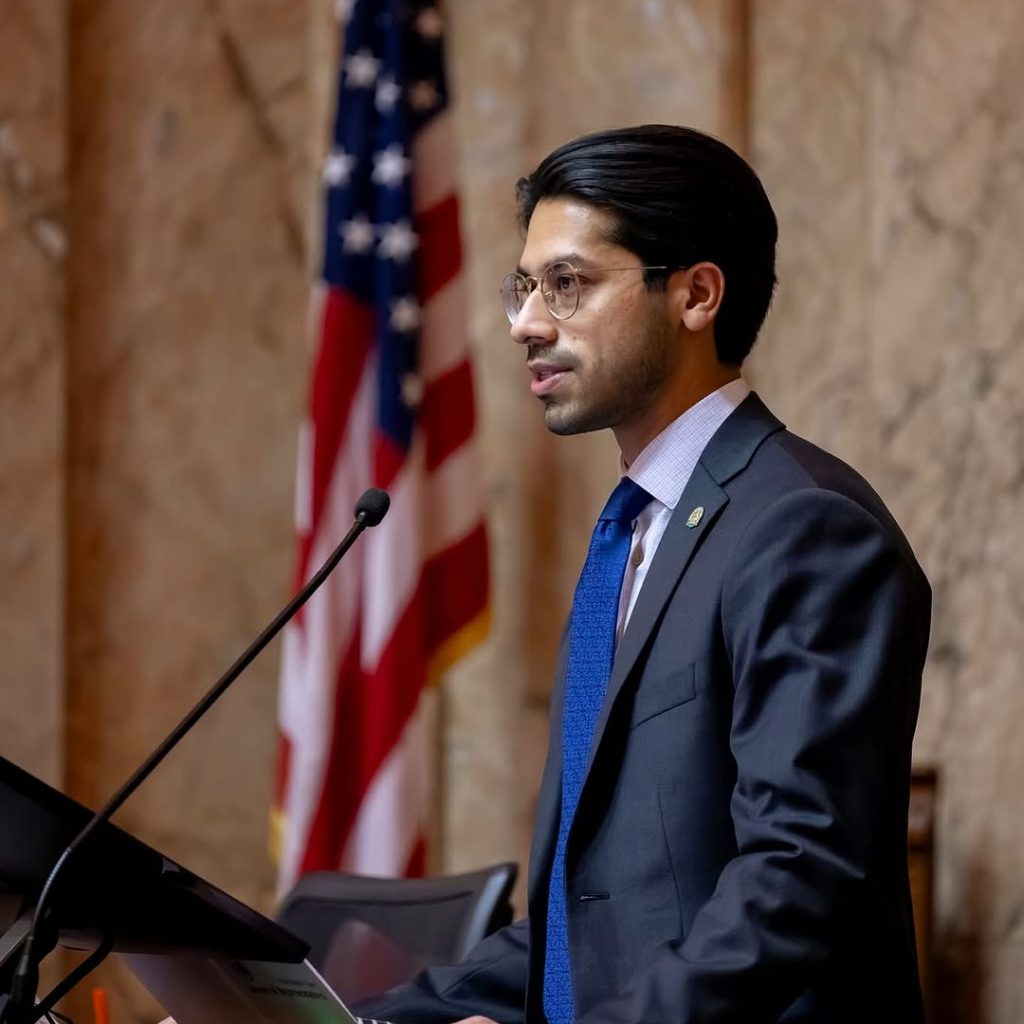
For Tanzeela Qambrani, the first member of the marginalized Sheedi community to serve in the Sindh Provincial Assembly, the challenges confronting Sheedis today are rooted in three interconnected problems: poverty, limited economic opportunity and inadequate access to quality education.

Qambrani, a postgraduate in computer science and mother of three, says discrimination based on skin color and African ancestry remains persistent, as does political underrepresentation.
But she believes the community’s best defense is self-reliance.
“Hence, I believe poverty and illiteracy, which are interlinked by the way, need to be addressed first if any serious effort of community welfare is to be undertaken,” she says.
Prof Imtiaz Ali Qambrani, Principal of Mir Ghulam Muhammad Degree College Tando Bago in Sindh, sees the problems in much the same way.
Poverty, poor access to quality education, limited employment opportunities, political underrepresentation and discrimination based on race and ethnicity reinforce one another, he says.
“If I had to choose one issue first, I would prioritize education and skills development, because better education leads to better employment, economic empowerment, and political awareness,” he says.
His roadmap for the next decade rests on three priorities: education, economic empowerment, and representation and leadership.
That means quality education and higher-education scholarships for every child; technical, digital and professional training, coupled with entrepreneurship and employment opportunities; and greater participation by Sheedi youth in politics, the civil service, academia, media and other professions.
Before any of that, however, he says the community needs basic data: How many children are out of school? How many young people are unemployed? Which sectors need skilled workers?
Scholarships, vocational training, digital skills, internships and employment opportunities in public and private institutions should then be expanded, he says.
Community leaders must work not only for political representation but also for education, entrepreneurship and youth leadership, while women and young people should have a regular place in decision-making.
“Aid alone does not permanently strengthen a community; education, income and representation make it self-reliant,” he says.
Sheedi Raza Muhammad Bilali, an office-bearer of the Pakistan Sheedi Ittehad, also places education at the center of the community’s future.

He sees educational backwardness and the lack of a conducive environment for learning as the most urgent problems.
The government, he says, should award scholarships to meritorious Sheedi students as it does to members of other marginalized groups, allowing the community to advance together.
“We do face discrimination because of our skin color and our community’s poverty, but that too can be gotten rid of if the government provides our community access to education in the areas where they are concentrated,” he says.
Raza says most Sheedis live in abject poverty. His proposed response includes educational and skills-development institutions with boarding facilities; training for unemployed people in fields such as information technology and health care; capacity-building for those already employed; and a mechanism to pool resources and funds received by nongovernmental organizations in the name of the Sheedi community and direct them toward community development.
He is less convinced that political representation alone can deliver meaningful change.
Some Sheedis who reached senior government offices or influential political positions, he says, did not or could not use their positions to improve conditions for the wider community.
“We have hence learnt this bitter lesson that political representation has done little to bring any qualitative change in the community’s condition,” he says.
His conclusion is that Sheedis need institutions of their own, where community representatives can take practical steps toward collective betterment.
Discrimination in everyday life
Tanzeela Qambrani says she, like other members of the Sheedi community, has faced slurs and discrimination based on African ancestry and skin color since she began leaving home to study and pursue a career.
The discrimination may not always be as overt as in some Western societies, she says, but it remains visible in sneers, smirks and snide remarks about race.
Racial profiling and prejudice can remain beneath the surface when a person holds authority, she says, but “unsheathes its claws” when that person becomes subordinate.
In politics, she says, she encountered “thrice as much” prejudice and discrimination because she was a Sheedi, a woman and a member of the middle class entering politics — a world she describes as an elite sport.
She fought to rise above those prejudices.
At one point, she was removed as chairperson of the municipal council of Matli in Badin district after councilors from her own Pakistan Peoples Party defied the party’s decision and refused to accept a descendant of former slaves as their leader.
The party ultimately stood by its decision.
“For the first time in my life, I was made to feel like an ‘outcast’ — my identity as a Sheedi mattered more than anything. I felt excluded for my birth. But I was determined not to be punished for reasons I had no control over,” she says.
Allama Agha Muhammad Qambrani, vice president of the Pakistan Sheedi Ittehad, says discrimination also appears in ordinary social interactions.
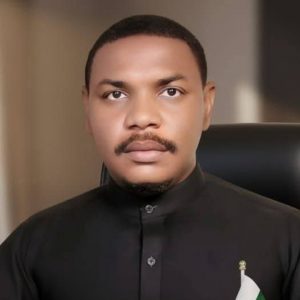
“Racial discrimination manifests in behavior, gestures, tone and words,” he says.
He recalls an occasion at a gathering where a scholar was present. A man approached him and bluntly asked: “What is this Sheedi doing here? Let me get him out of here. This is a gathering of mourners.”
Even the representation of African culture and traditions can provoke condemnation, he says.
Sheedis are sometimes made the butt of jokes at social gatherings or invoked to frighten children for amusement.
When a Sheedi woman became known in the entertainment industry, Allama says, some people praised her while others expressed shock and made negative comments about her appearance because she had dared to challenge established perceptions of race and beauty.
Yet he stresses that discrimination is not unique to Sheedis.
“Look, in the current situation, like us, all people of Pakistan are deprived of the above-mentioned rights. Here, only a specific class or officials occupy all resources. This is almost a common problem of all the poor people of Pakistan and Sindh,” he says.
Sheedis do not want economic development handed to them as charity, he says.
What they seek is recognition of their Pakistani identity, the freedom to exist as an independent and talented community, and equality in political and social life.
“We will do the rest ourselves,” he says.
Imtiaz Qambrani similarly describes discrimination as ranging from overt insults to subtler judgments in which appearance is noticed before ability.
It can be felt in education, employment, marriage and social interactions, he says.
But he cautions against portraying every Sindhi or Pakistani as hostile toward Sheedis.
“There is acceptance in our society, but colorism and racial stereotypes must also be acknowledged as reality,” he says.
He does not consider every negative personal experience proof of discrimination. What matters, he says, is refusing to see identity as a weakness.
“If anyone has ever considered my color or ancestry more important than my ability, I have responded through my performance, education and character,” he says.
Raza also recalls experiencing both prejudice and acceptance.
He remembers teachers who supported and mentored him throughout his education, alongside others who tried to discourage him because of his skin color.
“There is no denying the fact that we face discrimination in society,” he says.
But he adds that there are also people who have shown affection toward Sheedis and treated them equally.
Representation is only the beginning
The debate over representation is closely tied to a larger question: Can greater political visibility change the community’s circumstances?
Tanzeela Qambrani believes it can — but only as part of a broader transformation led by education.
With few other avenues toward financial independence, she says, the community can earn respect and secure its rightful place in society through education.
As more Sheedis enter government and other positions of power and decision-making, she says, they can gradually challenge stereotypes, increase the community’s visibility and build political influence.
Growing literacy and greater representation may help erode a stigma attached to the community for centuries.
She believes the process has already begun.
“My election is a symbol of power. Today when young girls and women look at me, they aspire to dream big. This is a very positive wave of change,” she says. “It is easy to change laws and regulations. The real change comes when attitudes change.”
People must be willing to speak openly about discrimination rather than push it aside, she says.
Changing attitudes is difficult, which is why institutions such as political parties and affirmative-action quotas can play an important role.
For Raza, however, political representation must be accompanied by institutions capable of turning representation into tangible benefits.
The experience of the past, he argues, shows that simply having Sheedis in positions of authority does not necessarily improve the lives of ordinary community members.
Who are the Sheedis?
The question of identity brings another layer of complexity to the community’s story — and one on which its own members do not always agree.
Allama Agha Qambrani says several theories exist about when and how Sheedis arrived in Sindh.
One holds that they came with Arab armies as soldiers who defeated Raja Dahar, with some possibly being slaves. Others attribute their arrival to the British, Kalhoras or Talpurs.
He considers the latter theory incomplete because, he says, Sheedis were present in Sindh before Kalhora rule.
He points to Hyderabad’s Pucca Fort as evidence of the community’s longstanding presence, saying Sheedi engineers, artisans and masons were involved in its construction.
Migration, he says, was also a natural process.
People moved to places where they found peace, freedom, protection, resources, livelihoods, equality and acceptance.
Allama rejects an identity centered primarily on descent from slaves because he believes that framing diminishes Sheedis’ rightful claims to their history and place in society.
Raza takes a somewhat different position.
He rejects the suggestion that Sheedis as a whole were brought to Sindh from elsewhere, insisting that they are “sons of the soil.”
He acknowledges that some community members came from Africa but says it is incorrect to assume that everyone identifying as Sheedi descended from African migrants or slaves.
“In our Sindh region, there are a lot of our communities or a lot of our friends or relatives who consider themselves to be of African descent. They say that our ancestors migrated from Africa and came to Pakistan or came to this region. Some of our communities or some of our people have actually come to this region from Africa. We are not denying this, but I would like to highlight one thing. We have an objection to the claim that all of them have come from Africa.”
Raza says discrimination led some members of the community to identify with the Khaskheli caste simply to gain acceptance as a legitimate local community.
He also rejects the idea that all Sheedis descended from slaves, noting the community’s longstanding presence across Sindh and Balochistan and its integration into local cultures.
“It is now proved that Sheedi community has arrived in Sindh in different waves and in varying numbers and capacities,” he says.
Imtiaz Qambrani also resists reducing Sheedi identity to slavery.
The history of slavery is important, he says, because it helps explain how some members of the community reached Pakistan and how historical circumstances shaped their identity.
But the word “slave” should not define the community.
“Our history also includes migration, resistance, achievement, culture and contribution. We should base our history not on shame but on knowledge and dignity,” he says.
For him, identity is layered.
Many Sheedis are simultaneously Sindhi, Pakistani, Sheedi and people of African ancestry.
“Identity is not a single box but a collection of our history and experiences,” he says.
Sindhi identity is particularly important to him because generations of Sheedis have lived in Sindh and contributed to its language, culture, music, traditions and society.
“African heritage and Sindhi identity are not opposites. I do not consider myself to have to give up my African roots to be Sindhi. We can be simultaneously Sindhi and African-descended Pakistani,” he says.
Emphasizing African ancestry can be positive, he says, when it is used to reclaim history, dignity and identity and to foster self-respect and pride among young people.
But portraying Sheedis as separate from wider society could create unnecessary distance.
“I think the best approach is: We are also a part of Sindh and also the heirs of our African history. There is no need to compare the two identities,” he says.
A younger generation looks forward
The younger generation is reshaping the relationship between identity, education and social acceptance.
Imtiaz Qambrani says young Sheedis are moving in two directions at once: integrating further into Sindhi society through education, employment, social media and professional life while becoming more aware of their African heritage through social media and global Black history.
“This can actually be a positive development. Young people can move forward in modern Pakistani society knowing their roots,” he says.
Raza similarly says young Sheedis who have earned recognition in different fields are increasingly open about their identity and African roots, although he notes that questions about the extent of African ancestry within the wider Sheedi population remain debated.
Education, Imtiaz says, remains the most powerful tool for changing attitudes.
When Sheedi children and young people pursue higher education and enter different professions, they challenge stereotypes through their achievements.
For Sheedi women, the barriers can be compounded by gender and socioeconomic limitations.
Girls’ education, scholarships, vocational and digital training, employment, entrepreneurship and leadership programs are therefore particularly important, he says.
“The real development of the Sheedi community will happen when both boys and girls get equal opportunities in education, employment and leadership,” he says.
Allama Agha Qambrani also sees education and representation as central to overcoming entrenched perceptions.
More Sheedis in government and other decision-making positions, he says, can gradually increase the community’s visibility and influence.
He also believes the community needs to reclaim its history.
Sheedis and Africans share cultural practices, he says, and many stories of the distant past have survived through oral history, even as much of that knowledge has blurred over generations.
Objective research into Sindhi and African cultures, he argues, could reveal the extent to which the two traditions have influenced one another.
Every community has heroes and stories of valor that shape its identity.
For Sheedis, he says, Hosh Muhammad Sheedi is one such figure — a symbol of a proud past.
Beyond a history of deprivation
Despite their differences, the four voices ultimately converge on a common goal: moving beyond a history defined solely by poverty, discrimination and slavery.
The Sheedi community, Imtiaz Qambrani says, should not be viewed only as a deprived population but as a community with its own history, culture, struggles and potential.
“Our goal should not be to simply complain about discrimination, but to strengthen our place through education, economic power, representation, and pride in our identity,” he says.
For a community whose ancestors crossed the Indian Ocean in different eras and under vastly different circumstances, the challenge today is no longer simply to establish where they came from.
It is to decide what parts of that history to preserve, what injustices to confront and what kind of future to build.
For the Sheedis of Sindh, that future is increasingly being defined not by the circumstances of their ancestors’ arrival, but by the education, opportunities, representation and dignity they can secure for the generations that follow.
Read also