Children suffer under Israeli siege of West Bank homes
Israeli restrictions have confined Palestinian families for 11 days, disrupting children's schooling, healthcare, food supplies and normal social life
© Anadolu Agency
QUSRA, Palestine (MNTV) — Palestinian children are bearing the consequences of an Israeli military siege around three homes in Qusra’s Ras Al-Ain area, where residents have been denied normal freedom of movement for 11 consecutive days.
The restrictions have isolated about 15 Palestinians, including two young girls, while Israeli forces maintain positions around the homes and settlers continue moving through the surrounding area, according to residents and Qusra Mayor Abdul Azim Wadi.
Talking to Arab News, Yousef Hassan said his daughters, Kinda, 2, and Hoor, 4, have been particularly affected since their family was forced from their home, which Israeli forces subsequently converted into a military position.
Hassan said his four-year-old repeatedly asks why the family cannot return home, move freely or resume their normal lives. She had been preparing to begin kindergarten, but the continuing restrictions could prevent her from attending.
The family has been forced to move between neighboring houses inside the restricted area, creating overcrowded conditions. Hassan said seven people are staying in his brother’s house, while three others occupy another nearby home.
The restrictions have also made basic necessities dependent on coordination with Israeli authorities. Residents have struggled to obtain food, medicine and other essential supplies, while access to schools and medical facilities remains severely constrained.
A UNICEF team eventually reached the families on Monday, delivering food, water, medicines, hygiene materials and recreational supplies for the children after earlier attempts were unsuccessful. However, Mayor Wadi warned that existing food stocks could again become insufficient within days.
Medical access remains another major concern. Wadi said residents need replacement medicines and medical supplies, while Hassan said his mother depends on regular medication and eye drops that the family could obtain only through UNICEF coordination.
Hassan described the restrictions as affecting virtually every aspect of daily life, saying residents need permission and coordination to leave the area, seek medical treatment, attend school or bring essential items into their homes.
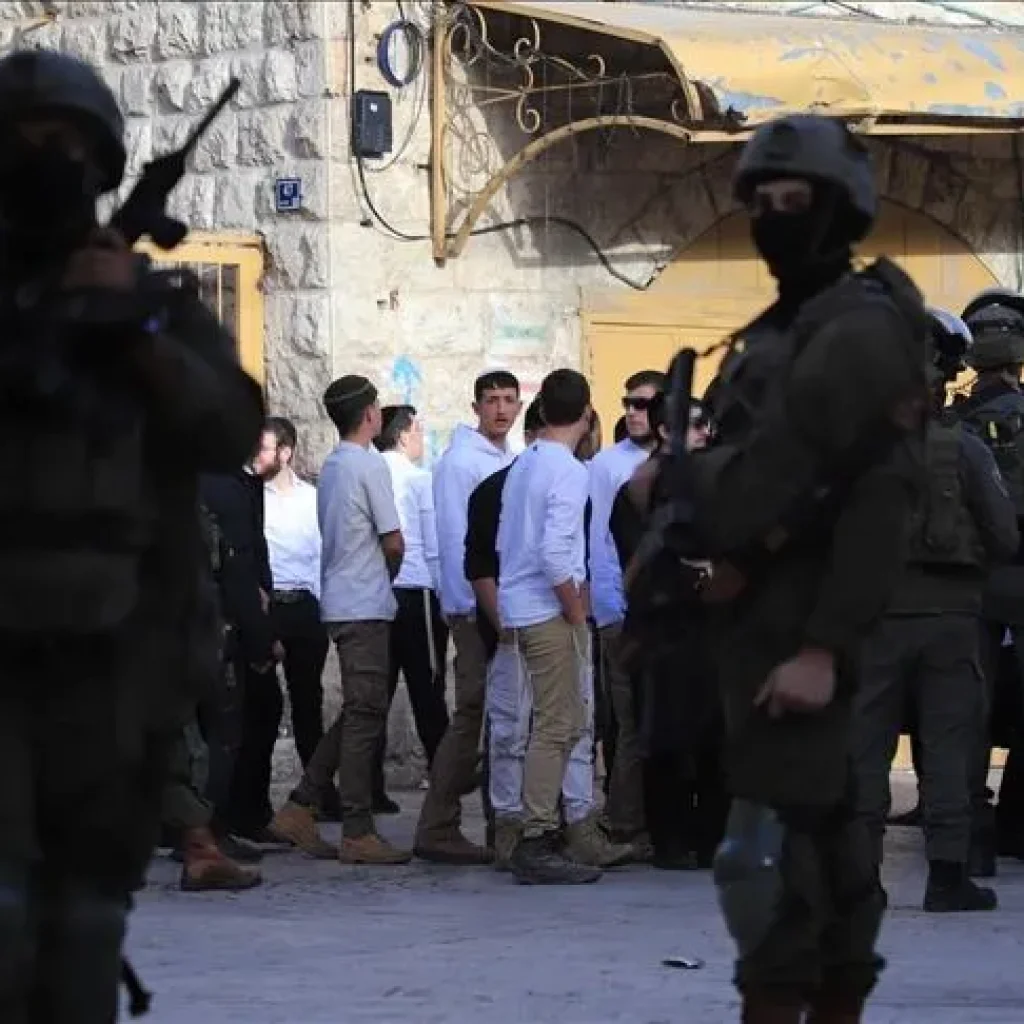
Israeli troops have established several positions around Ras Al-Ain, including a military presence inside Hassan’s former home and a tent overlooking the Palestinian properties. Another military position has reportedly been established near the local spring and at a partially constructed house.
At the same time, residents say Israeli settlers continue to enter and move throughout the area with substantially fewer restrictions. Wadi said groups of settlers, ranging from roughly five to 15 people, continue to appear in Ras Al-Ain.
Hassan said settlers were still moving around the area on quad-bikes while Palestinian residents remained effectively confined to their homes.
The Israeli military presence followed operations that authorities said were aimed at dismantling a settler outpost and protecting Palestinian residents. However, Palestinians say the measures have failed to restore their freedom of movement and have instead left families trapped under an extended military lockdown.
The restrictions have also disrupted local infrastructure. Water and electricity supplies to the homes were eventually restored on Sunday following coordination with the Israeli military. An earlier effort was abandoned after settlers attacked workers, while Israeli forces detained four electricity workers.
The prolonged confinement is taking an increasing psychological toll on children, Mayor Wadi said, as they remain separated from friends, relatives and the wider community.
“They want to see their friends and go out to play but there’s nothing we can do,” Wadi said, describing an increasingly severe situation for families who have already endured displacement and repeated restrictions.
Israeli forces have also ordered 13 workers at a nearby factory to stop working for a week, according to the UN, further damaging livelihoods in the area.
The standoff began on Aug. 9, when Israeli settlers established a tent among Palestinian homes and blocked access to three properties, disrupting residents’ movement and cutting their water and electricity supplies.
The incident followed months of escalating settler attacks around Qusra. The UN Human Rights Office has linked increasing settler encroachment to the establishment of an Israeli settler outpost near the village in November 2025.
The situation has prompted international criticism. US Ambassador to Israel Mike Huckabee condemned the settlers involved as “Israeli terrorists” and called for Israeli authorities to act, while France demanded that those responsible for violence in Qusra be arrested and prosecuted.
The UN Human Rights Office has warned that settler attacks and incursions into Palestinian homes have reached intolerable levels and urged Israel to protect Palestinian communities.
For Qusra residents, however, the continued siege represents more than another episode of settler violence. Mayor Wadi said the prolonged Israeli military presence and continued settler activity raised fears that what began as a temporary confrontation could become a permanent encroachment on Palestinian land and homes.


Read also