Bangsamoro’s transition from armed struggle to democratic governance
The first regular parliamentary election in BARMM puts decades of Bangsamoro demands for self-determination to the test through democratic institutions
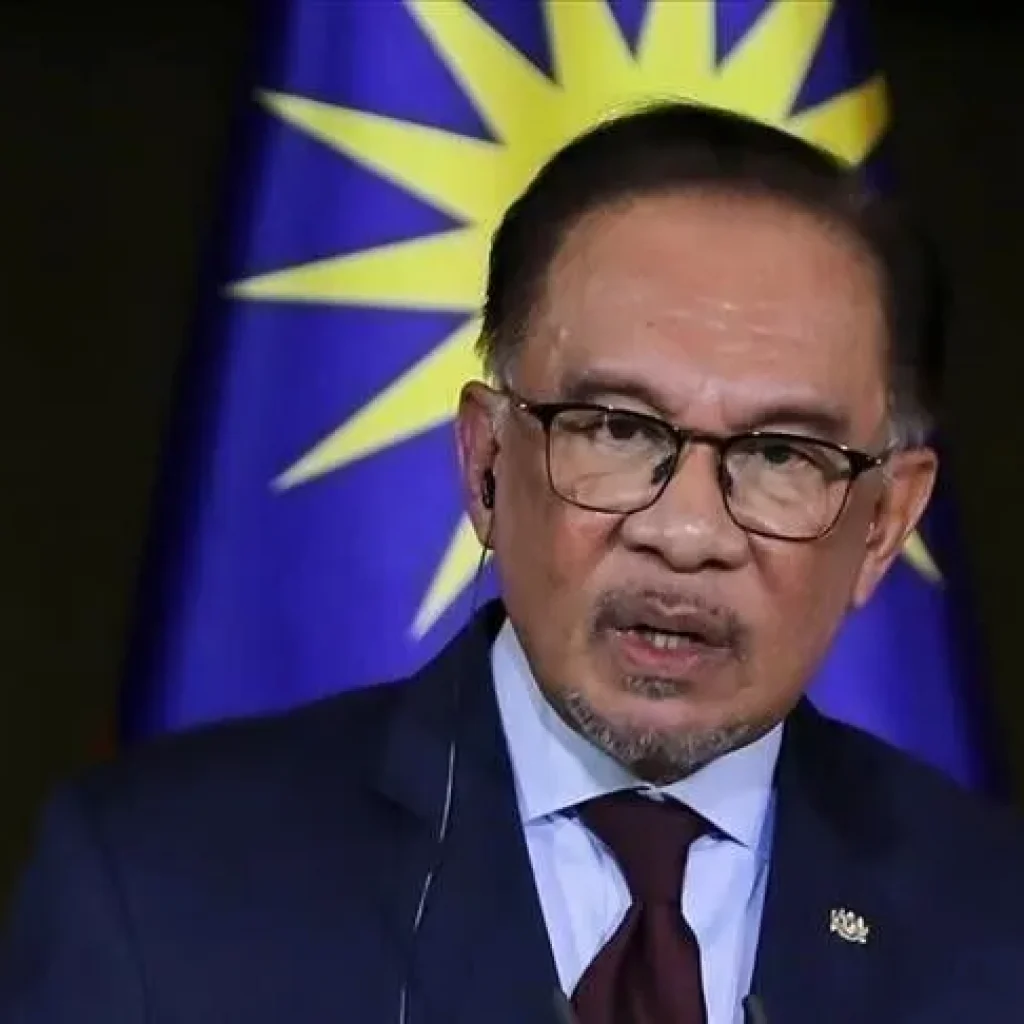
© Anadolu Agency
MNTV News Desk – In the southern Philippines, a political journey that began with demands for recognition, self-determination and greater control over Muslim-majority communities has reached a defining moment: the ballot box.
On Monday, voters across the Bangsamoro Autonomous Region in Muslim Mindanao (BARMM) cast ballots in the region’s first regular parliamentary elections, completing a major stage in a peace process that has taken decades to move from armed struggle for freedom toward democratic self-government.
The election is not simply another political contest. For many in the Bangsamoro, it represents a transformation in how Muslims in a predominantly Catholic country seek to protect their identity, exercise political authority and shape laws and institutions in areas where Islam has historically been central to community life.
More than 2.25 million registered voters were eligible to participate in the election for an 80-member Bangsamoro Parliament. The parliament will choose the region’s chief minister and exercise legislative authority under the Bangsamoro Organic Law.
By Monday evening, polling had closed and the counting process was underway, with the Commission on Elections beginning to receive election returns. Early reports showed that voting was generally peaceful in much of the region, although violence and alleged irregularities were reported in some areas, including Cotabato City and Basilan.
The peaceful transfer of political aspirations from the battlefield to elections has deep roots.
For decades, Moro Muslim movements fought against what they viewed as the marginalization of their communities and the loss of ancestral lands and political control. The struggle developed in the context of the Philippines’ wider nation-building process, where Muslims in Mindanao and the Sulu archipelago represented a distinct historical and cultural tradition within a predominantly Christian country.
The Moro National Liberation Front (MNLF) emerged as a major force in the 1970s, demanding self-determination for the Moro people. The 1976 Tripoli Agreement represented an early major attempt to resolve the conflict through autonomy. Although implementation proved difficult, the agreement established a framework for negotiations rather than an exclusively military solution.
Another major development came with the creation of the Autonomous Region in Muslim Mindanao (ARMM) in 1989. The arrangement gave Muslim-majority areas a degree of regional autonomy, but many in the Bangsamoro considered it insufficient and criticized its limited powers and governance structures.
The Moro Islamic Liberation Front (MILF), which had broken away from the MNLF, subsequently became the principal armed movement negotiating with the Philippine government.
The turning point came with the 2014 Comprehensive Agreement on the Bangsamoro, under which the MILF abandoned its long-standing demand for an independent state in favor of meaningful autonomy within the Philippines. The agreement ultimately led to the Bangsamoro Organic Law in 2018 and a 2019 plebiscite that established BARMM.
The change was profound. A movement that had once sought to establish a separate political entity was now participating in the creation of regional institutions inside the Philippine constitutional system.
Islam remains an important part of that political identity.
For Bangsamoro Muslims, autonomy has never been only about territory or administrative power. It has also been connected to the ability to preserve Islamic culture, family and personal laws, education, halal practices and institutions shaped by the region’s Muslim heritage.
But the autonomy arrangement does not create an Islamic state separate from the Philippines. BARMM remains within the Philippine Republic, whose national constitutional framework continues to apply. Instead, the autonomy settlement provides the region with expanded powers over areas of governance while allowing certain institutions reflecting Islamic traditions to operate within the wider legal framework.
This distinction has helped make the peace settlement possible.
The transition also reflects an important change in the strategy of Muslim political movements. Rather than seeking to protect Islamic identity primarily through armed struggle or demands for complete separation, the post-2014 process has increasingly emphasized political parties, elections, parliament, public administration and economic development.
The first parliamentary election therefore tests whether former revolutionary movements can become effective democratic institutions.
Former MILF leaders and other political groups are competing alongside traditional political clans and rival factions. The new parliament will have to deal with poverty, infrastructure, education, employment, security and investment issues in a region that has historically lagged behind many parts of the Philippines.
The challenge is particularly significant because the transition is not complete. The disarmament of former combatants has progressed but remains unfinished, while clan politics, local rivalries and violence continue to complicate the region’s political landscape. More than 20,000 security personnel were deployed for the election, reflecting continuing concerns about electoral violence.
Yet the symbolism of September 14 is difficult to miss.
The Philippines’ southern Muslim region, once associated internationally with insurgency and armed conflict, is now attempting to build legitimacy through elections. The ballot has become the latest instrument through which Bangsamoro Muslims can exercise political agency.
For supporters of autonomy, the ultimate test is whether this system can deliver what previous arrangements failed to provide: meaningful self-government while preserving the region’s Muslim identity.
The election also carries significance beyond Bangsamoro. It demonstrates how a long-running separatist conflict can evolve into a negotiated model of autonomy in which former combatants enter democratic politics without abandoning the cultural and religious identity that helped drive their original struggle.
As votes are counted, the question is no longer whether Bangsamoro will have greater autonomy. That principle has already been institutionalized.
The more difficult question is what the region will do with it.
For the Bangsamoro, the next chapter of the struggle will be written not through armed confrontation, but through laws, budgets, institutions and the decisions of elected representatives.
The journey from struggle for freedom to parliament is far from finished. But on September 14, 2026, the Bangsamoro took another significant step in turning its decades-long demand for self-determination into democratic government.
Related posts


Read also