New York votes watched worldwide: Mamdani’s grassroots momentum vs billionaire resistance
As New Yorkers head to the polls, the city’s mayoral race pitting progressive Assemblyman Zohran Mamdani against veteran Andrew Cuomo and Republican Curtis Sliwa has drawn unprecedented global attention
NEW YORK (MNTV) — The morning has barely broken over the five boroughs, yet the energy in New York is unmistakable. From the Bronx to Brooklyn, volunteers in red and blue campaign shirts knock on doors, hand out flyers, and urge voters to head to the polls. It feels more like a national election day than a local one.
This year’s mayoral race has stirred passions and debates that extend far beyond the city’s skyline. Never in living memory has a New York City election drawn such global fascination. The reason lies in the remarkable rise of Zohran Mamdani—a 34-year-old son of Ugandan-Indian immigrants who has come to embody the hopes of progressive America, and the fears of its political establishment.
For months, Mamdani has led in opinion polls against two seasoned rivals: former New York governor Andrew Cuomo, running as an independent, and Republican candidate Curtis Sliwa.
But that lead has narrowed in recent days amid a torrent of attacks funded by some of the wealthiest individuals in America.
According to data compiled by the Americans for Tax Fairness Action Fund (ATFAF), at least 62 billionaires or their family members have poured over $28 million into super PACs aimed at stopping Mamdani’s path to City Hall. Groups like Fix the City and Defend NYC have flooded television, radio, and social media with ads branding him as “anti-business” and “too radical” for New York.
The city’s billionaire class—111 individuals collectively worth $717 billion—has rarely appeared so united. Their fear stems from Mamdani’s signature proposal: a 2% “millionaire’s levy” on individuals earning over $1 million a year. The funds, he insists, would finance free public transport, rent freezes, and universal childcare.
“New York’s future must be built on fairness, not fear,” Mamdani said at a closing rally in Queens. “If you love this city, you don’t abandon its working people to poverty while billionaires build penthouses in the clouds.”
In contrast, Cuomo’s campaign has positioned itself as the defender of what he calls “fiscal sanity.” He courted business leaders and moderate voters by warning that Mamdani’s agenda would “turn New York into a socialist experiment.”
Sliwa, the Republican candidate, has focused his campaign on crime and immigration, appealing to conservatives frustrated by what they see as a decline in public order.
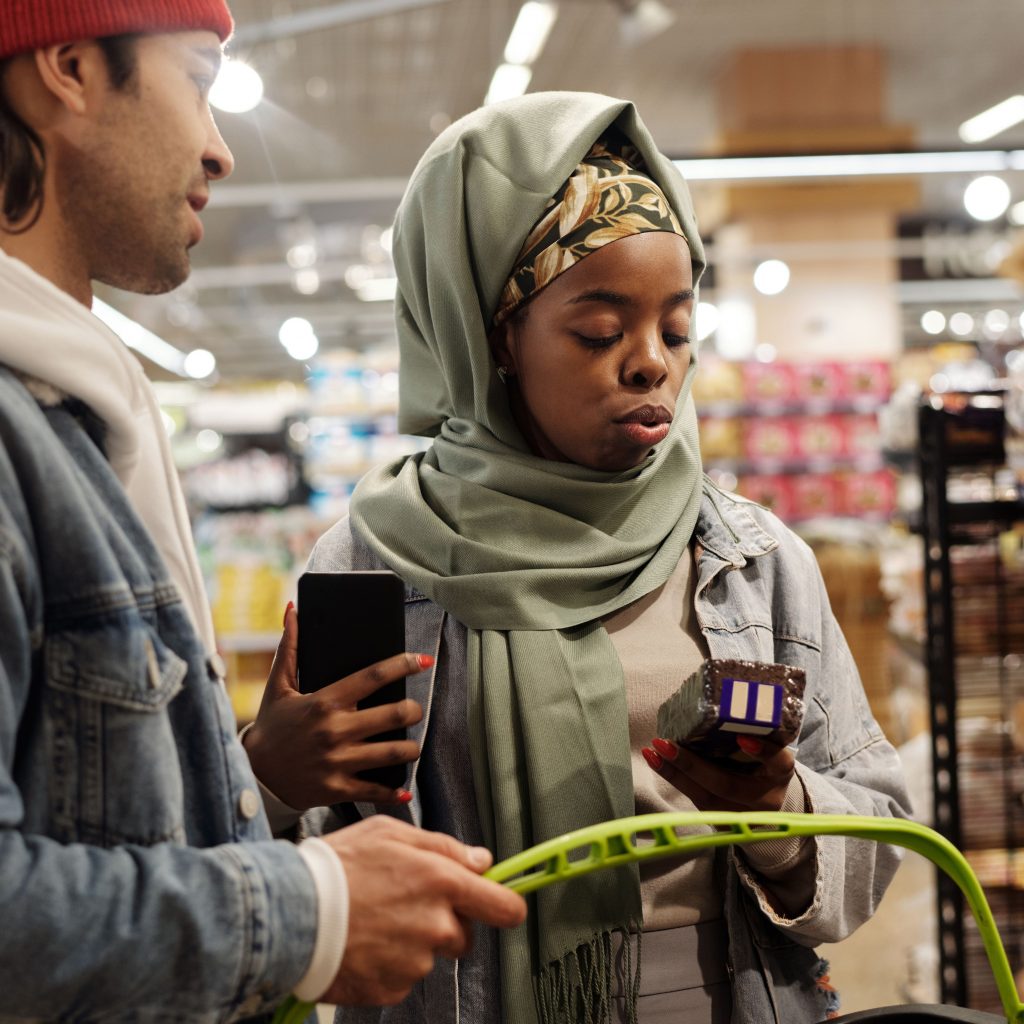
But for Mamdani’s supporters, the real issue is economic survival. “Focus on affordability,” says Robert Wood, a 47-year-old volunteer who has spent the last week knocking on doors across Crown Heights. “People are tired of seeing rents double while their wages stay the same. That’s why this race matters.”
Ground game that changed conversation
Unlike his rivals, Mamdani’s campaign has relied almost entirely on small donations and a vast volunteer network. Nearly 90,000 people—students, retirees, taxi drivers, teachers—have joined the effort.
From Astoria to Harlem, volunteers have organized block parties, mosque and temple visits, and multilingual town halls. The energy resembles the early days of Bernie Sanders’ presidential campaigns, with whom Mamdani shares both style and substance.
“Every time he talks about affordability, he’s speaking to people’s pain,” said Susan Kang, a political science professor at John Jay College and a member of the Democratic Socialists of America (DSA), which has endorsed Mamdani. “He’s reframing what politics should be about—care, not capital.”
Kang recalls how Mamdani’s early rallies seemed like niche gatherings of activists and students. “Now you walk into them and see construction workers, cabbies, nurses, even retired teachers. It feels like the city is rediscovering its voice.”
The campaign’s social media strategy has also been pivotal. Short, direct-to-camera videos—often filmed on phones—show Mamdani listening to workers in halal food carts or tenants facing eviction. His messaging blends empathy with economic realism.
“We wanted to rebuild a coalition that had frayed over years of disappointment,” he said after his upset primary win in June. “People have written off working-class voters as apathetic. But they’re not apathetic—they’re angry, and rightfully so.”
Cuomo’s return to politics after his 2021 resignation amid misconduct allegations initially stunned New York’s political class. His campaign has framed itself as a comeback of competence. “You may not always like me,” he told a crowd in Staten Island last week, “but I know how to make this city work.”
His rallies have drawn older, more affluent crowds. “Cuomo knows how to deal with unions, businesses, and Albany,” said 68-year-old Tony Romano in Midtown Manhattan. “Mamdani’s ideas sound nice, but we’ve got to pay for them somehow.”
Yet many young voters see Cuomo as the symbol of a failed status quo. “He represents everything that went wrong with the Democratic Party,” said Sofia Hernandez, 22, a student from the Bronx. “Corruption, cronyism, backroom deals. Zohran’s about people, not politics as usual.”
Sliwa, once known for patrolling subway stations with his Guardian Angels, remains the outsider. His law-and-order message resonates with parts of Queens and Staten Island but has little traction in a city that leans heavily Democratic.
Still, analysts warn against complacency. “In a three-way race, small shifts can matter,” said political analyst Marcus Glenn. “If turnout among younger voters dips or moderates break hard for Cuomo, Mamdani’s lead could evaporate.”
Faith, identity, and resilience
What has made this election truly global, however, is not just the money or policies—it’s the story of identity.
Mamdani would be New York’s first Muslim mayor, its first leader born in Africa, and its first of South Asian descent. For his supporters, that diversity mirrors the city itself, where nearly 40 percent of residents are foreign-born.
But it has also made him a target. In recent weeks, two Republican members of Congress—Randy Fine and Andy Ogles—called for investigations into his immigration history. Conservative media outlets have labeled him “a radical Islamist sympathizer.”
The attacks have only hardened his base. “They said the same things about Obama,” said Latifa Emery, a Bronx resident attending a Mamdani rally. “But Obama distanced himself from his Muslim roots. Zohran wears his proudly—and that’s why he’s winning hearts.”
Mamdani’s open support for Palestinian rights has further polarized the race. His criticism of Israeli policies has drawn both admiration and anger, with opponents accusing him of antisemitism. But Jewish groups such as the Satmar Hasidic community in Brooklyn have defended him, calling the allegations “false and dangerous.”
At a rally last week, Mamdani addressed the controversy head-on. “To love this city is to stand with all its people,” he said. “Jewish, Muslim, Black, white, rich, poor—we rise together, or we fall apart.”
Global echo
Observers from Europe to South Asia are watching closely. In Delhi, Nairobi, Istanbul, and London, opinion writers have drawn parallels between Mamdani’s movement and broader shifts in global urban politics.
“His campaign symbolizes a rebellion against plutocracy,” said Omar Rahman, a sociologist at the London School of Economics. “It’s not just about New York—it’s about whether cities can still be democratic spaces in an age of extreme inequality.”
Media across the Middle East have highlighted his stance on Gaza and Islamophobia, while African outlets note his Ugandan heritage as a source of pride. Social media in India has lit up with references to his mother, filmmaker Meera Nair, and their shared journey from Kampala to Queens.
Even in Turkiye, political commentators have drawn comparisons between Mamdani’s grassroots campaign and local populist movements in Istanbul and Ankara.
Final hours
Early voting, which began on October 25, has already shattered records. Over 1.2 million ballots were cast before Election Day, with long queues seen in boroughs such as Queens and the Bronx.
As polling stations open, Mamdani’s volunteers are fanning out across neighborhoods, armed with tablets and clipboards. “We’ve built something that’s bigger than one election,” said campaign coordinator Aisha Rahman. “Even if he loses, people have seen their power.”
But few in Mamdani’s camp are ready to think about losing. “Please, do not underestimate our opponents,” Senator Bernie Sanders warned at a rally in Queens last week. “They have money. But we have people. And that’s always been how real change begins.”
Across town, Cuomo’s headquarters has prepared for a long night. His aides insist late-deciding voters could tilt the race. “People know Andrew,” said campaign spokesman Peter Kline. “He’s the steady hand this city needs.”
By contrast, Mamdani’s supporters plan to gather tonight at a watch party in Astoria, where his political journey began.
For the millions watching around the world, the symbolism is undeniable: a son of immigrants, challenging entrenched wealth in the most powerful city in America.
Whether Zohran Mamdani becomes mayor or not, today’s election has already redrawn the map of American politics—proving that even in an age of billionaires, the power of the people still counts.
Related posts
Read also