UN inquiry: Israel’s Gaza war meets genocide threshold
UN commission report is the most direct legal analysis yet by a world body of whether Israel’s campaign in Gaza meets the threshold of genocide under international law
GENEVA (MNTV) – – A United Nations commission of inquiry has determined that Israel’s actions in Gaza since October 2023 constitute genocide, a finding that carries sweeping legal and political implications for Israel and for all states bound by the Genocide Convention.
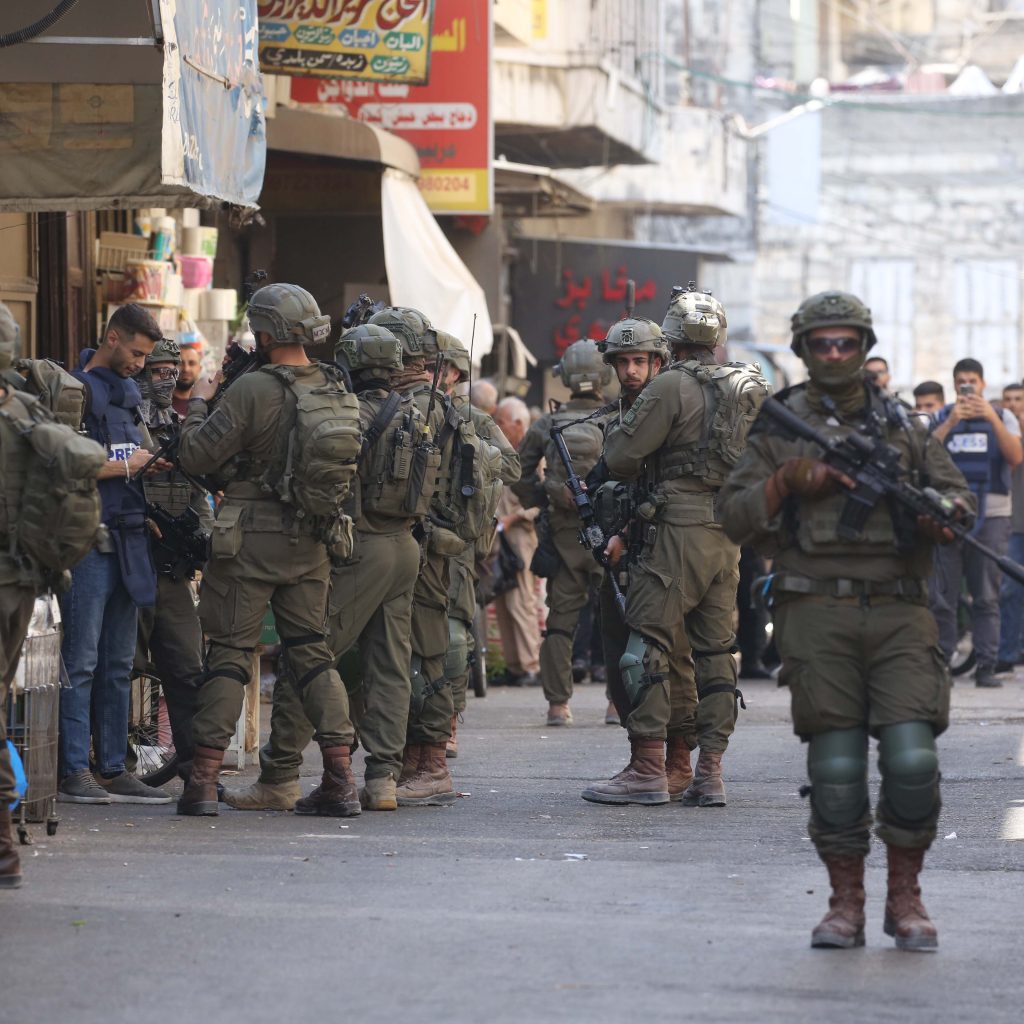
In a report presented in Geneva on Tuesday, the Commission concluded that Israel deliberately killed tens of thousands of Palestinians, imposed starvation as a method of warfare, destroyed healthcare and essential infrastructure, and incited further violence through statements by senior officials.
The inquiry, formally known as the Independent International Commission of Inquiry on the Occupied Palestinian Territory, including East Jerusalem, and Israel, was tasked by the Human Rights Council to examine violations of international law.
Its latest conference room paper, is the most direct legal analysis yet by a UN body of whether Israel’s campaign in Gaza meets the threshold of genocide under international law.
The Commission’s investigation covers the period from October 7, 2023, through July 31, 2025. During this time, at least 60,199 Palestinians were killed in Gaza, including 18,430 children and 9,735 women.
The inquiry notes that many of these deaths resulted from the deliberate targeting of civilian homes, schools, hospitals, and shelters.
Life expectancy in Gaza plummeted from 75.5 years before the war to just over 40 years within the first year of conflict, a drop of nearly 35 years, or almost half of pre-war levels. The Commission described this as a demographic collapse unprecedented in modern conflict.
“Victims were not targeted as isolated individuals,” the report stated. “They were targeted collectively due to their identity as Palestinians.” The Commission concluded that Israeli authorities intended to kill as many Palestinians as possible through sustained military operations and knew that their chosen methods , heavy unguided munitions in densely populated areas , would cause mass civilian casualties.
The inquiry documented multiple cases where entire families spanning several generations were wiped out in single strikes. Safe zones designated by the Israeli military were bombed; evacuation convoys came under fire; and even children holding white flags were shot at close range.
Starvation as a weapon
Beyond direct killings, the Commission found that Israel systematically imposed conditions of life calculated to bring about the physical destruction of Palestinians in Gaza. Central to this was the blocking of food, medicine, fuel, and humanitarian assistance.
In early 2025, the World Food Programme (WFP) had warned that all of Gaza’s 25 WFP-supported bakeries had shut down for lack of wheat flour and fuel. More than 116,000 metric tons of food aid sat at closed crossings, enough to feed one million people for four months. UNRWA reported nearly 3,000 trucks of lifesaving aid stranded, unable to enter Gaza. Yet, Israel continued to deny access.
The UN Secretary-General described Gaza as “a killing field – civilians are in an endless death loop.”
Doctors without Borders called Israel’s aid mechanism an “abomination,” noting that Palestinians were shot while queuing for food.
By July 2025, at least 1,373 Palestinians had been killed while seeking food, including children shot in the chest at aid distribution points.
The Commission concluded that Israel weaponized food and humanitarian assistance, deliberately creating famine conditions. As of September 2025, at least 422 Palestinians , 145 of them children, had died of starvation and malnutrition.
Israel carried out nearly 500 attacks on Gaza’s healthcare facilities between October 2023 and July 2024, killing at least 747 people in hospitals. Pregnant women died from treatable infections; premature babies perished when incubators lost power supply; and thousands of wounded civilians succumbed for lack of basic medical supplies.
The Commission said that healthcare facilities were not collateral damage but deliberate targets. It documented the killing of at least 1,400 healthcare workers, over 330 UNRWA staff, and more than 170 journalists by mid-2025.
One of the most shocking episodes occurred in March 2025 in Rafah’s Tal as-Sultan neighborhood, where Israeli forces killed 15 first responders from the Palestine Red Crescent Society, the Civil Defence, and UNRWA. Ambulances and a UN vehicle were buried in sand by Israeli bulldozers. A video recovered from a victim’s phone showed that the convoy had its emergency lights on and fired no shots before being attacked. Forensic evidence suggested execution-style killings.
The Commission found these acts consistent with a broader strategy: “Everyone you encounter is an enemy,” one Israeli commander was recorded telling troops.
The inquiry also examined evidence of reproductive violence and deliberate policies aimed at preventing Palestinian births. Women faced forced miscarriages, lack of maternal care, and sexual violence by soldiers.
The destruction of maternity wards and denial of reproductive healthcare were found to constitute “measures intended to prevent births” within the group, one of the five recognized acts of genocide under the Genocide Convention.
Legal threshold: genocide
Under international law, genocide requires both prohibited acts (killing, causing serious harm, inflicting destructive conditions, or preventing births) and dolus specialis, the specific intent to destroy, in whole or in part, a protected group. The Commission concluded that both were present.
It cited:
Scale and pattern of killings: tens of thousands of civilians targeted collectively as Palestinians.
Starvation and blockade: systematic creation of conditions leading to mass death.
Targeting of children and healthcare: direct assaults on vulnerable groups.
Statements by Israeli officials: including calls to “erase” Gaza or treat all Palestinians as enemies.
“The Israeli authorities intended to kill and cause the deaths of Palestinians in Gaza,” the report stated. “The means and methods of warfare employed were chosen with the knowledge and purpose of destroying Palestinians as a group.”
State responsibility and failure to punish
The Commission found Israel guilty both of committing genocide through its organs and of failing to prevent and punish genocidal acts. Crimes by soldiers were “largely unpunished,” with official justifications and encouragement reinforcing impunity.
Israel, the report said, must:
- Immediately cease all military operations inconsistent with its obligations under the Genocide Convention.
- Comply with all provisional measures ordered by the International Court of Justice.
- Take all possible steps to prevent and punish further genocidal acts.
- Make full reparations to Palestinians, including restitution, compensation, and satisfaction.
The Commission also found Israel responsible for direct and public incitement to genocide by state officials. Such statements, it stressed, are themselves prohibited under Article III(c) of the Genocide Convention. Israel therefore has a duty to investigate and punish political and military leaders who incited genocide , regardless of their rank.
Obligations of all states
Perhaps most consequentially, the Commission underscored that the duty to prevent genocide applies not only to the perpetrating state but to all states. Citing the International Court of Justice’s Barcelona Traction ruling, it said that genocide prevention is an erga omnes obligation, owed to the international community as a whole.
Since January 2024, when the ICJ indicated provisional measures in the South Africa v. Israel case, all states have been on formal notice of the plausibility of genocide in Gaza. From that moment, governments had a binding duty to act.
The Commission warned that states supplying arms, political cover, or financial support to Israel may be complicit in genocide if they knew their actions could contribute to the crime. It urged governments to suspend military transfers, reassess alliances, and ensure accountability.
Recommendations
The report concluded with sweeping recommendations:
- To Israel: end military operations, allow humanitarian access, dismantle the blockade, and provide reparations.
- To all states: halt arms transfers, investigate complicity, and cooperate with international justice mechanisms.
- To the UN Security Council: refer the situation to the International Criminal Court and impose targeted sanctions on Israeli officials responsible.
- To humanitarian agencies: intensify documentation of crimes and ensure assistance reaches Palestinians without reliance on Israel’s aid mechanisms.
The Commission’s determination will intensify scrutiny on governments that continue to arm or shield Israel diplomatically. Already, cases are advancing before the ICJ and International Criminal Court. Legal experts warn that states ignoring the UN findings could face lawsuits, sanctions, or reputational costs.
For Palestinians in Gaza, the report is both validation and a plea. “The destruction of generations is underway,” the Commission warned. “The Palestinian people in Gaza are at risk of physical destruction as a group.”
Following is the link to the full report:
Related posts


Read also