14 hours ago
War, visas and a defiant draw: Iran’s extraordinary road to the 2026 World Cup
For first time in World Cup history, a team is playing in a tournament co-hosted by a country it was actively at war with
© AA
By MNTV Staff Writer
INGLEWOOD, United States (MNTV) — Iran opened its 2026 World Cup on Monday with a pulsating 2-2 draw against New Zealand at a raucous SoFi Stadium in Los Angeles — a result that, after the months Team Melli had endured to reach the start line at all, felt like the least remarkable thing about their day.
New Zealand twice took the lead through Elijah Just, in the 7th and 54th minutes, and twice Iran hauled themselves back. Ramin Rezaeian equalized in the first half and then turned provider after the break, setting up Mohammad Mohebbi to level it at 2-2.
Iran poured forward late in front of vocal support but couldn’t find a winner, sharing the points in a breathless, end-to-end opener.
It was a fitting start for a team whose mere presence on the pitch was, until recently, in serious doubt.
Qualification was easy part
On the field, getting to North America had been straightforward. Iran topped their Asian third-round group ahead of Uzbekistan, the UAE, Qatar, North Korea and Kyrgyzstan, sealing their place with a 2-2 home draw against Uzbekistan at Tehran’s Azadi Stadium in March 2025, captain Mehdi Taremi striking twice to clinch it.
The result made Iran one of the first nations to reach the expanded 48-team finals — a fourth consecutive World Cup and their seventh overall.
Then, on Feb. 28, the ground shifted.
The United States and Israel launched strikes on Iran, and Tehran retaliated against Israel and U.S. bases in the Gulf.
For the first time in World Cup history, a team was preparing to play in a tournament co-hosted by a country it was actively at war with.
A tournament nearly abandoned
Iran’s participation hung by a thread for weeks. The football federation president, Mehdi Taj, said that after the attack the country could hardly be expected to look toward the World Cup with hope, and the sports minister at one point declared the team would not take part.
By mid-March, Taj had landed on a defiant compromise, vowing that Iran would “boycott America” but not the World Cup itself, and pressing FIFA to move the matches.
The politics sharpened when U.S. President Donald Trump weighed in, posting that while Iran’s team was welcome, he did not think it appropriate for them to be there “for their own life and safety” — a line Iranian officials took as a threat.
Based in Mexico, commuting to play
The solution was without precedent.
Rather than stay on U.S. soil, Iran would be based in Mexico and cross the border only for matches.
FIFA President Gianni Infantino worked with Mexican President Claudia Sheinbaum to arrange it after the squad abandoned plans to train in Tucson, Arizona, setting up instead in the border city of Tijuana.
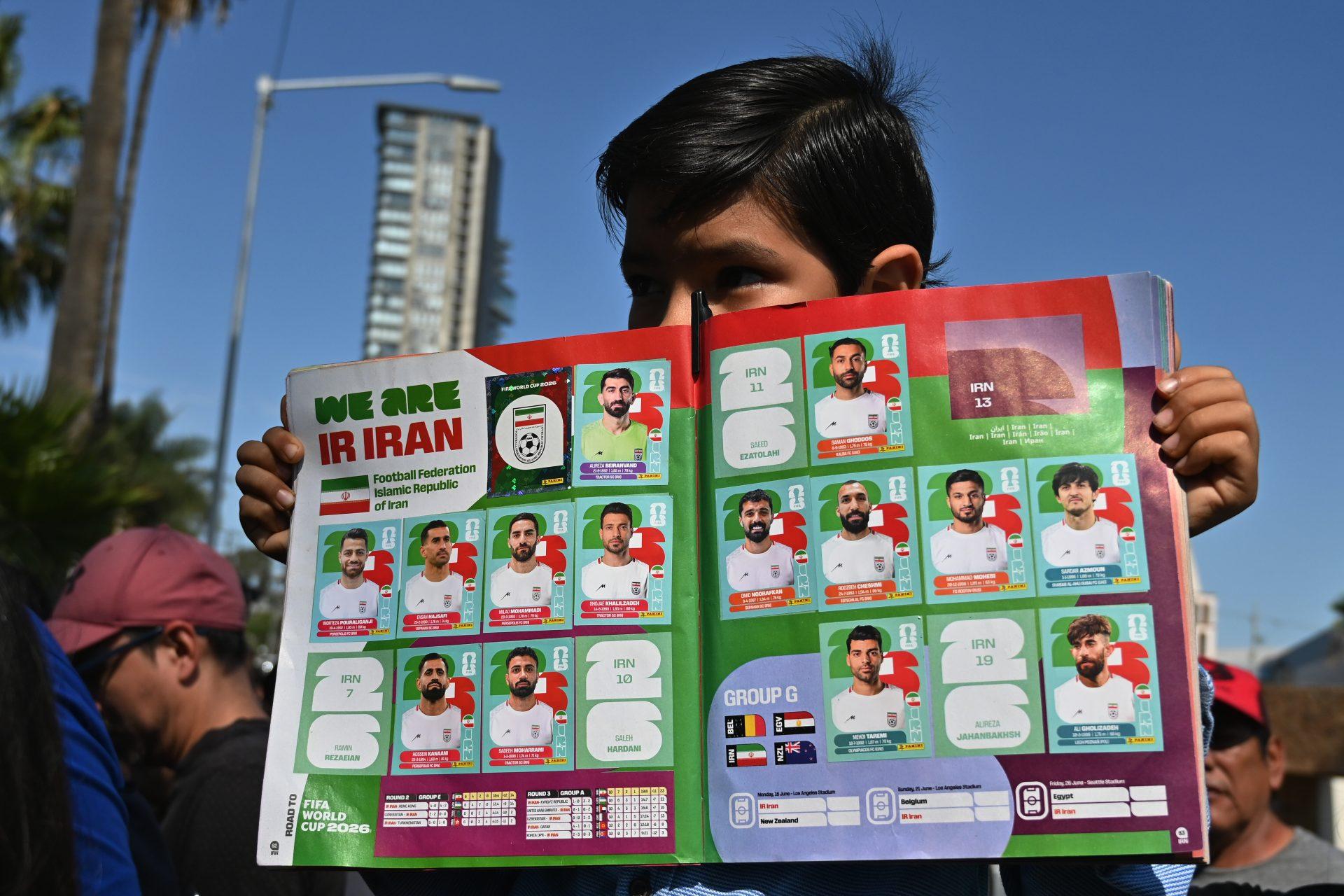
The visa drama went to the wire.
The players received their U.S. visas only on the Friday before the tournament, while around 14 support staff were refused entry altogether.
Under the State Department’s terms, the squad could enter the U.S. the day before a match but had to leave within 24 hours — meaning Team Melli would shuttle in from Tijuana for all three group games on the West Coast.
Iran’s embassy in Türkiye branded the restrictions “deliberate and discriminatory.”
The cross-border commute raised real questions about rest and preparation, with one observer calling the precedent, set days before kickoff, “not reassuring.”

Grief carried onto field
The war travelled with the team.
When Iran landed near the California border, players wore gold lapel pins reading “168” — a reference to those killed, most of them children, in a Feb. 28 missile U.S.-Israeli strike on a girls’ school in southern Iran on the war’s opening day.
At an earlier friendly in Antalya, several players, including Taremi and goalkeeper Alireza Beiranvand, had lined up holding schoolbags in memory of the children killed in the Minab bombing.

Iran’s fans, meanwhile, were largely shut out.
A U.S. executive order halting visa issuance to several countries, Iran among them, kept supporters from travelling, and there are no direct links between two nations with no formal diplomatic relations.
Iran’s federation said its ticket allocation for all three group matches — the 8% FIFA grants each participating nation — had been revoked.
The crowd that did fill SoFi was heavily Iranian diaspora, some even waving pre-revolutionary flags, a reminder that Team Melli has become as much a stage for the country’s divisions as a unifier of them.

A team built to spring a surprise
Through all of it, there is still football to play, and Iran arrive with what many regard as one of their most balanced squads in decades — disciplined, organized and dangerous on the counter under Amir Ghalenoei, in his second spell as coach.
The spine is heavy with experience, nearly a dozen players carrying 50 or more caps, and led by Taremi, the Olympiacos forward who scored 10 times in qualifying and twice against England at Qatar 2022.
Veteran captain Alireza Jahanbakhsh and Beiranvand anchor the side. Ghalenoei’s boldest call was to leave out Sardar Azmoun, the nation’s third-highest scorer of all time.
Drawn in Group G with Belgium, Egypt and New Zealand, Iran have long eyed this as a winnable path to a first-ever knockout appearance — a milestone that has eluded them across all six previous finals.
Monday’s draw with New Zealand, the group’s lowest-ranked side, complicates that math and leaves little margin against Belgium and Egypt.
But for a team that spent the spring unsure whether it would board the plane at all, simply taking the field in Los Angeles — and twice refusing to be beaten — carried a meaning the scoreline alone could never capture.
Arriving in the host city hours before Washington and Tehran announced their peace agreement, Ghalenoei said he wanted to talk about football, not politics.
As the reporting around the team noted, there was no escaping the politics-shaped elephant in the room.

Read also