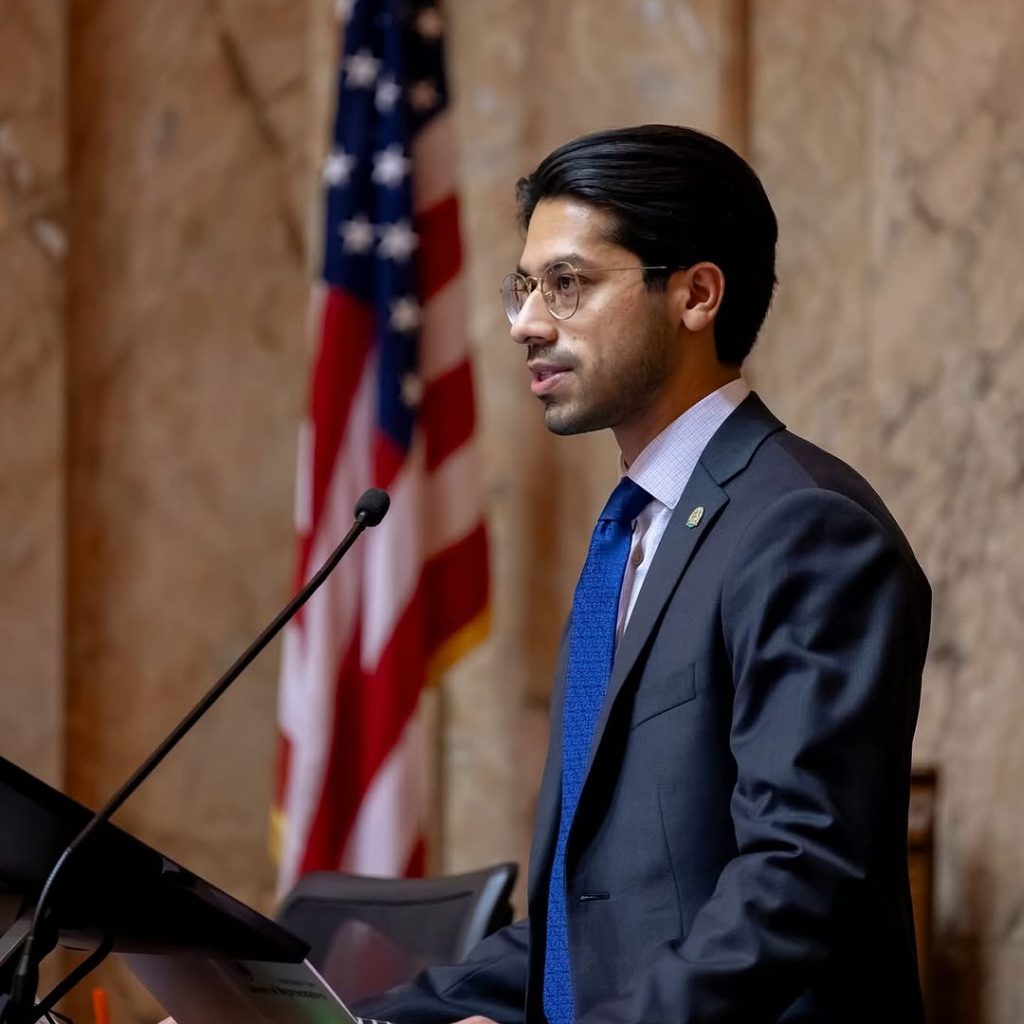
UK’s Starmer steps down as Labour leader amid fallout from election defeats
"I will resign as leader of the Labour Party," the prime minister declares
© AA
LONDON (MNTV) — British Prime Minister Keir Starmer announced his resignation on Monday as leader of the governing Labour Party, bowing to weeks of intensifying pressure after a string of damaging election defeats and a revolt within his own ranks.
Speaking outside his official residence at 10 Downing Street, an at times emotional Starmer confirmed he had already informed King Charles of his decision earlier that morning.
He said he would step down as Labour leader, a move that will also see him replaced as the country’s leader.
“I will resign as leader of the Labour Party,” he said, telling reporters he had listened to his fellow MPs question whether he remained the right person to carry Labour into the next general election and was accepting their verdict graciously.
His voice reportedly broke with emotion near the end of the brief statement.
Starmer said he would direct the party’s National Executive Committee to set out a timetable, with nominations opening on July 9 and closing before parliament’s summer recess.
He pledged to remain as caretaker prime minister until a successor is chosen and to ensure an orderly transfer of power. If Labour unites behind a single candidate without a contest, he could leave office within weeks.
A swift unraveling
The resignation caps a turbulent stretch for Starmer, coming less than two years after he led Labour to a landslide victory in July 2024 that ended 14 years of Conservative rule.
Despite securing a majority of 174 seats, his government was steadily undermined by sliding poll ratings, internal infighting and mounting public frustration over its failure to deliver quickly on economic growth and the cost of living.
By late 2025, surveys ranked Starmer among the most unpopular prime ministers in British history. He drew fire from the right over immigration and tax rises, and from the left over welfare reform, his stance on the Gaza genocide and his refusal to introduce a wealth tax.
His standing was further damaged by the controversy surrounding his appointment of Peter Mandelson as ambassador to the United States, after fresh revelations about Mandelson’s past ties to the late convicted sex offender Jeffrey Epstein raised questions over Starmer’s judgment.
The decisive blow came at the ballot box. Labour was routed in last month’s Scottish, Welsh and English local elections — a defeat that included the loss of Wales, ending a century of Labour dominance there.
The losses prompted scores of lawmakers to demand his departure; more than 80 Labour MPs eventually called publicly for him to go, spanning the party’s centrist, soft-left and hard-left factions.
A wave of resignations hollowed out his top team. Wes Streeting quit as health secretary in May, warning that the government had a vacuum where it needed vision, while a row over defence spending later cost Starmer his defence secretary, John Healey, a long-time loyalist.
Burnham closes in
Starmer had repeatedly vowed to fight on, insisting only days earlier that he would stand in any contest and would not walk away. His position collapsed, however, after his chief rival cleared the final hurdle to a challenge.
Andy Burnham, the popular mayor of Greater Manchester nicknamed the “King of the North,” won the Makerfield by-election on June 18 with 54.8% of the vote, returning to the House of Commons for the first time since 2017 and making him eligible to stand for the leadership.
The seat had been vacated by Labour MP Josh Simons specifically to give Burnham a route back to Westminster and a shot at the top job. Burnham resigned as mayor days later to take it up.
His victory — achieved by beating back Nigel Farage’s surging, anti-immigration Reform U.K. in a working-class northern seat the party had targeted — cemented his claim to be Labour’s strongest asset.
In his victory speech, Burnham declared that “politics isn’t working” and cast the result as a possible turning point for the country.
Within hours of Monday’s announcement, Burnham moved to claim the succession. He confirmed he would stand in the leadership contest, and one of his would-be opponents quickly said in a letter that he would instead back him.
That backer was Streeting, who abandoned his own leadership ambitions roughly two hours after Starmer spoke and threw his weight behind Burnham, signalling support for a more pro-business, “progressive capitalism” direction and a possible move toward a senior cabinet role.
Chancellor Rachel Reeves paid tribute to Starmer, crediting him with turning the party around from its worst modern defeat to a landslide win, while noting “there is more to do.”
Pressed by reporters on whether Labour faced a full contest or a coronation, Burnham — flanked by two police officers — offered only a brief “thank you everyone.”
Other names floated as potential candidates include Deputy Prime Minister Angela Rayner, Foreign Secretary David Lammy and Shabana Mahmood, though Burnham is widely seen as the frontrunner.
Seventh leader in a decade
Starmer’s exit means Britain is set for its seventh leader in 10 years, extending a run of political instability that has gripped the country since the 2016 Brexit referendum — whose 10th anniversary falls this week. David Cameron, Theresa May, Boris Johnson, Liz Truss and Rishi Sunak all preceded Starmer in a decade of short-lived premierships.
The turmoil drew comment from across the Atlantic. U.S. President Donald Trump weighed in even before the announcement, claiming on social media that Starmer “will resign” and tying his exit to immigration and energy policy.
Farage, meanwhile, used the moment to demand an immediate general election, arguing that voters would not tolerate another change of leader without a national vote.
Under Britain’s parliamentary system, the governing party can install a new prime minister mid-term without holding a general election — meaning Burnham, or whoever emerges as Labour leader, could enter Downing Street as the country’s next premier before parliament returns in September.
Read also