Timeline, 1979-2026: Iran, United States and a half-century of conflict
The relationship between Iran and the United States has been defined by mutual suspicion, missed opportunities, and escalating confrontation
© Wikimedia Commons
For nearly five decades, the relationship between Iran and the United States has been defined by mutual suspicion, missed opportunities, and escalating confrontation. This is a record of how it unfolded.
1979 — REVOLUTION
February 1979 | THE ISLAMIC REPUBLIC
The Shah, a close American ally, was ousted after mass popular uprising. Ayatollah Khomeini returned from exile and established the Islamic Republic. Washington lost its most important regional partner overnight. Many Iranians viewed the revolution as long-overdue liberation from a government they felt had prioritised American interests over their own — a sentiment rooted partly in the U.S.-backed coup that had removed Prime Minister Mosaddegh in 1953.
November 1979 | THE HOSTAGE CRISIS
Student militants seized the U.S. Embassy in Tehran, holding 52 American diplomats for 444 days. The crisis severed diplomatic relations between the two countries — a break that has never been formally repaired. The hostages were released on the day of Reagan’s inauguration, a coincidence that has fed suspicion on both sides ever since.
1980s — WAR
1980–1988 | THE IRAN-IRAQ WAR
Iraq invaded Iran in 1980, triggering an eight-year war that killed hundreds of thousands. The United States, wary of Iranian revolutionary influence spreading through the region, tilted toward Baghdad — sharing intelligence with Saddam Hussein and doing little to prevent his use of chemical weapons against Iranian forces. The war left deep scars on Iranian society and a lasting mistrust of Western intentions.
July 1988 | IRAN AIR FLIGHT 655
A U.S. Navy warship shot down an Iranian civilian airliner over the Persian Gulf, killing all 290 people on board. Washington said it was a tragic error. No formal apology was issued. The incident remains a significant grievance in Iranian public memory.
1990s — SANCTIONS
1995 | COMPREHENSIVE SANCTIONS
The Clinton administration imposed sweeping economic sanctions on Iran, citing its nuclear programme and support for militant groups. Iran’s economy increasingly strained under the pressure. Successive Iranian governments sought relief; Washington kept the pressure on. Israeli lobbying in Washington consistently pushed for a harder line against Tehran, arguing that Iran’s regional ambitions and its hostility toward Israel made engagement dangerous.
1997 | KHATAMI’S OPENING
Reformist President Mohammad Khatami won a surprise landslide, proposing cultural exchange and a “dialogue of civilisations” with the West. The Clinton administration made modest gestures in return but stopped short of lifting sanctions. The window for broader engagement gradually closed. Israeli officials were vocal in their skepticism of Khatami’s overtures, cautioning Washington against reading too much into them.
2000s — CONFRONTATION
January 2002 | AXIS OF EVIL
President Bush named Iran in his “Axis of Evil” speech, alongside Iraq and North Korea. The designation came just months after Iran had quietly cooperated with U.S. efforts in Afghanistan. Iranian moderates were weakened politically; hardliners argued it vindicated their skepticism of American intentions.
Israeli intelligence services had long characterised Iran as the primary strategic threat to the region, a view that found a receptive audience in the post-9/11 Bush administration
2003 | THE GRAND BARGAIN
Following the U.S. invasion of Iraq, Iran sent a diplomatic proposal to Washington offering broad negotiations — covering its nuclear programme, regional policy, and relations with Israel. The Bush administration did not formally respond. The episode is still debated by historians as a possible turning point.
Israeli officials, informed of the proposal, were reported to be deeply uncomfortable with any framework that might legitimise the Iranian government, thereby thwarting any productive diplomacy.
2006 onwards | NUCLEAR STANDOFF
Iran resumed uranium enrichment, asserting its right to a civilian nuclear programme under international law. The U.S. and Europe pushed back, arguing the programme masked weapons ambitions. A cycle of escalating sanctions and Iranian nuclear advancement began.
Israel lobbied Washington and European capitals aggressively. Israel also conducted covert operations against the programme — including the Stuxnet cyberattack, widely attributed to Israel and the U.S., and the assassination of several Iranian nuclear scientists.”
2010s — DEAL AND COLLAPSE
2015 | THE JCPOA
After two years of intensive negotiations, Iran and the major world powers signed the Joint Comprehensive Plan of Action. Iran accepted strict limits on its nuclear programme and international inspections. Sanctions were partially lifted. It was the closest the two countries had come to stable engagement in thirty years.
Israeli Prime Minister Benjamin Netanyahu was the agreement’s most prominent and vocal international critic, addressing the U.S. Congress directly to argue against it — an unusual intervention that caused friction with the Obama White House.
May 2018 | U.S. WITHDRAWAL
President Trump withdrew the United States from the deal, calling it a failure, and reimposed sanctions. Iran had been verified as compliant by international inspectors. European signatories tried to preserve the agreement but could not protect Iranian trade from U.S. secondary sanctions. Iran’s economy contracted sharply. The moderate political faction that had championed the deal lost credibility at home.
In the weeks before the decision, Netanyahu gave a televised presentation of Israeli intelligence alleging Iranian deception, which Trump cited publicly.
January 2020 | SOLEIMANI KILLED
The U.S. killed General Qasem Soleimani, Iran’s most senior military commander, in a drone strike at Baghdad airport. Iran responded with ballistic missile strikes on U.S. bases in Iraq. Soleimani was a deeply polarising figure internationally but widely mourned inside Iran. The killing brought the two countries to the closest point of direct military confrontation since 1988.
2020s — WAR
2021–2023 | JCPOA TALKS FAIL
Multiple rounds of negotiations in Vienna to revive the nuclear deal ultimately collapsed. Iran, citing the 2018 withdrawal as evidence that no agreement was durable, sought stronger guarantees. The U.S. said Iran’s demands went beyond the original deal. Iran accelerated its enrichment programme significantly.
Israel maintained sustained pressure on Washington not to re-enter an agreement it considered insufficiently restrictive.
2024 | REGIONAL ESCALATION
The Gaza genocide drew in regional actors. Iran launched direct strikes on Israel for the first time in April 2024, following an Israeli strike on its Damascus consulate. Iranian-backed groups across the region engaged in sustained confrontation with Israeli and American forces. By late 2024, Iranian proxies in Lebanon and Syria had suffered significant losses.
2025 | THE FINAL BREAKDOWN
Back-channel diplomacy failed to produce a framework. Iran’s nuclear programme had advanced to a point where Western governments said containment through diplomacy was no longer viable. Iranian officials said they had no confidence any new agreement would be honoured.
MARCH 2026 — OPEN WAR
FEBRUARY–MARCH 2026 | THE CAMPAIGN BEGINS
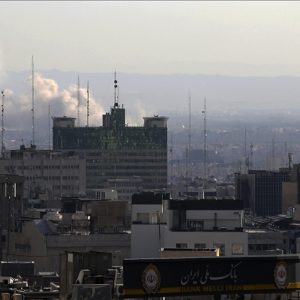
Israeli and U.S. forces launched coordinated strikes on Iran, targeting nuclear facilities as well as missile infrastructure across the country. The confirmed death toll has reached 787 people. The strikes are the most significant direct military action against Iran in the country’s modern history.
MARCH 2, 2026 | KHAMENEI KILLED
Supreme Leader Ali Khamenei has been killed, along with a significant number of senior Iranian political and military leaders. It is the most consequential single blow to the Iranian state since the revolution.
MARCH 3, 2026 | TRUMP: “WEEKS, NOT DAYS”
President Trump confirmed the military campaign against Iran could last for weeks, stating that Washington will do whatever it takes to destroy Tehran’s missile and nuclear capabilities. He has not outlined conditions for ending the operation. No diplomatic track is currently active.
MARCH 3, 2026 | IRAN STRIKES BACK
Iran has launched retaliatory strikes against energy infrastructure across the Gulf region, sending global oil and gas prices sharply higher. Attacks against Israel are also underway. Iran’s military has signalled it intends to continue striking regional targets for as long as the campaign against it continues.
What happens next is uncertain. What is clear is that the road here was long, and the off-ramps were many.


Read also