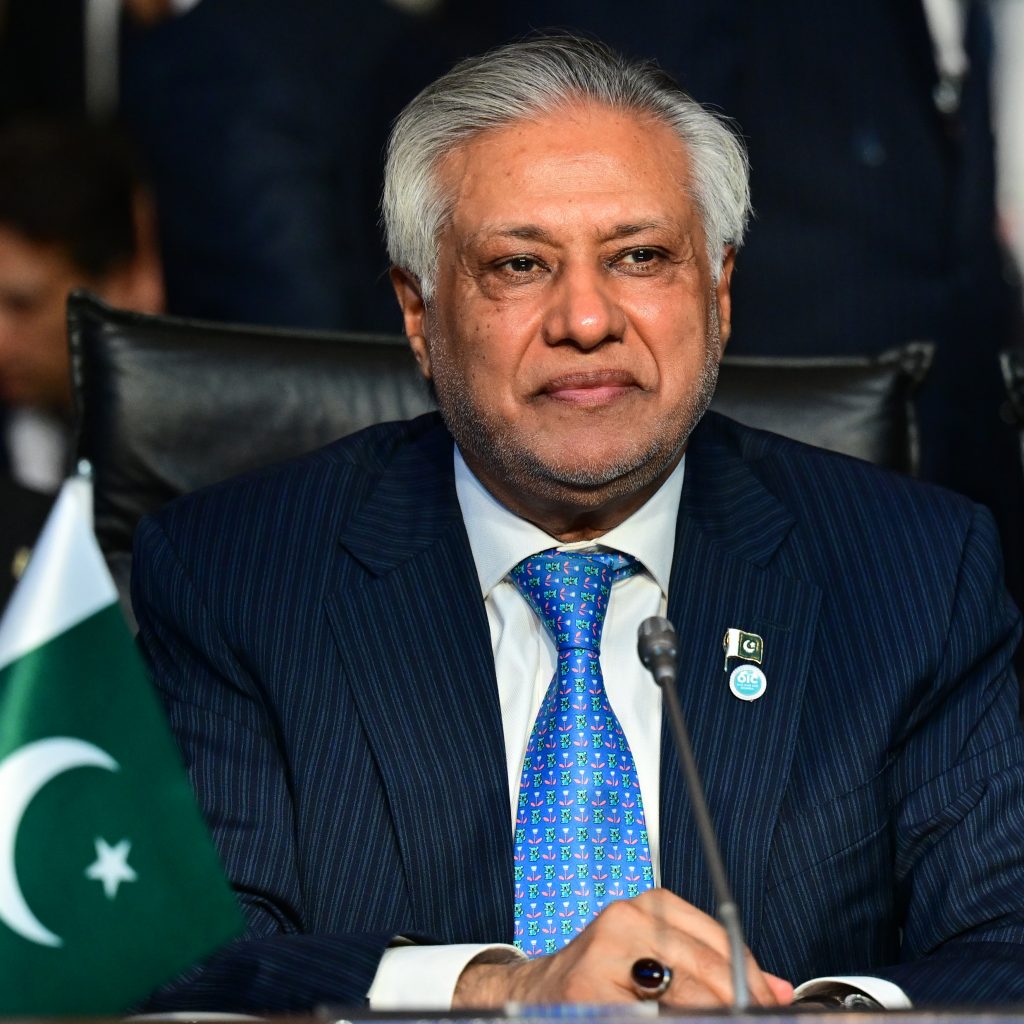
Pakistan’s quiet diplomacy that stopped a war
How Islamabad leveraged old ties and new trust to broker a fragile ceasefire between Washington and Tehran
© AA
By MNTV Staff Writer
ISLAMABAD (MNTV) – When the missiles were flying and the world was holding its breath, Pakistan did something that surprised almost everyone outside its own foreign ministry: it picked up the phone and kept calling.
Over the course of nearly two weeks, as the United States and Iran traded strikes across the Gulf and the Strait of Hormuz hung in the balance, Pakistan quietly positioned itself as the one country both sides trusted enough to carry a message. The result — announced in the early hours of Wednesday by Prime Minister Shehbaz Sharif — was a two-week ceasefire, paired with an invitation for both delegations to arrive in Islamabad for face-to-face talks on April 10.
For many analysts, the outcome was nothing short of remarkable for a country that has spent years navigating its own economic pressures and regional tensions.
“This is one of the most consequential acts of diplomacy Pakistan has undertaken in decades,” said Senator Mushahid Hussain Syed, a veteran political figure and longtime observer of Pakistan’s foreign policy. “What Islamabad demonstrated here was that quiet, principled engagement — not grandstanding — is how you create the space for peace. Pakistan read the room and stayed in it.”
Threading the needle
The diplomatic effort began well before the ceasefire headlines. As early as late March, Pakistan had signaled its readiness to facilitate dialogue. When U.S.-Israeli strikes on Iranian targets triggered a fresh round of escalation on March 28, Pakistan moved almost immediately: Prime Minister Sharif called Iranian President Masoud Pezeshkian to express solidarity, while simultaneously reaching out to Washington and a string of regional capitals.
Deputy Prime Minister and Foreign Minister Ishaq Dar followed with visits and calls to counterparts in Egypt, Turkey, Saudi Arabia, and ultimately Beijing, where he met Chinese Foreign Minister Wang Yi. By March 31, a joint Pakistan-China five-point initiative was on the table — the first structured multilateral framework calling for a halt to hostilities and the opening of negotiations.
Even as President Trump threatened further escalation and issued a 48-hour ultimatum demanding Iran reopen the Strait of Hormuz, Pakistan deepened rather than pulled back its outreach. Calls went out to the foreign ministers of Turkey, Qatar, Jordan, Indonesia, and the Gulf states, each conversation pressing the peace framework forward.
Retired General Zubair Hayat, former Chairman of Pakistan’s Joint Chiefs of Staff, said the effort reflected a strategic maturity that the outside world has consistently underestimated — but he was equally pointed about what he sees as the deeper forces driving the conflict.
“What you saw here was the full architecture of Pakistan’s statecraft working in sync,” General Hayat said. “The civilian leadership was carrying the diplomatic message forward, while the military channel kept communication open with both Washington and Tehran at the same time. That kind of coordination takes years to build.”
General Hayat did not stop at process. He placed Pakistan’s intervention within what he described as a far more dangerous ideological landscape hardening across the region.
“We have to be honest about what is driving instability from West Asia through to South Asia,” he said. “The convergence of Zionism and Hindutva — these are not separate phenomena. They share a supremacist logic, and together they are reshaping the security environment in ways that directly threaten Pakistan and the broader Muslim world. Our engagement in this ceasefire was never purely about maritime routes or oil prices. It was about pushing back against a regional order that has become increasingly hostile to countries like ours.”
The Islamabad Accord
By April 6, a formal proposal had been transmitted through Pakistan to both capitals. The plan, informally called the Islamabad Accord, outlined a two-tier approach: an immediate ceasefire tied to the reopening of the Strait of Hormuz, followed by a 15 to 20-day window for broader negotiations. De-escalation would come first; the harder political questions would follow once the immediate pressure had eased.
The optics were as complicated as the substance. Neither Washington nor Tehran was willing to be seen as the side that flinched. Pakistan threaded this by designing a mechanism in which both governments could commit simultaneously, with Islamabad as the sole conduit, sparing each side the appearance of having approached the other directly.
With less than two hours remaining before Trump’s self-imposed deadline expired, Prime Minister Sharif made a public appeal — asking Trump to extend the window by two weeks and calling on Iranian leadership to reopen the Strait for the same period. Within hours, Tehran signaled conditional agreement, and Trump confirmed the suspension of bombing.
Ambassador Aizaz Ahmad Chaudhry, former Foreign Secretary of Pakistan, said the outcome reflected something deeper than tactical cleverness.
“Pakistan never planted its flag and called itself a mediator,” Ambassador Chaudhry said.
“It expressed solidarity where that was genuine, urged calm where that was possible, and kept the door open in Islamabad without making a performance of it. A lot of countries would have been tempted to hold a press conference at every step. Pakistan resisted that temptation, and I think that restraint is a large part of why it worked.”
Chaudhry pointed to the particular combination of relationships Pakistan holds that no other country can replicate — working ties with Washington built through decades of security cooperation, relations with Tehran grounded in geography, shared heritage, and the fact that Pakistan represents Iranian diplomatic interests in the American capital where Tehran has no embassy, and longstanding bonds with Riyadh and the Gulf states rooted in economics and a mutual defense framework.
“When both sides needed someone to carry a message they could not send directly, there was really only one place that made sense,” he said.
What it means going forward
The ceasefire remains fragile. Disagreements persist over the full scope of any settlement, and whether the pause applies to Lebanon is still contested. The talks beginning April 10 in Islamabad will determine whether this moment holds or unravels.
But the episode has already shifted how Pakistan is being read internationally — and for Senator Mushahid, what happened this week cannot be understood apart from a much larger transformation underway in global affairs.
“What we are watching is not just a ceasefire,” he said.
“The world is in the middle of a genuine realignment. China has arrived as a global power in every meaningful sense. The Eastern bloc is gaining weight and confidence. The countries of the Global South are no longer willing to simply absorb decisions made for them elsewhere. The old order is cracking, and something new is taking its place.”
Mushahid argued that Pakistan’s geography and its web of relationships position it centrally within this shift — not by accident but because of choices made over many years. “Pakistan sits where the Islamic world, South Asia, Central Asia, and China all converge. Its relationship with Beijing is structural, built over generations. As this new order takes shape, Islamabad carries a kind of weight and reach that larger countries with fewer cross-cutting ties simply do not have. This week showed that.”
General Hayat returned to the strategic fundamentals. “The Strait of Hormuz is not an abstraction — roughly a fifth of global energy supplies move through it.
A prolonged closure would have hit Pakistan hard, and Pakistan acted accordingly. But the larger point is that we are entering a period where the ability to speak credibly to multiple sides simultaneously is going to matter enormously. Pakistan has cultivated that ability over a long time. That is why it was here, doing this, when it counted.”
Ambassador Chaudhry closed with a thought about the nature of the work itself.
“Diplomacy that holds is built on trust that accumulated slowly, through consistency and through never being seen to exploit a confidence. Pakistan has worked at that for years across very different relationships. What happened this week was the return on that work — and the question now is whether the follow-through in Islamabad can turn a pause into something that lasts.”
Related posts


Read also