Manufacturing crisis: India’s repeated failure to act on intelligence warnings
© Anadolu Agency
Disturbing pattern links terror incidents in India, there are prior warnings, yet authorities fail to act—whether due to negligence or strategic calculation remains unclear
Iftikhar Gilani
MNTV Analysis
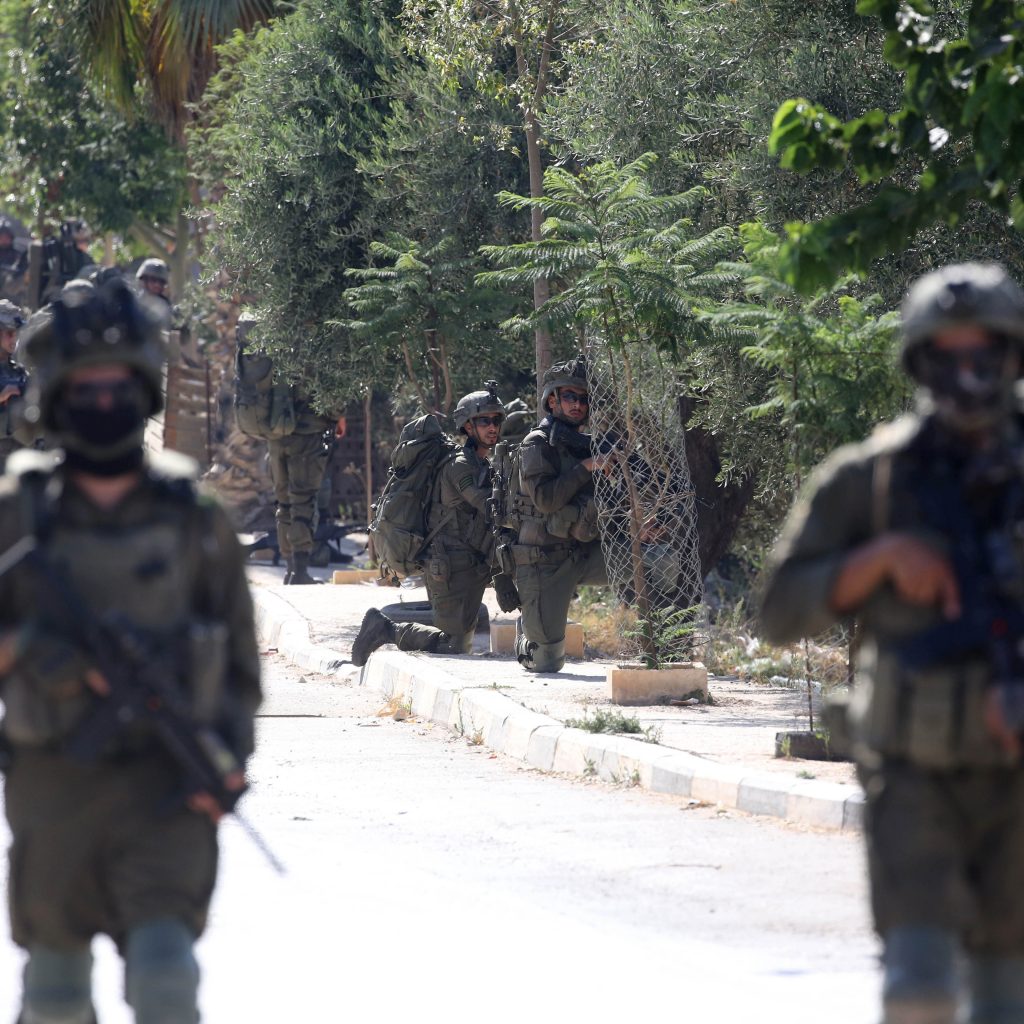
Nuclear arch-rivals India and Pakistan are once again on the brink of war after an attack killed 26 Indian tourists in a picturesque meadow near the town of Pahalgam in Indian-administered Kashmir.
In the past three decades, India and Pakistan have been on the brink of war three times: the 2001 attack on Parliament, the 2008 attacks on two five-star hotels in Mumbai and the 2019 suicide attack on a paramilitary convoy in Kashmir’s Pulwama district.
One thing these events have in common is that the Indian intelligence agencies had advance information.
According to news leaks to Indian media sources, the intelligence agencies seem to have warned this time also of a possible attack on tourists.
Why then are such attacks allowed to happen again and again and no preventive measures are taken?
That remains a pressing, unanswered question.
Let us begin with the incident of abduction and disappearance of six foreigner tourists in July 1995 in the hills of Pahalgam.
Indian authorities and the Jammu and Kashmir police were aware that the tourists were being held in a village called Wadwan.
Photos of them playing volleyball were even taken from the plane.
Years later, two British journalists, Adrian Levy and Cathy Scott-Clark, in their book “The Meadow: Kashmir 1995 Where the Terror Began”,” quoted two former Indian intelligence chiefs and police officials who revealed that the abduction was deliberately dragged out to exploit it to damage Pakistan’s image in the world.
The authors claimed that the Western tourists could have been saved because agents of India’s foreign intelligence agency, the Research and Analysis Wing (RAW), had constantly monitored and even photographed both the hostages and their captors.
When a woman mountaineer reported the kidnapping to the Rashtriya Rifles camp, a unit of the Indian army, she was allegedly attacked instead of being helped.
An informant of the Jammu and Kashmir police, “Agent A’,” who was supposed to track down the abductors, was labeled a militant by the army and killed, silencing the source.
British journalists concluded, based on evidence, that India allowed the tourists to be killed to gain a decisive advantage over Pakistan in the Cold War narrative.
Similarly, in December 1999, during the hijacking of Indian Airlines flight IC 814, which was to be taken to the Afghan city of Kandahar, an intelligence officer reportedly suggested to Prime Minister Atal Bihari Vajpayee that he allow intelligence agencies to blow up the passenger-laden plane rather than give in to the hijackers’ demands.
When asked why, it was argued that such an action would isolate Pakistan diplomatically.
However, Vajpayee rejected the proposal as he was not willing to sacrifice 300 lives for political leverage.
Attack on Hindu temple and parliament
In September 2002, two unidentified men carried out an attack on the Hindu Akshardham temple in the western Indian city of Ahmedabad, killing 32 people.
After a year-long investigation by the anti-terrorism unit was unsuccessful, the case was handed over to the Gujarat Criminal Investigation Department.
Within a week, they arrested Mufti Mansoori and five others and claimed to have solved the case. ‘
Nine years later, they were acquitted of all charges by the Supreme Court.
This raises questions: Who were the actual perpetrators and who orchestrated the attack? Why were innocent people arrested and whose actions were concealed?
In 2002, the current Prime Minister Narendra Modi contested the assembly elections for the first time as Chief Minister of Gujarat.
He used the incident for his election campaign, stirred up enthusiasm throughout the country and attributed the attack to the then Pakistani President Pervez Musharraf. To this day, the real perpetrators of the attack have not been identified.
In 2001, before the attack on parliament, the then Interior Minister L. K. Advani had warned of a possible attack.
Afzal Guru, a Kashmiri allegedly involved in the attack, testified in court that he had brought the four attackers to Delhi on the instructions of Deputy Commissioner of Police Davinder Singh.
Ideally, Singh should have been summoned and investigated. However, the court took Guru’s statement only up to the transportation of the attackers from Sopore to Delhi, leaving out the rest and sentencing him to death.
Davinder Singh’s name surfaced not only in the 2001 Parliament attack but also in a 2005 incident in Gurgaon, near Delhi.
The Delhi Police arrested four people after an encounter and seized a pistol and a radio.
The arrestees produced a letter from Singh, who was then with the Jammu and Kashmir CID, instructing security agencies to provide them safe conduct with weapons and communication equipment.
The Delhi Police later traveled to Srinagar to verify the letter, raided Singh’s residence and seized AK rifles and ammunition.
All this is recorded in the official chargesheet filed in a Delhi court. Singh’s name resurfaced a year after the 2019 Pulwama bombing when he was caught accompanying two militants in a civilian vehicle on January 11, 2020.
Mumbai and Pulwama attacks
The Mumbai attacks in November 2008 highlighted another failure.
Almost all Indian intelligence agencies — including the Intelligence Bureau (IB), the Research and Analysis Wing (RAW) and even the American CIA — had common forewarnings.
The same goes for the Mumbai Police and the management of the Taj Mahal Palace Hotel.
In the year leading up to the attack, the Indian authorities received no less than 26 warnings. These were not vague hints, but predictions about possible targets, likely infiltration routes and timeframes.
In August 2008, newly appointed Deputy Commissioner of Police Vishwas Nangare Patil, who was in charge of South Mumbai, even warned the Taj Hotel to beef up its security.
He conducted hour-long mock drills, sealed vulnerable entrances and set up a security post outside the tower wing. But after Patil went on vacation, the hotel management lifted these security measures. The attack happened exactly as the secret services had predicted.
This pattern was repeated in Pulwama in February 2019.
On the second anniversary of the attack, Frontline magazine reported that between January 2 and February 13 — just one day before the bombing — security authorities had received eleven specific warnings of an imminent attack.
One warning even predicted an explosive blast on the Jammu-Srinagar highway.
In a separate report, the Lethpora crossing in Awantipora was termed a high-risk area. It was precisely there that a suicide bomber rammed an explosives-laden car into a paramilitary convoy on February 14, killing 40 Indian soldiers. The convoy, which consisted of 78 vehicles and had 2,500 soldiers on board, was on its way from Jammu to Srinagar. An intelligence report even advised tighter security along this stretch of highway.
Nevertheless, the police subsequently killed a local youth, Mudassir Ahmed Khan, and labeled him the “mastermind” of the attack, despite admitting that he had been under close surveillance for months.
The clear conclusion is disturbing: the Indian authorities had enough information to act but chose not to intervene.
Whether this was a case of criminal negligence or strategic calculation is a question that remains unanswered.
In the March issue of The Caravan, renowned defense analyst Sushant Singh had warned that a politically weaker Modi, struggling with a tepid economy, might be forced to divert the country’s attention back to Pakistan on some pretext. A month later, has this prediction come alarmingly true?
Cows, Muslims and Pakistan — the three traditional battle cries of Hindu nationalists — have lost some of their sting.
The ‘cow’ narrative has faded, Muslims no longer provide the same polarization in elections as they used to, and even the controversial Waqf Act has lost traction.
Only one card remains strong and reliable: Pakistan. It polarizes quickly, stirs up nationalist sentiment and converts anger into votes.
The 2019 elections proved this, and the Governor of Jammu and Kashmir, Satyapal Malik, later testified to this.
India is on the cusp of becoming a 5 trillion-dollar economy. But this is only possible if there is peace in the region. Wouldn’t it be better to invest in peace and stability in South Asia? If long-standing disputes were resolved and trust restored, the region could become a global example of cooperation.
Instead of threatening to stop water, why not make the river networks navigable all the way to Jalalabad in Afghanistan to promote trade?
Nature has already blessed this region. What we lack is the vision — and the statesmanship — to make it flourish. Mistrust has become endemic. A narrow-minded, short-sighted leadership has taken the entire region hostage.

Read also