John Esposito, who let a billion Muslims speak for themselves, dies at 86
Over five decades, Georgetown scholar challenged idea of Islam as civilisational threat and built institutions that taught a generation otherwise
WASHINGTON (MNTV) — John L. Esposito, the Georgetown University professor whose vast body of work on Islam shaped how successive generations of students, journalists, and policymakers in the West understood the faith, has died. He was 86.
His death was announced by Imam Abdul Malik Mujahid, a longtime friend and the founder of Sound Vision Foundation and former chair of the Parliament of the World’s Religions, who said Esposito’s wife, Jean, had confirmed that he died at 2pm following complications from a stent procedure the previous Thursday.
Service details are expected to be announced later.
Tributes have since arrived from across the Muslim world, including from Malaysian Prime Minister Anwar Ibrahim and from the Council on American-Islamic Relations (CAIR).
“A compassionate friend and trusted voice”
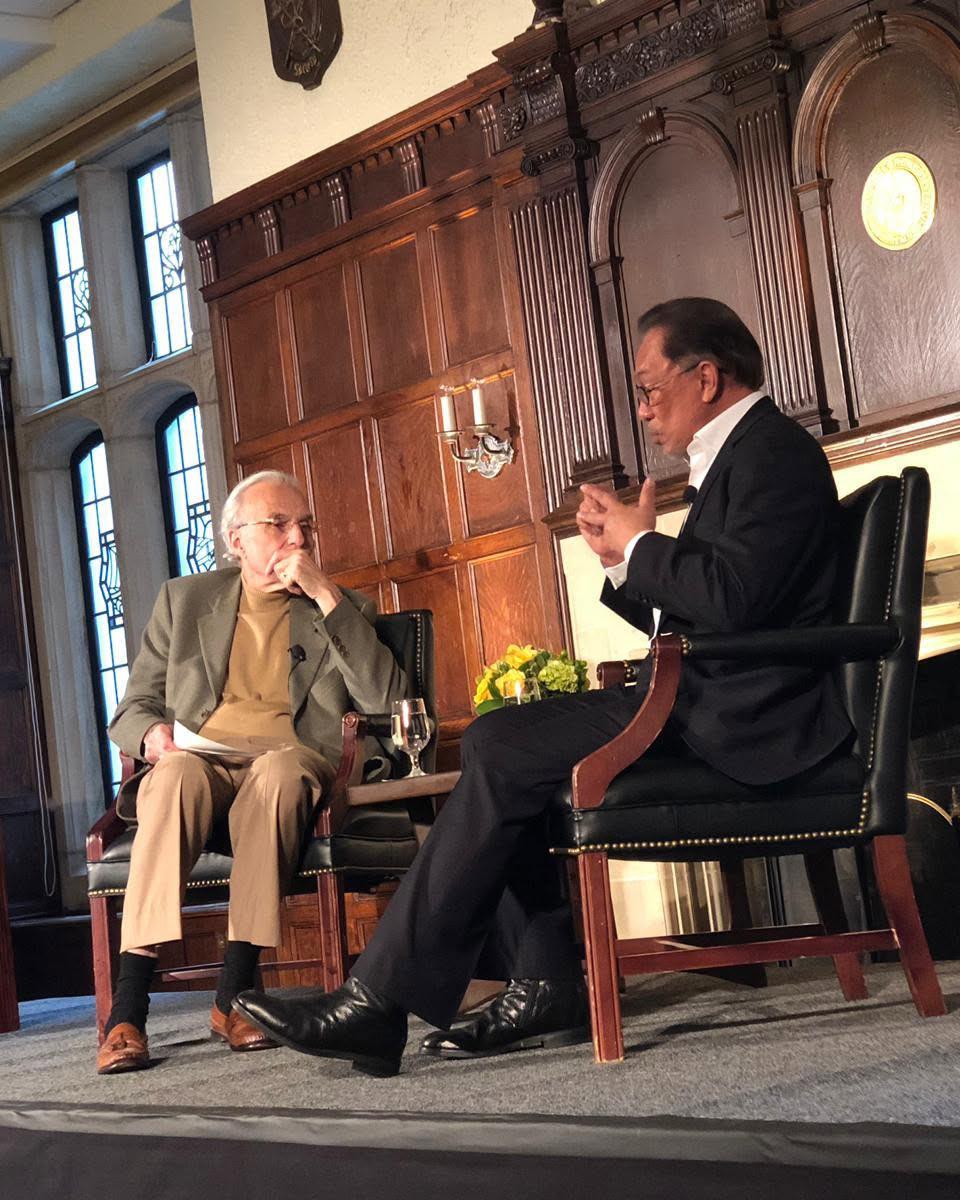
Anwar Ibrahim, who first came to know Esposito in the early 1970s and remained close to him for more than fifty years, credited the scholar with building the intellectual foundations for a deeper understanding of Islam in the West, and described his contribution to Muslim-Christian understanding as enormous.
Esposito, he said, “built bridges where others were content to build civilisational barriers.”
The Malaysian prime minister dwelt as much on the private man as the public scholar, describing someone as generous in conversation as he was rigorous on the page, whose counsel he had valued over many years and who stuck with him through thick and thin.
Extending Malaysia’s condolences to Jean Esposito and to her husband’s family, colleagues, and students, Anwar said Esposito remained, to the end, “a true friend to the Muslim world.”
In a statement, CAIR National Executive Director Nihad Awad opened with the Quranic verse recited at moments of loss — to God we belong and to Him we return — and extended condolences to Esposito’s family, colleagues, students, and the many others touched by his work.
Awad said Esposito had devoted his life to advancing an accurate understanding of Islam and Muslims at a time when misinformation and prejudice too often dominated public discourse, and that his scholarship had educated generations of students, policymakers, journalists, religious leaders, and members of the public worldwide.
He described Esposito as not only an extraordinary academic but a compassionate friend and trusted voice who consistently stood for religious freedom, interfaith cooperation, and the dignity of all people — a legacy, he said, that would continue to inspire future scholars and advocates working to build understanding and mutual respect.
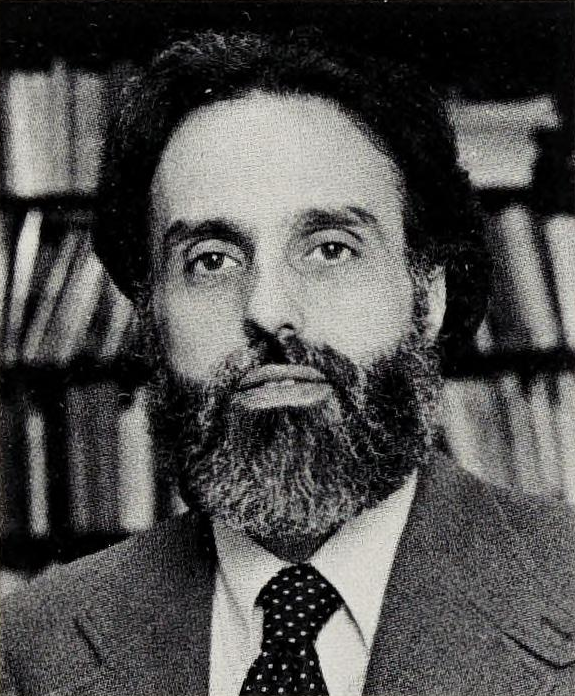
Imam Mujahid, reflecting on decades of friendship, captured the same duality. “He has written more books to build bridges between the United States and the Muslim world than anyone I know of,” he said.
But what stayed with him was not only the scholarship — it was the man’s availability. Esposito would always pick up the phone. For Mujahid, as for countless others across American Muslim institutional life, that accessibility mattered as much as the books: his counsel, offered readily and without ceremony, guided decisions across many areas over many years.
That combination of towering academic output and personal generosity is what many in the field will remember most.
Esposito occupied a rare position — a scholar whose work sat on university syllabi worldwide and on the desks of State Department officials, but who also answered calls from imams, community organisers, and graduate students who simply needed advice.
From Brooklyn to Georgetown
Born in Brooklyn in May 1940 to an Italian-American family, Esposito completed his doctoral studies under the influential Palestinian-American scholar Isma’il Raji al-Faruqi — a formative intellectual lineage that would shape his career.
He spent nearly two decades teaching religious studies at the College of the Holy Cross, a Jesuit institution in Massachusetts, where he chaired the religious studies department and eventually held the Loyola Professorship of Middle East Studies.
In 1993 he joined Georgetown University, where he founded the Center for Muslim-Christian Understanding and served as its director for three decades. The centre, later endowed with a $20 million gift from Prince Alwaleed bin Talal, became one of the world’s leading institutions for cross-cultural and interreligious dialogue.
He also founded the Bridge Initiative, Georgetown’s multi-year research project on Islamophobia, which has produced some of the most rigorous documentation of anti-Muslim prejudice in Europe and North America.
Esposito, who was Catholic, held the title of University Professor at Georgetown, teaching both religion and international affairs and Islamic studies.
Books that taught a generation
His scholarly output was extraordinary in both scale and reach. He wrote, co-wrote, or edited more than 45 books, translated into some 35 languages. Islam and Politics appeared in 1984, followed by Islam: The Straight Path in 1988 — a text that became a standard introduction to the faith and went through many editions.
The Islamic Threat: Myth or Reality?, first published in 1992, took on the emerging Western framing of Islam as a civilisational adversary.
After September 11, 2001, it found a mass readership among people trying to make sense of what had happened. Unholy War: Terror in the Name of Islam followed in 2002, alongside What Everyone Needs to Know About Islam.
Perhaps his most consequential intervention came in 2007 with Who Speaks for Islam? What a Billion Muslims Really Think, co-authored with Dalia Mogahed.
Drawing on Gallup’s massive global polling of Muslim populations, the book made an argument that data, rather than punditry, should determine what the West believed about Muslims — and found that the assumptions dominating Western discourse were largely wrong.
He was also editor-in-chief of the reference works that anchor the field: The Oxford Encyclopedia of the Modern Islamic World, The Oxford History of Islam, The Oxford Dictionary of Islam, the six-volume Oxford Encyclopedia of the Islamic World, and Oxford Islamic Studies Online. For anyone who has looked up a term, a figure, or a movement in Islamic studies over the past thirty years, the chances are they were reading something Esposito shaped.
Recognition and attacks
Esposito served as president of the American Academy of Religion, the Middle East Studies Association of North America, and the American Council for the Study of Islamic Societies. He sat on the High Level Group of the UN Alliance of Civilizations, served as a consultant to the US State Department and to European and Asian governments, and advised the PBS documentary Muhammad: Legacy of a Prophet.
He received the American Academy of Religion’s Martin E. Marty Award for the Public Understanding of Religion in 2005 and Pakistan’s Quaid-e-Azam Award for outstanding contributions to Islamic studies.
His prominence also made him a lightning rod. Far-right extremists accused him of apologetics and of being too sympathetic to Islamic movements — charges he consistently rejected, arguing that his work simply followed the evidence and refused to treat 1.8 billion people as a security problem.
That he was attacked from that quarter for decades was, to his admirers, an indication of precisely how effective his work had been.
The legacy
Esposito spent more than fifty years arguing, in effect, a single proposition: that Islam and its adherents deserve to be understood on their own terms rather than through the distorting lens of conflict, and that the work of explaining one community to another is not soft or secondary but essential to peace.
He did that work through books, encyclopedias, lectures, and testimony — and, as those who knew him attest, through phone calls answered at any hour.
He is survived by his wife of six decades, Jean.

Read also