
Iran launches retaliatory strikes after fresh US attacks endanger Middle East
Washington says it struck 90 Iranian military sites as Tehran responds with attacks on US bases and regional tensions deepen
© Anadolu Agency
TEHRAN, Iran (MNTV) — Iran launched a new wave of retaliatory strikes on US military facilities in the Gulf and elsewhere in the region after the United States carried out another round of attacks on Iranian military targets, further escalating the conflict between the two countries.
The US military said it struck about 90 military targets across Iran, including air defense systems and logistical infrastructure near the Strait of Hormuz. According to US Central Command, the operation was intended ‘to reduce Iran’s ability to threaten commercial shipping in the strategic waterway.’
Iranian authorities said US strikes over the past two days killed at least 14 people and injured 78 others across five provinces.
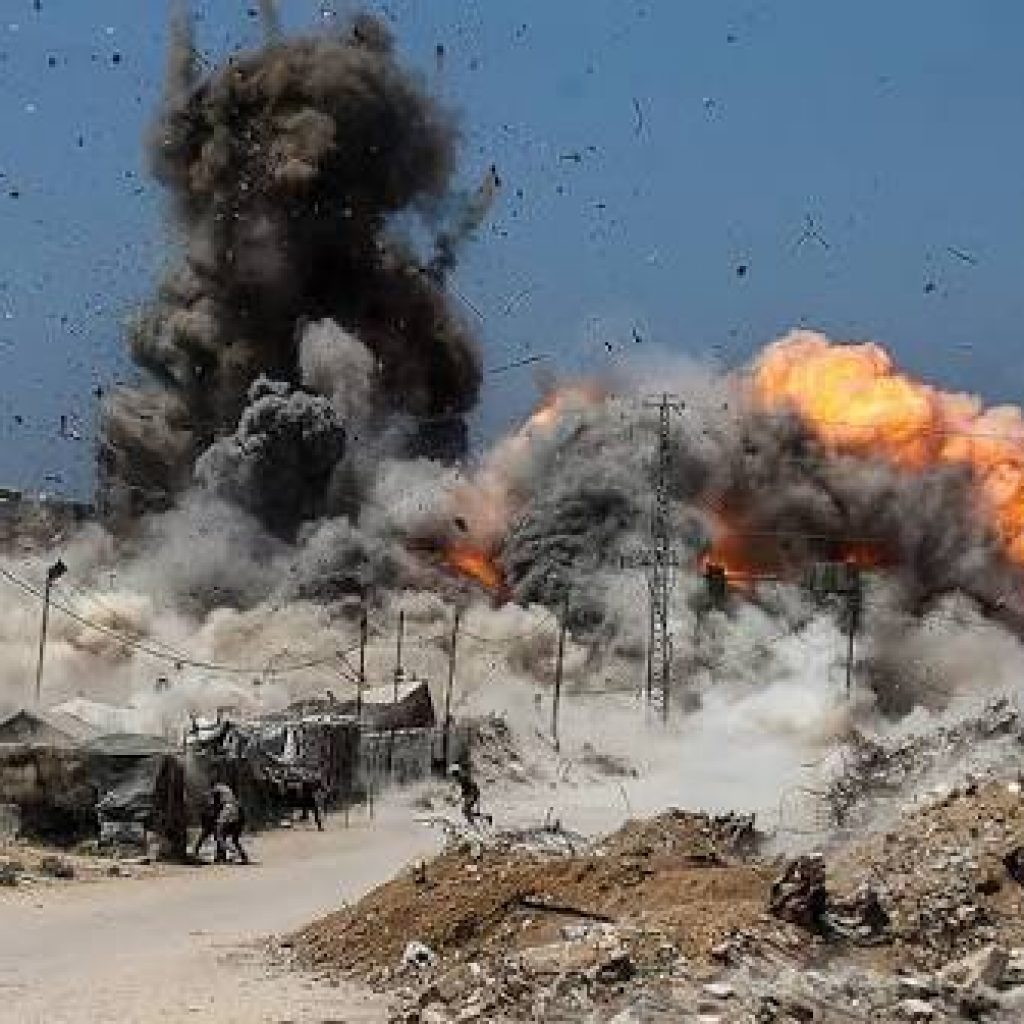
Officials also reported attacks near the Bushehr nuclear power plant, while explosions were heard in several southern cities, including Konarak, Chabahar and Bandar Abbas. US officials did not comment on those reported incidents.
In response, Iran said it targeted US military assets in Kuwait, Bahrain and Qatar before launching additional strikes against sites in Kuwait, Jordan and Iraq, according to Iranian state-linked media.
The Islamic Revolutionary Guard Corps described the attacks as the first phase of its response to recent US military operations.
Iran’s Foreign Ministry condemned the US strikes as a serious violation of international law, while Parliament Speaker Mohammad Bagher Ghalibaf warned that further military action against Iran would be met with additional retaliation.
He also reiterated Tehran’s position that navigation through the Strait of Hormuz would remain subject to Iranian security arrangements.
The renewed hostilities have sharply affected commercial shipping through the Strait of Hormuz. Maritime industry officials said vessel traffic has fallen dramatically as ship operators seek to avoid the increasingly volatile waterway.
Meanwhile, large crowds gathered in Mashhad for the burial of Iran’s late Supreme Leader Ayatollah Ali Khamenei, who was killed during the opening phase of the US-Israeli military campaign against Iran on Feb. 28. The funeral concluded several days of nationwide mourning ceremonies.
The latest exchange marks the most serious deterioration in relations since the memorandum of understanding signed by Washington and Tehran in June.
Although the agreement included a 60-day ceasefire and continued negotiations, US President Donald Trump has declared the arrangement effectively over, leaving the future of diplomacy uncertain.

Read also


