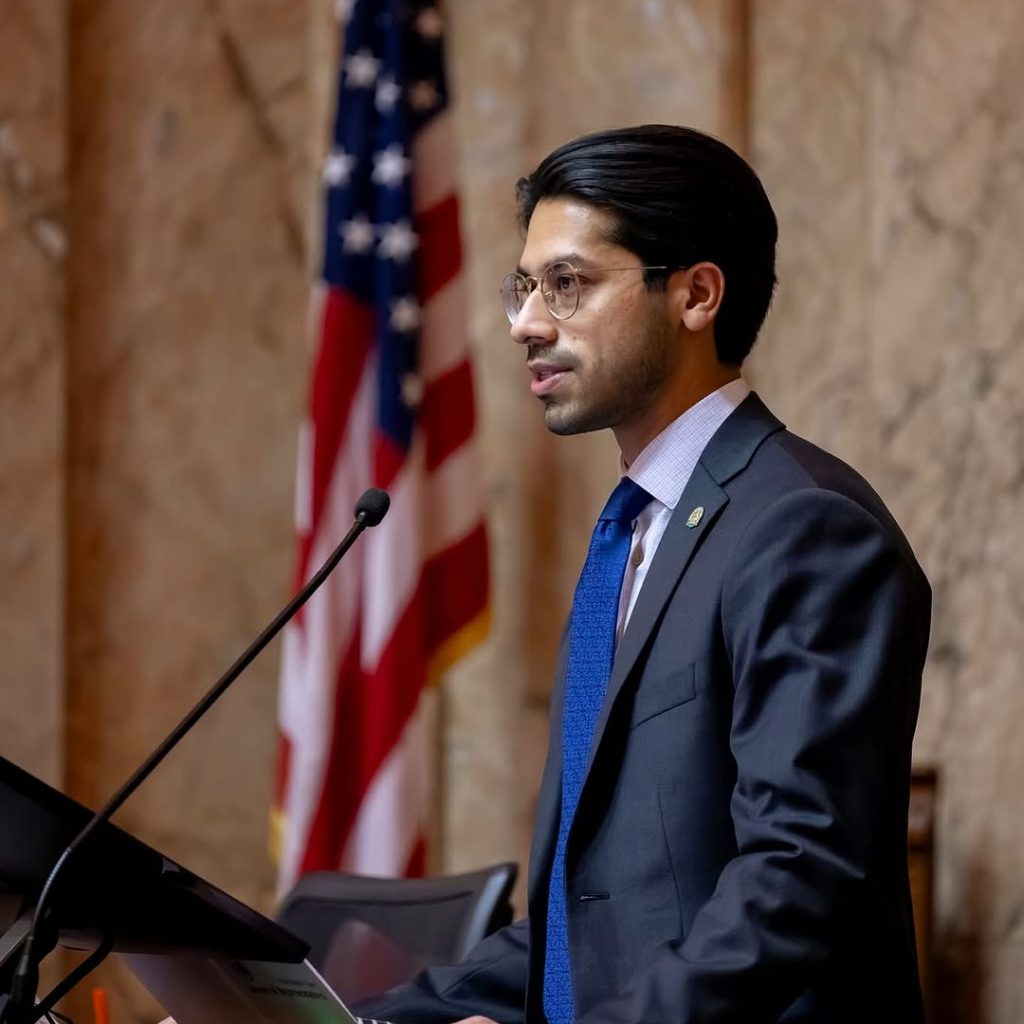
Amira Elghawaby Launches the Muslim Communities Research Observatory — A New Data Study to Track Canadian Muslims and Issues That Concern Them.
The Muslim Communities Research Observatory (MCRO), in collaboration with the Institute of Islamic Studies (IIS) at the University of Toronto, is undertaking a national research initiative titled “The Survey of Muslims in Canada” (SMiC). This study aims to build a credible source of information about Canadian Muslims.
Mission: The goal is to gather research from across the country, digitally catalog it for easier searching, and make it accessible to a wide audience, including everyday citizens, journalists, community leaders, and government organizations.
MCRO is led by Amira Elghawaby, who is Canada’s first Special Representative on Combating Islamophobia (2023–2026), alongside broadcast journalist and communications strategist Ginella Massa, and international operations specialist Rabea Sultan.
MCRO focuses on providing information that is not only quickly accessible but also conveniently usable. The data is ideal for four key user groups:
- Community Advocates – They receive two-page policy briefs that can be read quickly before meetings with elected officials, detailing what the evidence reveals.
- Community Leaders – They can access data to identify service gaps in areas like youth mental health and elder care, alongside practical advocacy toolkits.
- Journalists and Policy Analysts – They have access to verified citations, historical data, and direct links to sources.
- Everyday Citizens – This includes parents, workers, and students, who obtain credible information to use in neighborhood councils or workplace equity committees.
Core Themes for the Survey:
- Everyday Life and Social Attitudes
- Sense of Belonging
- Political and Civic Engagement
- Mosques and Muslim Organizations
- Muslim Youth and Socioreligious Integration
- Mental Health and Wellbeing
- Discrimination
Key Findings
Values: Unlike earlier surveys that provided only binary choices, the SMiC study found that most Muslims and non-Muslims in Canada agree that Muslims wish to embrace both Canadian and Muslim values.
Generational Differences: While first-generation Muslim immigrants predominantly choose to remain in Canada, nearly 47.5% of second- and later-generation Canadian Muslims have considered living in another country due to concerns about affordability and inequality.
Data Portal: These findings are linked to community policy briefs and a portal developed in collaboration with a leading media house, aimed at transforming empirical data into actionable policies for communities and the government. The dataset is archived through the Borealis Dataverse.
Topline Results:
- Muslims in Canada encounter more workplace discrimination than other Canadians. Few report these incidents, and even fewer see them resolved.
- In the Greater Toronto and Hamilton Area (GTHA), only about 1 in 10 cases of workplace discrimination are fully resolved.
- 64% of workplace discrimination cases in the GTHA were reported, primarily to an employer or HR.
- Only 16% of those reported cases were fully addressed.
- 12% of Muslims who faced discrimination at work or school reported it to the authorities.
- 43% of those who reported said that no action was taken.
- 26% have experienced discrimination or prejudicial treatment in the workplace.
- 26.7% of individuals in the labor force have faced verbal or physical violence or Harassment while working.
- 52% indicate that their religious practices are not adequately accommodated.
- 1 in 5 individuals were questioned about their religion during job interviews.
Challenges Reported by Muslim Businesses, Officials, and Individuals:
- Customers: 41% of harassment incidents were reported to come from customers or clients, making this the largest source.
- Fear: 27% of those who did not report incidents remained silent due to fear of retaliation.
- Pay: Visible minority Muslim women working full-time earn only 64 cents for every dollar earned by White non-Muslim men.
- Slow Systems: The federal human rights commission’s backlog grew by approximately 60% in 2025. 49% of Muslim women whose reports resulted in action were not satisfied with the outcomes.
What Employers and Governments Can Do to Combat Muslim Hate at Work:
- Improve the Human Rights System:
Ontario: Fund the Human Rights Commission and Tribunal to ensure cases are heard.
Enforcement: Decide cases on their merits and set public timelines.
Federal: Fund the federal commission to clear its backlog.
- Ensure Complaint Outcomes Lead to Results:
Employers: Investigate every complaint and provide the employee with written feedback on the actions taken.
Enforcement: Proactively check sectors with high Muslim employment, rather than waiting for complaints to arise.
Ontario: Require employers to investigate complaints and presume retaliation if a worker is punished after reporting.
- Make Room for Faith and Prevent Harassment:
Employers: Avoid asking about religion in interviews; implement a clear written accommodation policy; and take measures to stop Harassment from co-workers, managers, and customers.
Ontario: Strengthen protections against Harassment, including from customers.
- Ensure Equal Pay and Benefits:
Ontario: Update the Employment Standards Act to ensure fair wages and equal benefits, including part-time employees.
Federal: Revise the Employment Equity Act as promised in 2023.
- Count Muslim Workers:
Federal: Include religion in the Labor Force Survey; fund a national study and an action plan addressing Islamophobia in the workplace.
Enforcement: Publish results of complaints by religion and gender.
Note: *MCRO suggestions are not included in the reports. “Enforcement” refers to human rights commissions and tribunals.



Read also