Israel’s election: No hope for Palestinians
Israeli human rights group B'Tselem warns that even Netanyahu's defeat will not end occupation, apartheid or Palestinian suffering; only international pressure, not change of government, can secure Palestinian rights
By Iftikhar Gilani
ANKARA, Turkiye (MNTV) – Israel is heading into a parliamentary election that could determine Prime Minister Benjamin Netanyahu’s political future. But for millions of Palestinians living under Israeli occupation and military control, the outcome may make little difference.
Whether Netanyahu retains power or an opposition coalition replaces him, the fundamental policies governing Palestinian lives are unlikely to change.
That is the assessment of B’Tselem, one of Israel’s leading human rights organizations, whose senior officials have warned that the country’s political establishment remains united on maintaining Israeli control over Palestinians, despite fierce divisions over domestic politics and Netanyahu’s leadership.
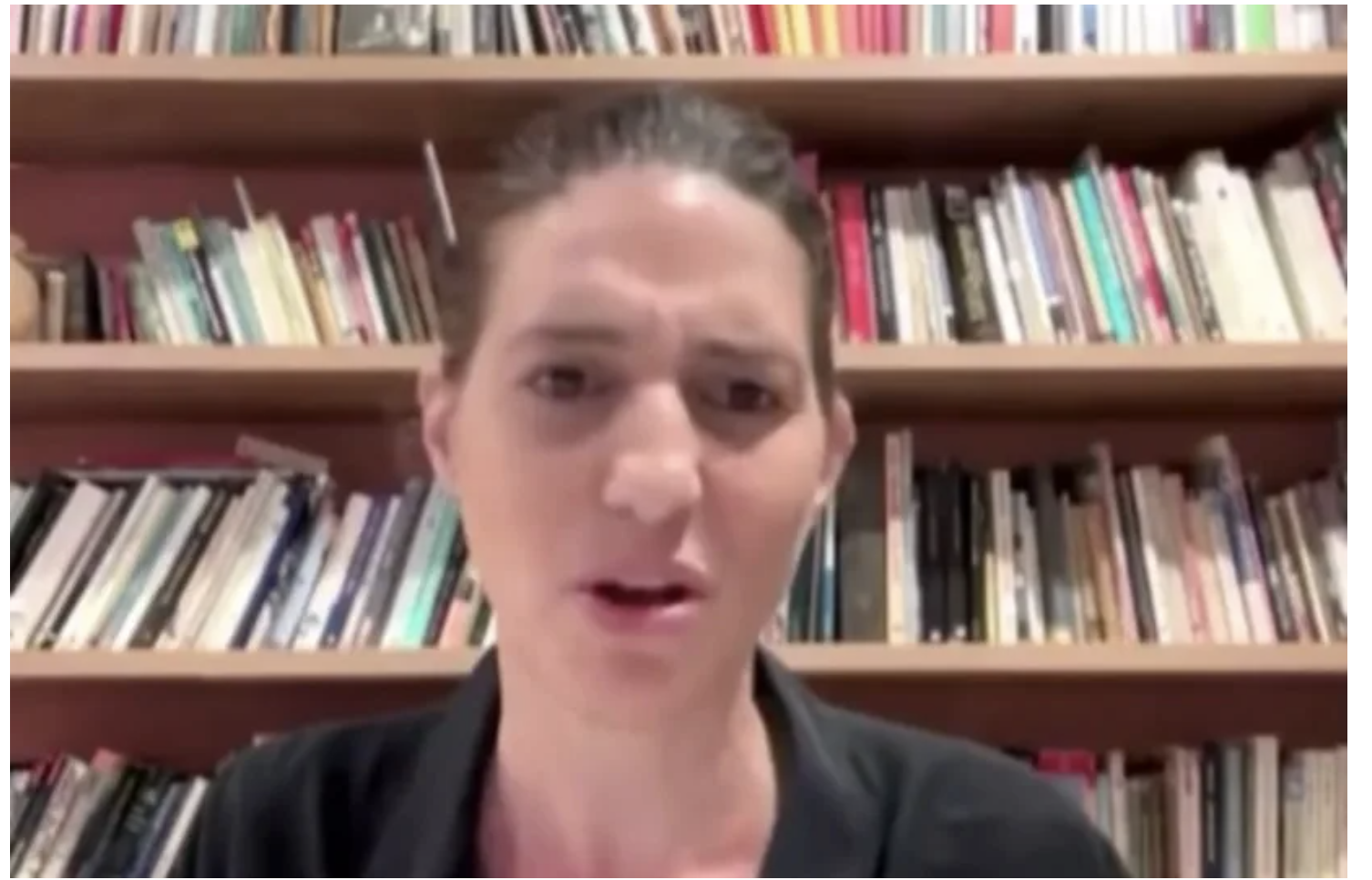
Speaking at an online briefing attended by Muslim Network TV, B’Tselem Executive Director Yuli Novak and Yair Dvir, a senior representative of the organization, argued that the forthcoming election is taking place within a political system that systematically excludes millions of Palestinians from decisions affecting their lives.
Their central message was that replacing Netanyahu would not automatically dismantle the structures of occupation, settlement expansion, military domination and institutionalized discrimination.
“We are not seeing any possibility of change that will come from within the system,” Dvir said.
More importantly, they cautioned the international community against treating an opposition victory as an opportunity to postpone action while waiting for another Israeli government to demonstrate its intentions.
The responsibility, they argued, now rests with governments and international institutions that have provided Israel with military assistance, diplomatic protection and political legitimacy over decades.
Election ignores Palestinian suffering
Perhaps the most striking feature of Israel’s election campaign, according to B’Tselem, is the virtual absence of any serious discussion about Palestinian rights.
Despite three years of devastating warfare in Gaza, extensive destruction of Palestinian communities and escalating violence across the occupied West Bank, these issues have barely entered the mainstream electoral debate.
Dvir said the campaign has proceeded almost as though the destruction of Gaza and the displacement of its population were unrelated to Israeli politics.
He described the situation as an indication of how deeply violence against Palestinians has become normalized within Israeli society.
According to figures presented during the briefing, more than 1,500 Palestinians have been killed in Gaza since the US-backed ceasefire agreement last year.
B’Tselem maintains that Israel’s actions in Gaza constitute genocide, a characterization that reflects the organization’s assessment of Israeli policy.
Dvir said the destruction of entire neighborhoods, the displacement of almost all of Gaza’s population and the continuing deterioration of living conditions have failed to generate meaningful debate among the principal election contenders.
“There is no discussion about Palestinian rights, about accountability for Israeli crimes and about reconstruction in Gaza,” he said.
The only substantial references to Gaza, he added, have come from far-right politicians advocating further displacement of Palestinians and the establishment of Israeli settlements in the territory.
“The lack of mention of the genocide and what Israel is doing in the West Bank” reveals the normalization of violence against Palestinians and the boundaries of Israeli political debate, Dvir said.
The silence is particularly significant because Israel’s next government will inherit responsibility for decisions affecting Gaza’s reconstruction, security, movement of people and future political administration.
Yet none of these questions has emerged as a central electoral issue from the perspective of Palestinian rights.
West Bank violence outside electoral debate
The situation in the occupied West Bank provides another illustration of the disconnect between Israeli electoral politics and Palestinian realities.
B’Tselem officials said more than 1,100 Palestinians have been killed in the West Bank over the past three years, with Israeli military forces responsible for most of those deaths.
They also reported that 65 Palestinian communities have been forcibly displaced during this period.
More than 30,000 Palestinians have been driven from their homes during Israeli military operations in refugee camps, according to figures cited at the briefing.
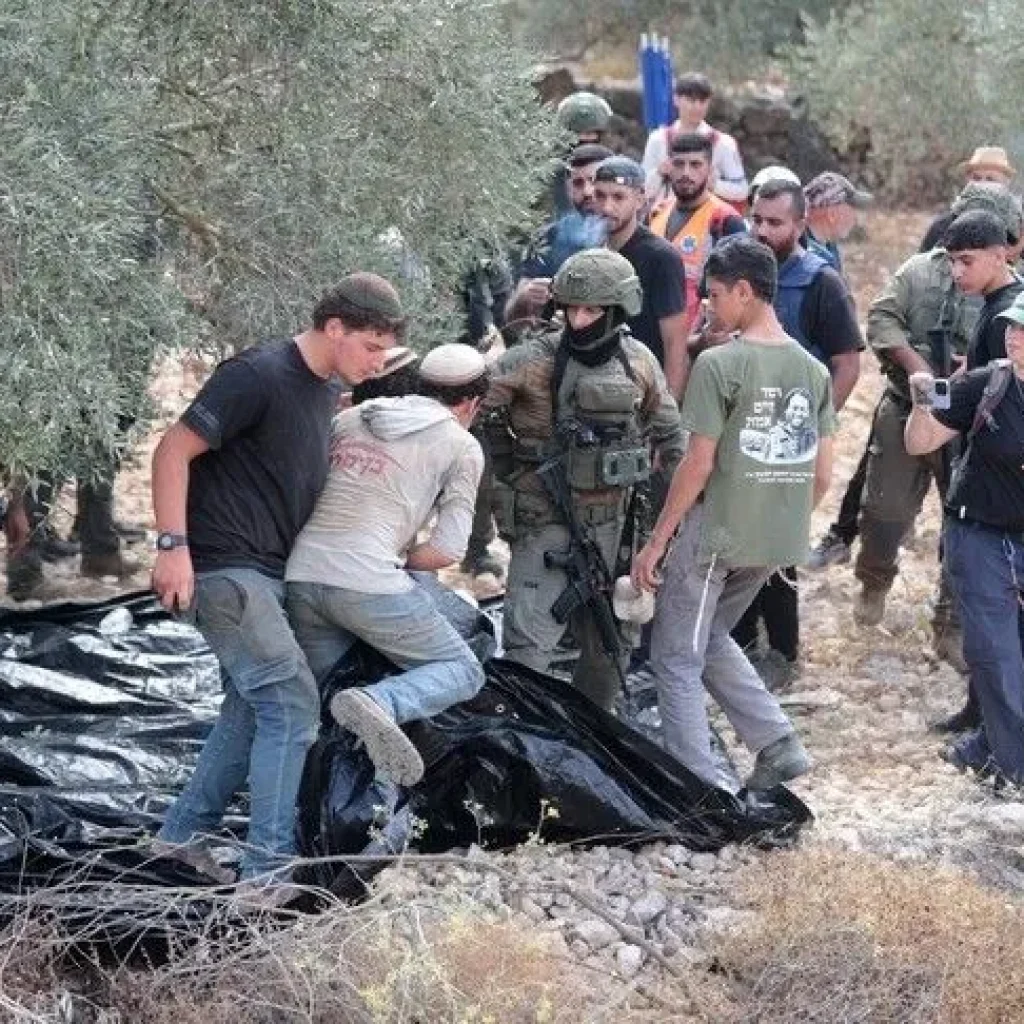
The violence has intensified during the current olive harvest, a season that is central to Palestinian agricultural livelihoods and community life.
Citing documentation, Dvir said more than 500 attacks had been recorded across approximately 180 Palestinian villages during the recent escalation.
The attacks have included assaults on farmers, intimidation, destruction of agricultural property and interference with access to olive groves.
But B’Tselem emphasized that settler attacks are only one component of a much wider system of coercion.
Israeli military operations, movement restrictions, land seizures, home demolitions and economic pressure collectively undermine the ability of Palestinians to remain in their communities.
“The army is the one that is controlling the life of Palestinians, maintaining the movement restrictions,” Dvir said, emphasizing that Israeli military forces, rather than settlers alone, are responsible for enforcing the system.
For B’Tselem, the absence of these realities from the electoral debate demonstrates the narrow boundaries of acceptable political discussion in Israel.
The question is not merely whether one party is more aggressive than another. It is whether any major political force is prepared to challenge the system that enables these policies.
Millions governed without vote
Novak placed the forthcoming election within what B’Tselem describes as Israel’s overarching system of apartheid.
She said approximately 15 million people live between the Jordan River and the Mediterranean Sea under varying degrees of Israeli control.
Yet only about half possess the political rights necessary to influence the government exercising that control.
“These elections, as contradictory as it sounds, are operating within an apartheid,” Novak said, arguing that electoral competition does not alter the unequal political framework.
Palestinians living in the occupied West Bank and Gaza cannot vote in Israeli parliamentary elections, despite the far-reaching consequences of Israeli government decisions for their lives.
Most Palestinians in occupied East Jerusalem hold residency rather than Israeli citizenship and therefore cannot vote in national elections.
Novak pointed to the occupied West Bank as a particularly visible illustration of this unequal political structure.
Jewish settlers living in settlements can vote for the Israeli government, while Palestinians living only a few hundred meters away cannot participate in the same election.
Both populations experience the consequences of decisions taken by that government, but only one has representation in the political system making those decisions.
For B’Tselem, this inequality is not an incidental defect of Israeli democracy. It is a defining feature of the system.
Novak argued that the political arrangements are designed to advance the rights and interests of one national group while denying equal rights to another.
This means the election cannot be understood solely as a contest between Netanyahu and his opponents.
It is also an election in which millions of people governed by Israeli policies have no voice in choosing those who govern them.
Opposition offers no alternative
B’Tselem’s assessment of the principal opposition figures was equally critical.
Dvir said that although Netanyahu’s opponents disagree with him over leadership, governance and some domestic policies, they largely share his opposition to Palestinian sovereignty and support for continued Israeli control.
“They have different agendas in a way, but about the core issue they are actually agreeing,” he said.
He identified former military chief Gadi Eisenkot, former Prime Minister Naftali Bennett and former Defense Minister Avigdor Lieberman as prominent examples.
Eisenkot, Dvir noted, previously served as chief of staff of the Israeli military and is associated with the Dahiya doctrine, which advocates overwhelming military force against enemy-controlled areas.
According to B’Tselem’s assessment, Eisenkot supports continued settlement activity and opposes Palestinian statehood.
Bennett, who previously led the Yesha Council representing Israeli settlements in the occupied territories, has long opposed the creation of a Palestinian state.
He has supported Israeli annexation of Area C, the portion of the occupied West Bank under full Israeli administrative and security control.
Lieberman has also opposed Palestinian statehood and advocated renewed large-scale military action against Hamas in Gaza.
These positions, Dvir argued, demonstrate that the opposition’s disagreement with Netanyahu does not necessarily extend to the central question of Palestinian self-determination.
Some opposition figures have proposed stronger action against unauthorized settlement outposts and more effective enforcement against violent settlers.
But B’Tselem considers such proposals limited adjustments rather than fundamental changes.
Even if an opposition government removed some unauthorized outposts or prosecuted individual settlers, it could continue expanding established settlements and maintaining military control over Palestinian communities.
The resulting government might appear more moderate internationally without substantially changing the conditions Palestinians experience.
Novak warned against the assumption that removing Netanyahu would reverse the direction of Israeli policy.
“Settlement, ethnic cleansing, dehumanization, military control, apartheid, these are all things that were there way, way before,” she said.
She added that some Israeli political forces seek to intensify these policies, while others merely seek to administer them in a less openly confrontational manner.
“Some [are] trying to push those very far, even farther, and there are some who try to hold it within the kind of, make it a more polite apartheid,” Novak said.
Neither approach, she argued, provides Palestinians with a credible route to freedom and equality.
Palestinians face political exclusion
The briefing also examined the position of Palestinian citizens of Israel, who constitute roughly one-fifth of the country’s population.
Unlike Palestinians living under occupation, they possess Israeli citizenship and can vote in parliamentary elections.
Their votes could potentially determine whether Netanyahu remains in office.
Yet B’Tselem said their political influence is constrained by institutional discrimination and the reluctance of major Jewish-led parties to accept Palestinian parties as legitimate coalition partners.
Responding to a question from Muslim Network TV about whether Palestinian voters could influence the formation of the next government, Dvir acknowledged that their participation could be decisive.
“Palestinian citizens of Israel have the right to vote, and they can influence the election result and the formation of the government,” he said.
“But first, we must remember that they operate within a system of apartheid and institutionalized discrimination.”
According to Dvir, the contest between Netanyahu’s governing bloc and its principal opponents remains close.
An opposition coalition willing to cooperate with Palestinian parties could improve its prospects of defeating Netanyahu.
Nevertheless, leading opposition figures have resisted such an arrangement.
Dvir argued that this refusal reveals the limits of political inclusion in Israel.
Even the prospect of another Netanyahu government has not persuaded major opposition leaders to abandon their resistance to Palestinian political participation.
The exclusion also extends to the legal framework governing elections.
Israeli law permits the disqualification of parties and candidates that reject Israel’s definition as a Jewish and democratic state, among other grounds.
B’Tselem argued that such provisions restrict the scope of political debate and make it difficult to advance alternatives based on equal national and political rights.
The result is a political system in which Palestinian citizens can participate in elections but face significant barriers to influencing government policy.
Why Israeli society looks away
Novak offered a deeper explanation for the absence of Palestinian suffering from the election campaign.
She argued that the problem cannot be attributed simply to media censorship, misinformation or public ignorance.
Instead, she traced it to decades of separation, dehumanization and political conditioning.
Under what she describes as apartheid, members of the privileged population can experience democratic rights and political freedoms while remaining largely insulated from the conditions imposed on Palestinians.
This creates two profoundly different experiences within the same political system.
One population sees elections, political competition and democratic institutions. The other experiences military rule, displacement, restrictions and the denial of equal rights.
“That’s exactly what apartheid does,” Novak said, explaining how a society can continue believing in its democratic character while denying fundamental rights to millions under its control.
Novak said this contradiction has become deeply embedded in Israeli political consciousness.
She also argued that the events following October 7, 2023, accelerated an existing process rather than creating an entirely new political direction.
Although B’Tselem condemned the Hamas-led attacks of October 7 as criminal, Novak maintained that the subsequent Israeli military campaign in Gaza intensified the normalization of extreme violence against Palestinians.
“A genocidal discourse and incitement for genocide became completely normalized in Israeli discourse,” she said.
The resulting political atmosphere has made Palestinian suffering increasingly invisible in mainstream debate.
For Novak, this helps explain why an election can take place after years of devastating warfare without a serious national discussion about accountability, occupation or Palestinian freedom.
She warned that the expectation of an automatic return to moderation after Netanyahu’s departure misunderstands the depth of the problem.
Hard-line policies
B’Tselem also cautioned that changing political leadership would not necessarily transform the institutions implementing Israeli policies.
Novak identified the military, police, prison system and Shin Bet internal security agency as institutions in which increasingly hard-line approaches have become entrenched.
She argued that the problem extends beyond ministers issuing orders.
Policies, administrative practices and the outlook of officials responsible for implementing them have evolved over several years.
Consequently, even a government promising a less confrontational approach could inherit institutions accustomed to exercising extensive coercive powers over Palestinians.
A change in leadership would not automatically reverse those practices.
This institutional continuity, B’Tselem argued, is another reason international governments should not assume that an opposition victory would produce immediate improvements.
International pressure cannot wait
The strongest message from the briefing concerned international responsibility.
Dvir argued that foreign governments have repeatedly allowed Israeli political developments to become reasons for delaying action.
The international community has waited for elections, new coalitions, diplomatic initiatives and peace negotiations while Israeli control over Palestinians has continued to deepen.
Meanwhile, military assistance, economic relations and diplomatic protection have enabled successive Israeli governments to maintain their policies without sufficient accountability.
Dvir warned that this pattern must end.
He said international governments should demand concrete changes regardless of who wins the election.
A Netanyahu victory would require a firm international response, but an opposition victory should not become an excuse for granting Israel another period of diplomatic patience.
“We cannot give them more time,” Dvir said.
“We need to see actions on the ground; we need to see the policies changing.”
He urged the international community to move beyond expressions of concern and diplomatic condemnation toward meaningful measures capable of changing Israeli conduct.
“If not, we need to see the international community moving from talking and from condemnation into real actions on the ground,” Dvir said.
Such measures could include enforcing international law, reviewing military cooperation, imposing consequences for settlement expansion and demanding accountability for violations of Palestinian rights.
The broader argument was that governments supplying Israel with political, financial and military support cannot remain passive observers of the consequences.
Their influence creates a responsibility to act.
B’Tselem’s position also challenges the tendency of international diplomacy to focus on personalities rather than policies.
Whether Israel’s next prime minister is Netanyahu, Bennett, Eisenkot or another political leader, the decisive questions remain the same.
Will Palestinians gain equal rights? Will forced displacement end? Will settlement expansion stop? Will military control give way to Palestinian freedom and self-determination?
Without measurable progress on these questions, B’Tselem argued, a change of government would have limited significance for Palestinians.
Novak’s assessment was that no major force within the dominant Israeli political spectrum currently offers the fundamental transformation required.
“We have no reason to think that a shift in government, that the changing government will change the fundamental direction that started way before this current government,” she said.
The organization’s warning therefore extends beyond the immediate election.
It questions the assumption that Israeli domestic politics alone can produce a just resolution after decades of occupation and unequal rights.
For Palestinians in Gaza, the occupied West Bank and East Jerusalem, the ballot boxes opening in Israel may decide who exercises power, but not whether that power will continue to govern their lives.
For Palestinian citizens of Israel, the election may offer opportunities to influence parliamentary arithmetic without necessarily overcoming the barriers to meaningful political equality.
The central conclusion of the B’Tselem briefing was unmistakable: Palestinian freedom cannot depend on the electoral fortunes of Netanyahu or his opponents.
Unless the international community makes respect for Palestinian rights a condition of its relationship with Israel, the organization warned, the next government could preserve the same system under a different political leadership.
The election may change Israel’s rulers. Without sustained international pressure, B’Tselem sees little reason to expect it to change the reality for Palestinians.

Read also