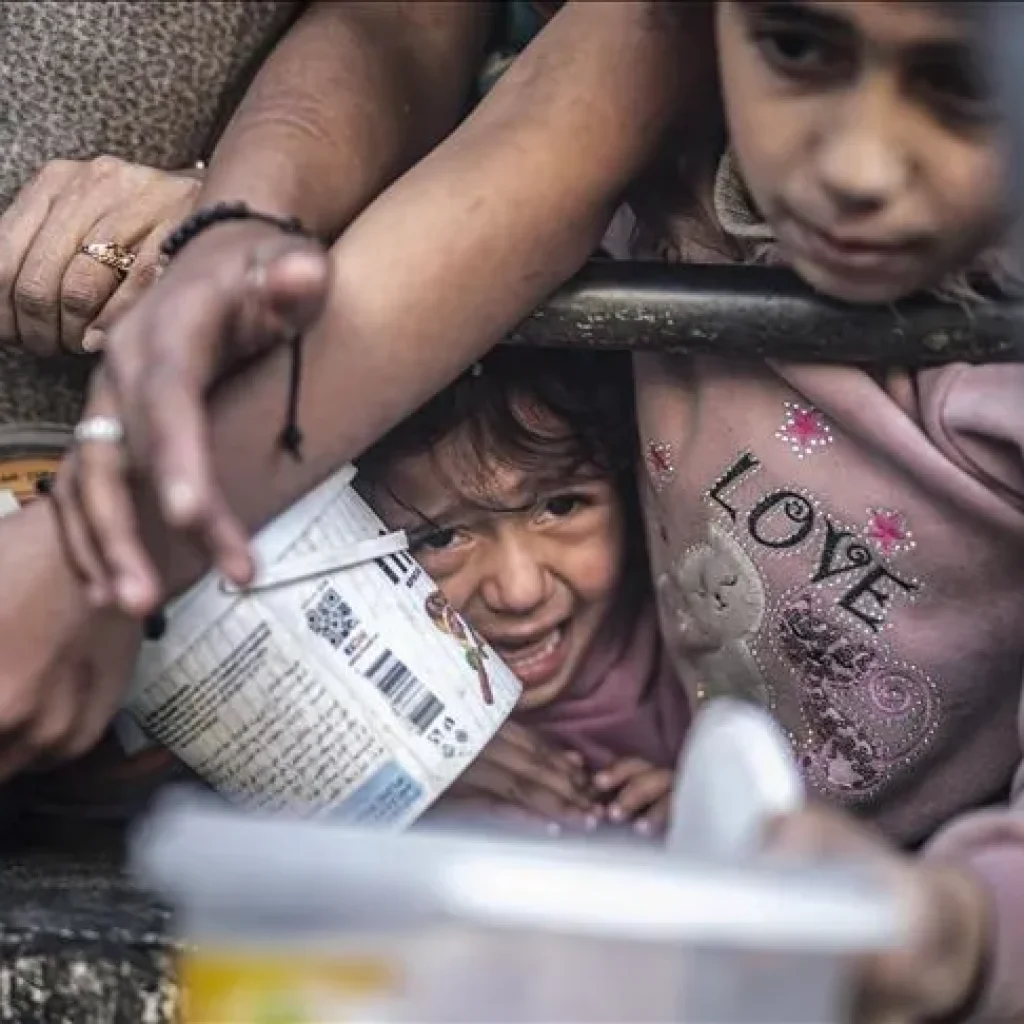
Amnesty urges sanctions as Israeli settlers target Palestinian farmers
Rights group condemns Israeli settler attacks during olive harvest, demands sanctions, arms embargo and action against occupation and forced displacement
© Anadolu Agency
RAMALLAH, Palestine (MNTV) — Amnesty International has urged governments to impose concrete measures against Israel as attacks by Israeli settlers intensify during Palestine’s olive harvest, threatening farmers’ livelihoods and deepening displacement across the occupied West Bank.
According to Amnesty International, attacks over the weekend targeted Palestinian farmers near Abu Falah and residents near Taybeh, northeast of Ramallah.
The settlers also attacked a Washington Post photojournalist and a delegation of European diplomats, underscoring the dangers facing Palestinians and international observers in areas where settler violence has escalated.
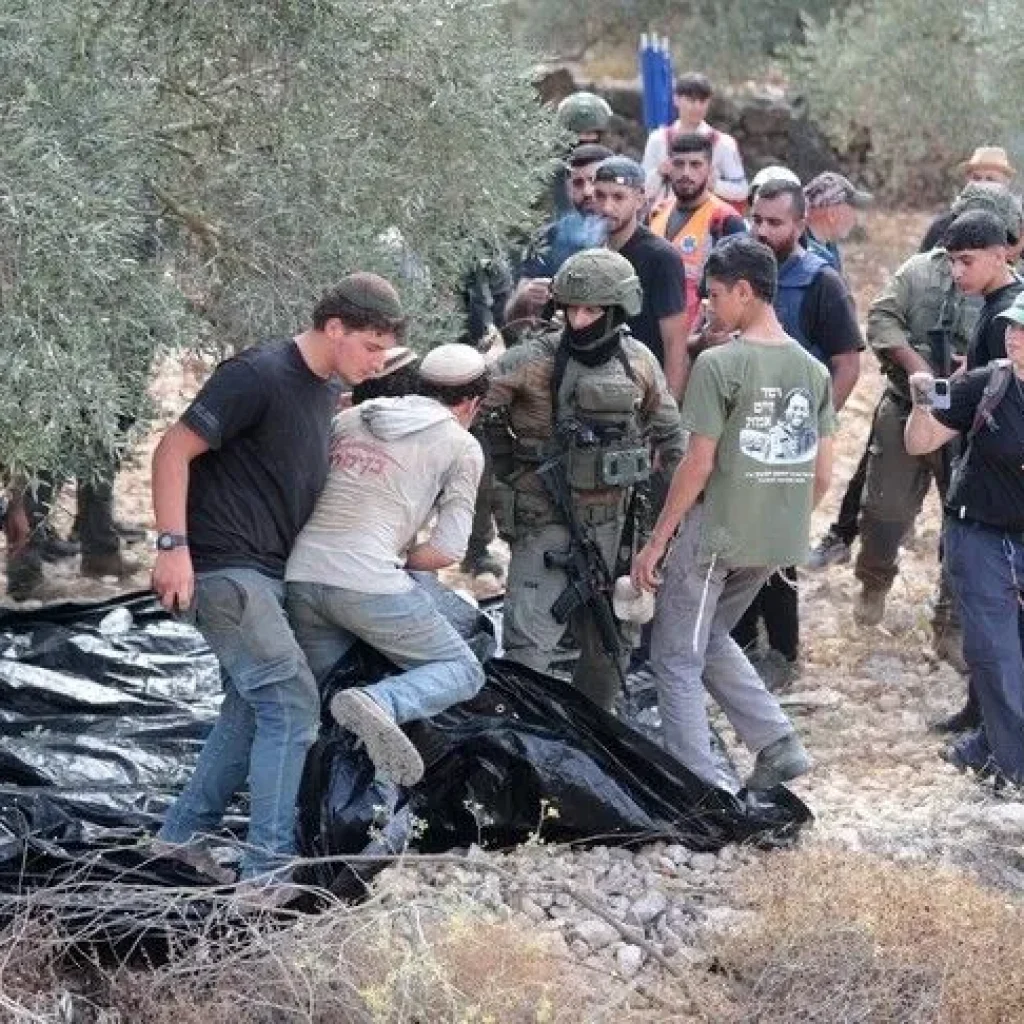
On October 16, dozens of masked Israeli settlers attacked Palestinian farmers harvesting olives near Abu Falah. Amnesty reported that the attackers threw stones, used slingshots, set olive trees on fire and assaulted Palestinians.
US photojournalist Heidi Levine, who was covering the harvest for The Washington Post, was knocked to the ground and repeatedly kicked before bleeding heavily, despite wearing clearly marked protective equipment for journalists.
Her camera equipment and telephone were reportedly stolen, and she was hospitalized with multiple injuries. Israeli police said on October 19 that they had arrested 10 suspects in connection with the incidents.
The following day, masked settlers attacked a group near Taybeh that included Belgian, French and Polish diplomats, a French mayor, Catholic representatives and Palestinian residents.
A Belgian diplomatic vehicle was reportedly damaged, while several members of the delegation were assaulted.
Amnesty’s Regional Director for the Middle East and North Africa, Heba Morayef, described the violence as part of a broader pattern enabled by Israeli state policies and society.
The organization rejected attempts to portray such attacks as isolated actions by individual settlers, arguing that settlement expansion, military restrictions and official support have contributed to systematic dispossession.
Olive harvesting is a major source of income for many Palestinian families. Attacks on farmers, destruction of trees, theft of crops and restrictions on access to agricultural land can deprive communities of income while making continued residence increasingly difficult.
Amnesty said the violence must be understood within Israel’s wider policies in the occupied West Bank, including settlement expansion and measures aimed at consolidating control over Palestinian territory.
The organization has warned that state-supported settler violence is being used to pressure Palestinian communities into leaving their homes and land.
Its 2026 research documented the displacement of predominantly Bedouin and herding communities in Area C, where Israel exercises extensive control.
According to the organization’s report, at least 117 such communities experienced full or partial displacement between January 2023 and April 2026. United Nations figures cited by Amnesty indicated that at least 5,910 people had been forcibly displaced by the end of April 2026.
The organization also documented the expansion of settlement outposts and the destruction of Palestinian homes, agricultural assets and essential infrastructure. It argues that the pattern cannot be separated from the Israeli government’s broader annexation agenda.
Amnesty called on governments to suspend trade, investment and other cooperation that contribute to maintaining Israel’s unlawful occupation and settlement enterprise.
It also urged states to impose targeted sanctions on Israeli officials credibly implicated in serious violations of international law, enforce an arms embargo and support international accountability mechanisms, including investigations by the International Criminal Court.
The organization warned that diplomatic statements without practical consequences would do little to protect Palestinian communities.
It urged governments to take measures that address both the immediate attacks and the political and institutional structures that allow violence and displacement to continue.


Read also