NATO leaders discuss wars; spouses focus on saving children from digital dangers
At parallel summit in Ankara, spouses of NATO leaders urge global action against unchecked power of social media algorithms and artificial intelligence
© AA
ANKARA (MNTV) — While NATO leaders debated wars, defence spending and global security, another gathering across the city turned its attention to a different battlefield: one that millions of children enter every day with a single click.
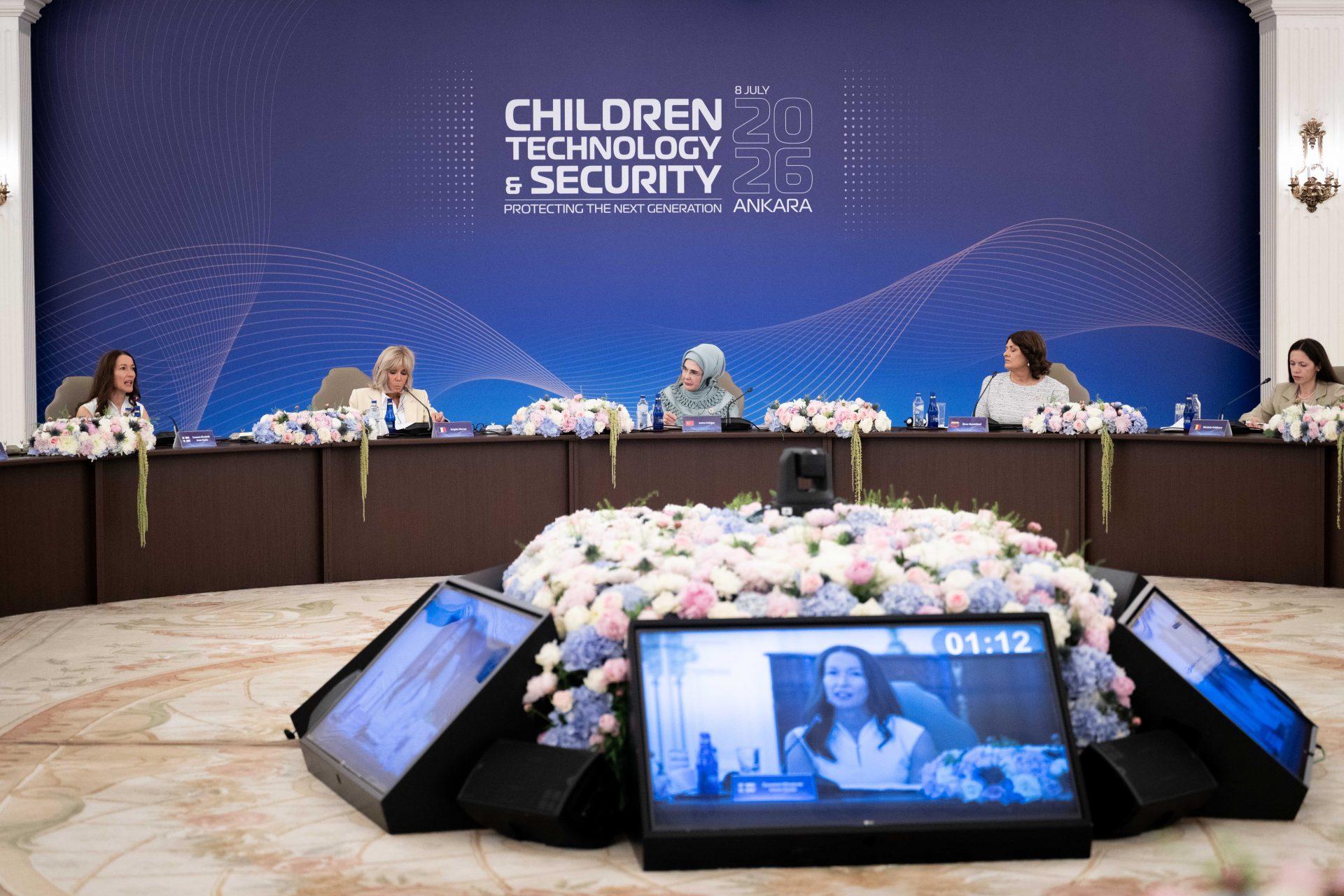
At the Çankaya Presidential Palace, Türkiye’s First Lady Emine Erdoğan brought together the spouses of presidents, prime ministers and other leaders attending the 36th NATO Summit for a roundtable titled “Children, Technology and Security: Protecting the Next Generation.”
The discussion shifted the focus from missiles and military alliances to smartphones, social media, artificial intelligence and the growing influence of digital platforms over children’s lives.
Opening the meeting, Emine Erdoğan delivered a forceful appeal for governments to regulate technology companies more effectively. Child safety, she warned, should never be treated as an optional feature bolted on after a product reaches the market.
“Child safety must not be an additional setting or an afterthought added to digital platforms. It must be the very first principle of their design,” she said.
She also demanded greater transparency from technology companies, arguing that the algorithms shaping the online experiences of billions of children cannot remain hidden from public scrutiny.
“The black box of the algorithms must be opened. Technology companies must submit the societal impact of their products to independent oversight,” she said.
Her remarks reflected growing international concern over the psychological and social effects of social media, artificial intelligence and digital addiction on children and teenagers.
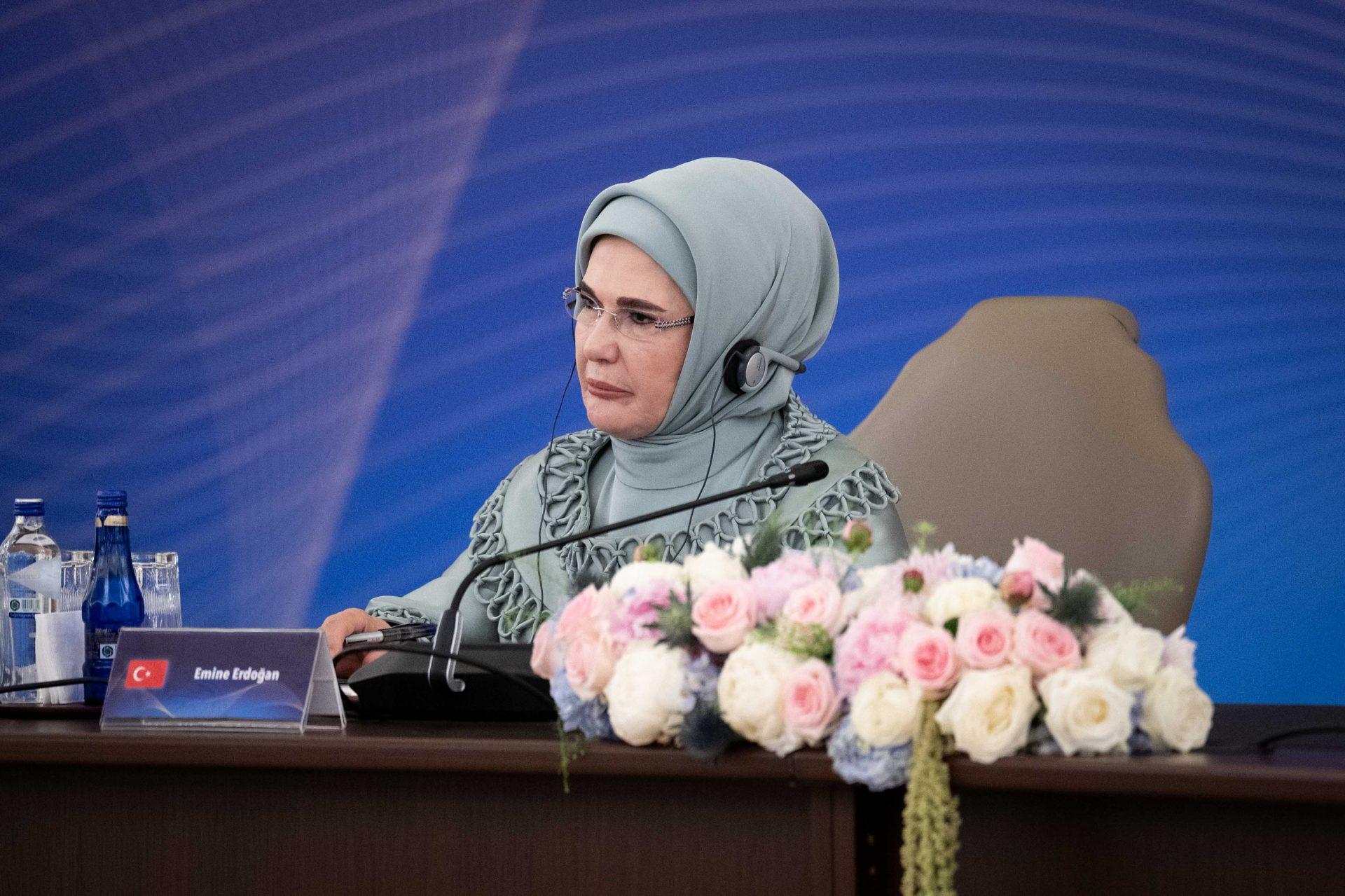
Citing UNICEF figures, she said around 60 children come online every 30 seconds — meaning dozens had entered the digital world in the time it took to introduce her speech. That world, she said, offers limitless opportunity and limitless risk in equal measure.
Children today are no longer merely using technology, she warned. Technology is increasingly shaping their thoughts, their behaviour and their emotional development.
“While children are watching the screen, the screen is also watching them,” she said.
She criticised algorithms designed to maximise user attention, saying they increasingly influence children’s minds, emotions and beliefs. According to studies she cited, nearly one-third of young people now prefer talking to artificial intelligence over talking to other people.
“Artificial intelligence has become the confidant and the mentor of the new generation,” she said.
Techno-colonialism
Children themselves, the first lady argued, have become the raw material of a new economy driven by attention and data, with a handful of technology companies wielding unprecedented influence over billions of young users.
She called the phenomenon “techno-colonialism”: a form of domination that no longer targets land or natural resources, but human attention and thought.
“In this techno-colonialism, whose territory is the mind and whose resource is attention, our children stand the most defenceless,” she said.
Governments, she insisted, cannot remain passive while digital technology transforms childhood. She compared digital exposure to medicine, arguing that no responsible parent would give a child an untested drug without medical supervision. Nor, she said, should governments leave children’s online lives entirely to companies whose primary duty is to maximise profit.
“Companies are accountable to their shareholders. States are accountable to their people,” she said.
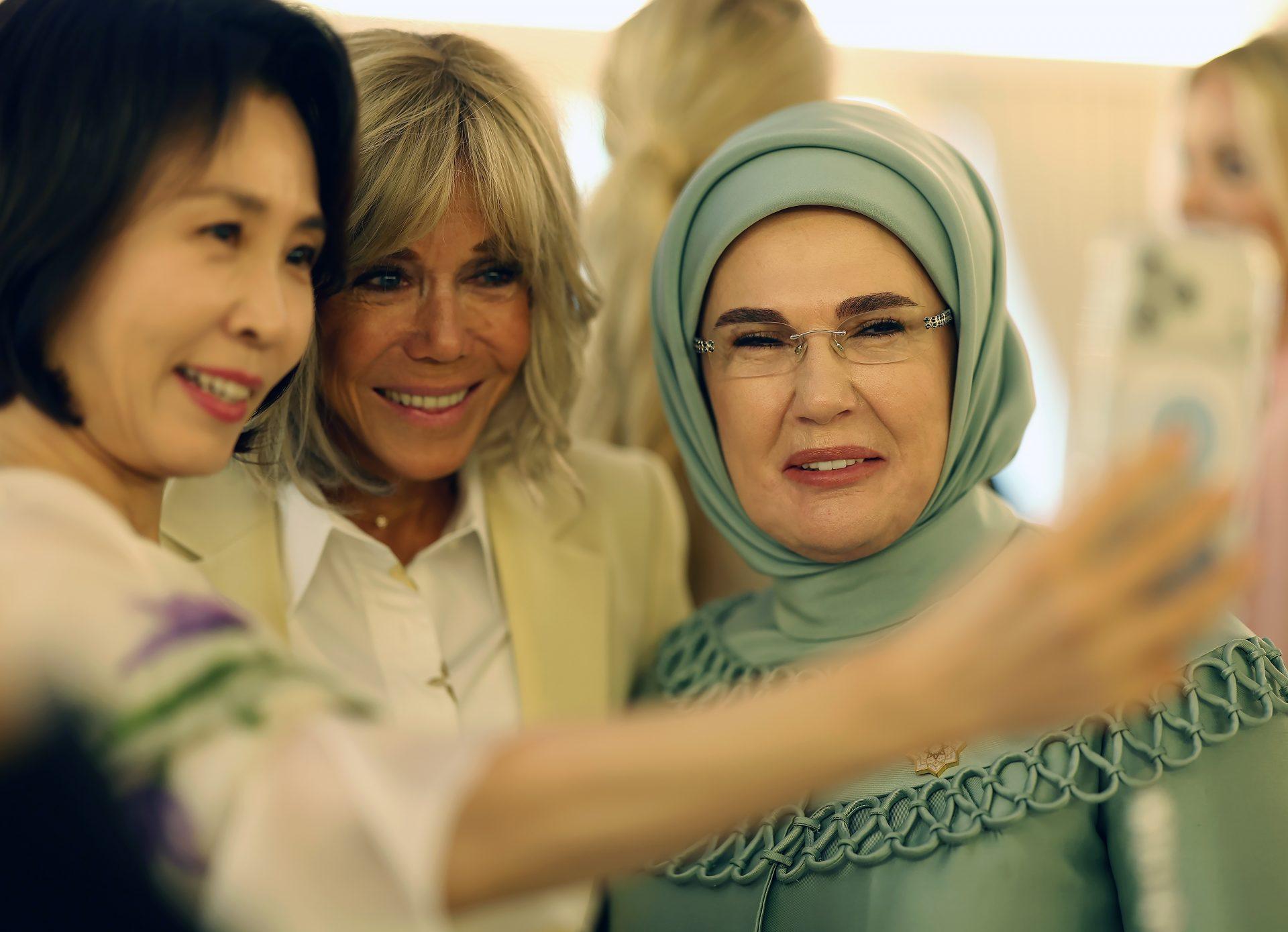
Emine Erdoğan pointed to Türkiye’s own measures, saying the country has introduced regulations limiting social media access for children under 15 and requiring stronger age verification and parental controls on digital platforms.
She thanked U.S. First Lady Melania Trump for her “Shaping the Future Together” initiative, saying it encourages cooperation among leaders’ spouses on issues affecting children. Awareness campaigns alone, however, cannot solve the problem, she cautioned.
“If the river continues to be polluted, we cannot be satisfied by distributing filters on the riverbank,” she said.
French First Lady Brigitte Macron, long involved in education and child welfare, also addressed the gathering.
Other participants included Diana Nausediene of Lithuania, Suzanne Elizabeth Innes-Stubb of Finland, Mirabela Gradinaru of Romania, Marta Nawrocka of Poland, Olena Zelenska of Ukraine, Kim Hea Kyung of South Korea, Urska Bacovnik Jansa of Slovenia, Linda Rama of Albania, Monika Babisova of Czechia, Bo Tengberg of Denmark, Mareva Grabowski-Mitsotakis of Greece, Milena Spajic of Montenegro, Evelin Oras of Estonia, Diana Fox Carney of Canada, Charlotte Merz of Germany and Heiko von der Leyen, spouse of the President of the European Commission, as well as representatives from Belgium and Luxembourg.
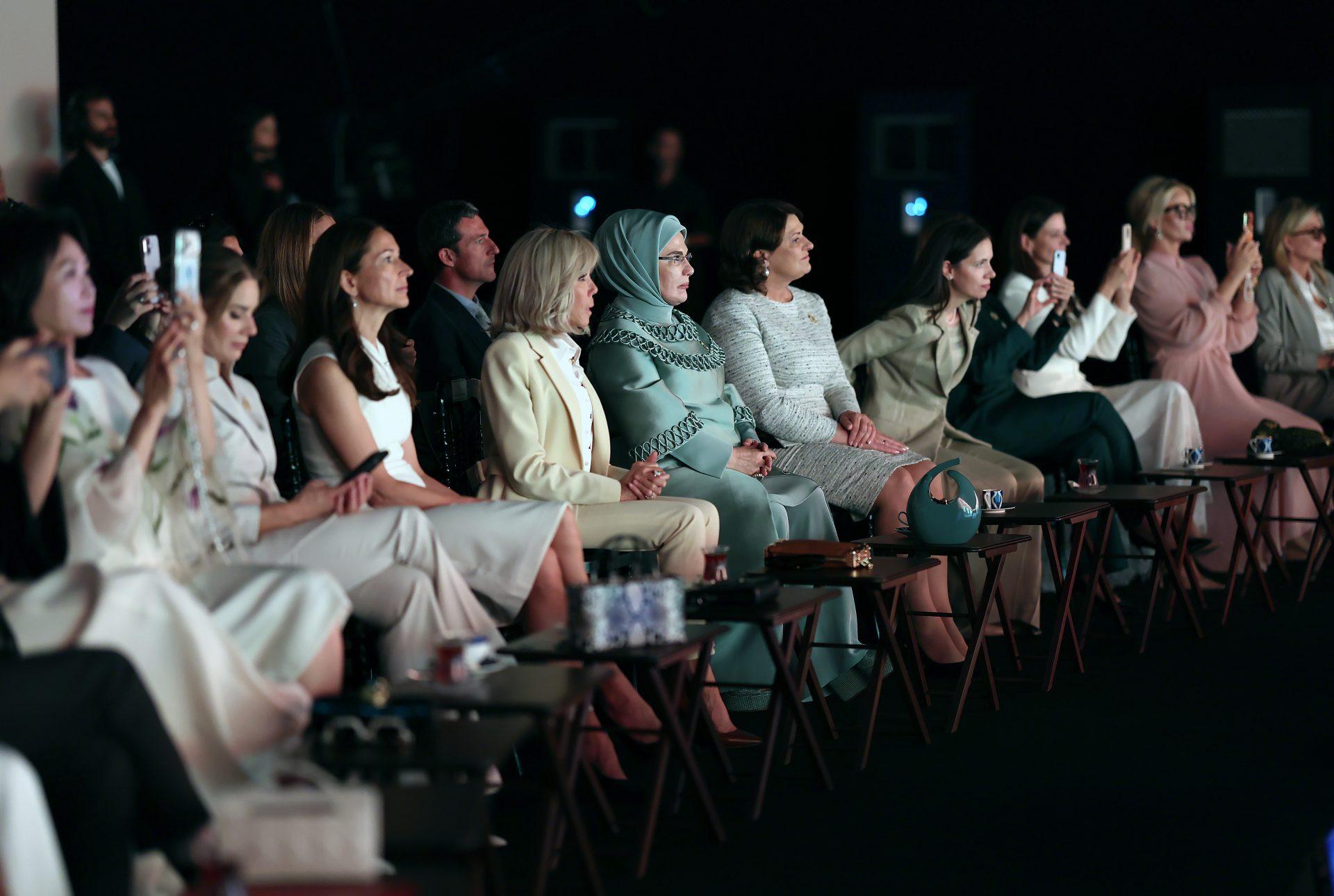
Afterwards, the first lady hosted the visiting spouses for a luncheon of dishes drawn from across Türkiye, among them fava, Urla artichoke, Anatolian stuffed zucchini blossoms, stuffed vine leaves, keşkek and Emiralem strawberries. The meal was served in a hall decorated with İznik tiles and traditional Turkish embroidery.
The guests then viewed an exhibition of Turkish handicrafts, weaving, embroidery and textiles representing the cultural legacy of Anatolia, Mesopotamia, the Ottoman Empire and modern Türkiye.
The parallel summit underscored a widening definition of security. While NATO leaders weighed military threats and geopolitical tensions, their spouses argued that the invisible algorithms reshaping childhood belong on the same agenda.



Read also