US urges India, Pakistan to seek ‘responsible solution’ after Kashmir attack
© Anadolu Agency
US urges dialogue, China calls for restraint after deadly Kashmir attack intensifies nuclear neighbors’ long-standing rivalry
ISLAMABAD/ NEW DELHI (MNTV) — The United States has urged India and Pakistan to work toward a “responsible solution” as tensions escalate following a deadly attack in Indian-administered Kashmir’s Pahalgam region that killed 26 people.
The April 22 attack is among the deadliest in the disputed Himalayan territory since 2000. India, without presenting evidence, has suggested possible cross-border involvement, while Pakistan has strongly denied any link to the incident.
Pakistan’s Prime Minister Shahbaz Sharif has called for a neutral investigation.
“This is an evolving situation, and we are monitoring developments closely. We have been in touch with the governments of India and Pakistan at multiple levels,” a U.S. State Department spokesperson said in an emailed statement to Reuters.
“The United States encourages all parties to work together toward a responsible resolution,” the spokesperson added.
While Washington publicly condemned the Pahalgam attack and expressed solidarity with India, it has notably avoided criticizing Pakistan.
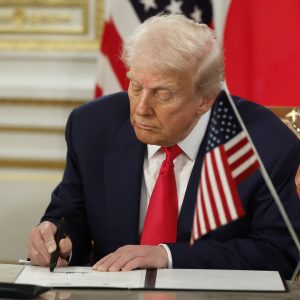
Both President Donald Trump and Vice President JD Vance have echoed support for India but emphasized that New Delhi and Islamabad should resolve tensions themselves.
Saudi Arabia and Iran have also offered to mediate between the two nuclear-armed neighbors.
India’s strategic ties with the United States have strengthened in recent years as Washington seeks to counter China’s influence in Asia.
Pakistan remains a U.S. ally, though its geopolitical relevance to Washington has diminished following the American withdrawal from Afghanistan in 2021.
Michael Kugelman, a South Asia analyst based in Washington and contributor to Foreign Policy magazine, said India now enjoys a far closer relationship with the U.S. than Pakistan.
“This may worry Islamabad that if India retaliates militarily, the U.S. may sympathize with its counterterrorism imperatives and not try to stand in the way,” Kugelman told Reuters.
Kugelman also noted that with Washington heavily engaged in the wars in Ukraine and Gaza, the Trump administration may prefer to leave India and Pakistan to manage tensions independently, at least in the early stages.
Hussain Haqqani, a former Pakistani ambassador to the United States and a senior fellow at the Hudson Institute, said there appears to be little appetite in Washington to intervene.
“India has long standing grievances about terrorism emanating from across the border. Pakistan believes India seeks to destabilize it. Both sides work themselves into a frenzy every few years. This time, there is no U.S. interest in calming things down,” Haqqani said.
Ned Price, a former U.S. State Department spokesperson under the Biden administration, warned that unconditional American support for India could increase the risk of escalation.
“If India feels that the Trump administration will back it to the hilt no matter what, we could be in store for more escalation and more violence between these nuclear-armed neighbors,” Price said.
Meanwhile, China on Monday urged both India and Pakistan to exercise restraint, amid reports of exchanges of fire along the Line of Control (LoC) for the fourth consecutive night.
“China hopes that the two sides will exercise restraint, meet each other halfway, properly handle relevant differences through dialogue and consultation, and jointly maintain regional peace and stability,” Chinese Foreign Ministry spokesperson Guo Jiakun said at a briefing.
As Washington and Beijing monitor the situation closely, concerns grow over the risk of escalation between the two nuclear-armed rivals.
Related posts


Read also