UN Security Council divided after US-Israeli strikes on Iran and Tehran’s retaliation
UN Security Council convened an emergency session following U.S. and Israeli military strikes on Iran and Tehran’s subsequent missile attacks
© AA
UNITED NATIONS (MNTV) — The UN Security Council convened an emergency session following U.S. and Israeli military strikes on Iran and Tehran’s subsequent missile attacks across the region, as Secretary-General António Guterres warned of a “grave threat to international peace and security.”
Addressing the Council, Guterres condemned “the massive military strikes by the United States and Israel against Iran – and the subsequent attacks by Iran,” saying they violated the sovereignty and territorial integrity of several regional states, including Bahrain, Iraq, Jordan, Kuwait, Qatar, Saudi Arabia and the United Arab Emirates.
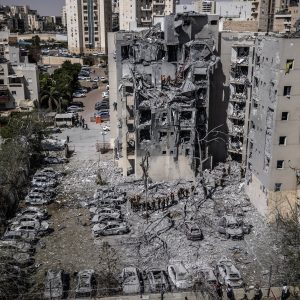
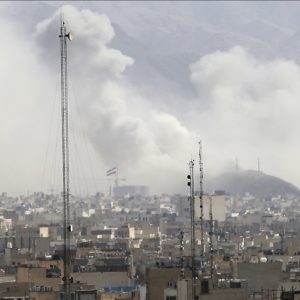
He described the situation as “very fluid,” noting that around 20 Iranian cities had reportedly been hit and that Iranian retaliation had extended across the region.
“I deeply regret that this opportunity of diplomacy has been squandered,” he said, referring to indirect U.S.-Iran talks mediated by Oman.
He urged an immediate ceasefire and a return to negotiations, particularly on Iran’s nuclear programme.
Israel and US defend operation
Israel’s Ambassador to the UN, Danny Danon, framed the joint operation as “an act of necessity” aimed at preventing “an existential threat.” He argued that Iran had advanced its nuclear and missile capabilities while calling for Israel’s destruction, saying diplomacy had been exhausted.
“They were building the means to force an irreversible reality with our backs against the wall. That is not a future Israel will accept,” Danon told the Council, adding that operations would continue as long as the threat persisted.
U.S. Ambassador Mike Waltz defended what he called “Operation Epic Fury,” describing it as focused on dismantling missile infrastructure, degrading naval assets and curbing support for regional armed groups.
He said the goal was to ensure that “the Iranian regime can never, ever threaten the world with a nuclear weapon.”
“No responsible nation can ignore persistent aggression and violence,” Waltz said, citing past Security Council resolutions demanding that Iran suspend uranium enrichment.
Iran calls strikes ‘war crimes’
Iran’s Ambassador, Amir Saeid Iravani, strongly rejected the U.S. and Israeli justification, calling the strikes “an unprovoked and premeditated aggression.”
“This is not only an act of aggression; it is a war crime and a crime against humanity,” he said, accusing Washington and Tel Aviv of deliberately targeting populated areas.
He dismissed claims of pre-emptive self-defence as “illegal and entirely devoid of legal foundation,” and said Iran was exercising its “inherent and lawful” right to self-defence under Article 51 of the UN Charter.
Tehran, he added, remains committed to respecting the sovereignty of its neighbours.
Council members split
Council members reflected broader geopolitical divisions.
China’s Ambassador Fu Cong described the U.S.-Israeli strikes as “brazen,” stressing that “the sovereignty, security, and territorial integrity of Iran and other regional countries must be respected.”
He called for an immediate halt to military action and a return to dialogue.
Russia’s Ambassador Vassily Nebenzia denounced the attacks as “armed aggression” and a “betrayal of diplomacy,” accusing Washington and West Jerusalem of violating the UN Charter.
France’s Ambassador Jérôme Bonnafont said “this region needs peace” and urged de-escalation, while also condemning Iranian strikes on regional states.
He noted concerns about Iran’s nuclear programme and reduced cooperation with the International Atomic Energy Agency.
The United Kingdom’s Ambassador James Kariuki said London played no role in the strikes but remains “under no illusion” about the nature of the Iranian regime.
He stressed that “regional stability remains a priority” and reiterated that “Iran must never be allowed to develop a nuclear weapon.”
Pakistan’s Ambassador Asim Ahmad condemned both the U.S.-Israeli attacks and Iran’s missile strikes on Gulf states, warning that diplomacy had once again been “derailed.”
Colombia’s Ambassador Leonor Zalabata Torres stressed that “the protection of human life must always be at the heart of international decisions,” condemning any use of force that contravenes the UN Charter.
Bahrain’s envoy Jamal Fares Alrowaiei condemned Iranian missile attacks targeting his country as violations of sovereignty and international law.
UN system voices alarm
Beyond the Council chamber, senior UN officials expressed concern.
World Health Organization Director-General Tedros Ghebreyesus said he was “deeply concerned” about civilians caught in the crossfire, while UN High Commissioner for Human Rights Volker Türk reiterated that “it is civilians who end up paying the ultimate price.”
The International Atomic Energy Agency said it was closely monitoring developments and urged restraint to prevent nuclear safety risks.
As the emergency session concluded, no unified Council position emerged, underscoring deep divisions among major powers. With military operations continuing and diplomatic channels strained, the crisis threatens to widen into a broader regional conflict.
Related posts


Read also