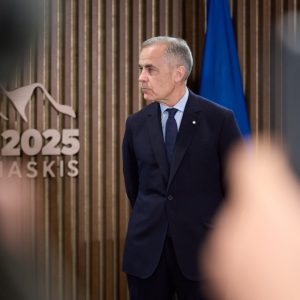
Turkish lawmakers press mediation efforts between Afghanistan and Pakistan
With tensions rising and border clashes threatening to spiral into wider conflict, Turkish parliamentarians are urging Ankara to step in as a credible mediator between Islamabad and Kabul
© Anadolu Agency
Shabana Ayaz
Istanbul, Türkiye (MNTV) — The growing mistrust between Islamabad and Kabul is fast becoming one of South Asia’s most alarming flashpoints. Airstrikes, retaliatory shelling, and the closure of border crossings have already disrupted lives and trade on both sides.
But amid this grim backdrop, Turkish lawmakers visiting Islamabad have issued a timely call: it is time for Türkiye to resume its mediating role between Pakistan and Afghanistan before tensions spiral beyond control.
This call came during the Third Trilateral Speakers’ Conference, held from October 12–14, 2025, in Islamabad. The meeting brought together parliamentary leaders from Türkiye, Pakistan, and Azerbaijan, reinforcing fraternal bonds and exploring new areas of cooperation.
The event, chaired by Pakistan’s National Assembly Speaker Sardar Ayaz Sadiq, was attended by Türkiye’s Grand National Assembly Speaker Numan Kurtulmuş and Azerbaijan’s Milli Majlis Speaker Sahiba Gafarova.
The gathering adopted the Islamabad Declaration, a document outlining future cooperation in trade, security, culture, and technology—a step toward collective resilience in a volatile region.
However, the backdrop to this meeting was far from calm. Only days earlier, a deadly ambush by the Tehreek-e-Taliban Pakistan (TTP) in Orakzai district had claimed the lives of 11 Pakistani soldiers. Islamabad retaliated with “precision strikes” on Afghan territory, targeting what it said were militant hideouts in Kabul and Paktika provinces.
Explosions near Abdul Haq Square reportedly targeted senior TTP figures, while Kabul condemned the operation as a violation of its sovereignty. Retaliatory attacks followed, killing soldiers on both sides and pushing relations to their lowest point in years.
The subsequent closure of key border crossings, including Torkham, crippled trade and intensified humanitarian pressures. Over 1.7 million undocumented Afghans in Pakistan now face the threat of forced repatriation. These cascading crises—rooted in the unresolved Durand Line dispute and mutual blame over militant sanctuaries—have left both nations trapped in a cycle of mistrust.
It was against this turbulent setting that Turkish parliamentarian Ali Şahin, President of the Türkiye-Pakistan Inter-Parliamentary Friendship Group, raised the need for Ankara’s active mediation.
Turkish lawmaker’s 5 point proposal
In his address and later in a conversation with this writer, Şahin proposed a five-point roadmap aimed at stabilizing Pakistan-Afghanistan relations while deepening Türkiye’s engagement in South Asia.
His proposals blend strategy with symbolism.
He suggested establishing Turkiye’s ruling AK Party representative office in Islamabad to foster political dialogue, educational collaboration, and people-to-people ties across a shared cultural and religious bloc.
He also advocated for a joint drone base at Gwadar Port to protect maritime routes and support regional security cooperation aligned with the China-Pakistan Economic Corridor (CPEC).
A third pillar of his plan called for Pakistan’s inclusion as an “Engaged Partner” in the Organization of Turkic States—a move that would both honor historical connections and strengthen modern diplomatic synergy.
But most notably, Şahin urged Türkiye to revive its Ankara Trilateral Summit with Pakistan and Afghanistan—a once-promising platform for dialogue that went dormant after the Taliban’s return to power in 2021.
In 2007, under then-Foreign Minister Abdullah Gül, Türkiye launched the first Ankara Trilateral Summit, bringing Afghan and Pakistani leaders together to discuss security coordination.
Even the Heart of Asia – Istanbul Process (HoA-IP) , an initiative of Turkiye, launched in 2011 and including16 supporting countries with an aim to stabilize Afghanistan has also gone dormant.
The revival of these initiatives, he argued, could serve as the most viable channel to prevent escalation and create a durable mechanism for peace.
Türkiye has the credentials to lead such an effort. Its history of mediation stretches back decades—from hosting the Pashtunistan talks in the 1950s to its post-9/11 contributions as part of NATO’s non-combat mission in Afghanistan.
Even after the fall of Kabul in 2021, Türkiye maintained a neutral stance, offering to manage airport security alongside Qatar and extending over $100 million in aid without formally recognizing the Taliban government. That careful balance of principle and pragmatism gives Ankara a credibility few others possess.
The need for such mediation is urgent.
The Pakistan-Afghanistan relationship is trapped in a “security dilemma”—each side believes the other harbors militant groups threatening its sovereignty. The Taliban regime accuses Pakistan of aiding cross-border attacks, while Islamabad blames Kabul for sheltering the TTP.
This cycle of accusation and reprisal benefits no one and risks destabilizing the entire region, including projects like CPEC and trade routes connecting Central and South Asia.
Revival of Ankara Trilateral Summit
Türkiye could break this deadlock by facilitating incremental steps toward trust. A revived Ankara Trilateral Summit could prioritize phased ceasefires, establish a joint border monitoring mechanism, and reopen diplomatic channels through Qatar and China.
Economically, Türkiye could encourage Afghanistan’s participation in the Middle Corridor trade route—linking China to Europe through Central Asia and Türkiye—providing both nations with shared economic incentives to maintain peace.
Ankara’s experience in conflict resolution elsewhere offers valuable lessons. Its mediation in the Somalia-Ethiopia dispute combined humanitarian aid, political dialogue, and cultural diplomacy. A similar multi-track approach—combining state-level talks, joint defense initiatives, and media and educational exchanges—could help ease Pakistan-Afghanistan tensions.
Turkish drones, already co-developed with Pakistan under recent defense pacts, could also support joint counterterrorism operations in border regions, reinforcing cooperation instead of confrontation.
Yet, mediation will not be easy. The Taliban’s internal divisions, Pakistan’s domestic politics, and India’s growing influence in Kabul complicate any diplomatic initiative. Ankara will need to balance these realities carefully, coordinating closely with Beijing, Doha, and the Organization of Islamic Cooperation (OIC) to ensure legitimacy and continuity.
In a region haunted by cycles of intervention and mistrust, the prospect of a neutral, fraternal mediator offers a rare glimmer of hope. The question is not whether Türkiye can mediate—but whether it will seize this opportunity before the window for diplomacy closes.
The stakes are high. Without credible mediation, the Pakistan-Afghanistan conflict could escalate into a prolonged standoff with devastating humanitarian and economic costs. Türkiye, with its legacy of constructive diplomacy and shared destiny with both nations, remains the best hope to guide them back from the brink—toward dialogue, stability, and peace.
Shabana Ayaz is a Pakistani journalist and analyst based in Ankara. She focuses on South Asian and Turkish affairs. The views expressed are her own.


Read also