MIDDLE EAST FLASHPOINT: ISRAEL TARGETS IRAN – FOLLOW LIVE
Political parties, parliamentarians among those pressing Prime Minister Anwar Ibrahim to reject Adams as ambassador over his ‘vocal support of Israel’s Zionist regime’
PETALING JAYA, Malaysia (MNTV) - Malaysians are urging their government to reject President Donald Trump’s appointment of conservative Nick Adams as the US ambassador to their country, reports The Straits Times.
Political parties, parliamentarians and members of the public are pressing Prime Minister Anwar Ibrahim’s government to reject Adams as ambassador to the country over his “vocal support of Israel’s Zionist regime”.
Adams, 40, has a reputation for making incendiary social media posts. Adams, born in Sydney, immigrated to the US in 2012. If confirmed by the Senate, he would replace Edgard Kagan, who took the job less than 16 months ago.
Although Adams, who became a US citizen in 2021, does have prior political experience, he has never been a diplomat. He was a member of Australia's Liberal Party before being driven out over an offensive rant about a journalist.
“Nick Adams is not a diplomat, not a statesman,” Mus’ab Muzahar from Amanah (Trust) party, a member of the ruling coalition, said. “He’s merely an extreme right-wing propagandist, a Trumpist and vocal supporter of Israel’s Zionist regime. His social media rhetoric is full of hatred, racism and Islamophobic sentiments,” he added.
Muzahar warned that Malaysia was "not a testing ground for US political puppets”.
Mohamed Sukri Omar, an official of Parti Islam Se-Malaysia, said the government should take a firm and clear stance against the nomination.
"Nick Adams is not just a controversial figure. He openly spreads hatred towards Islam and supports the Zionist colonial regime without consideration," Omar said.
He said Adams once pressured a restaurant in the US to fire a waitress simply for wearing a "Free Palestine" pin. "This is an inhumane act that demonstrates extreme and hateful attitudes towards the oppressed Palestinian people's struggle," he said.
His statement referred to a post of X, where Mr Adams proudly claimed to have gotten a waitress fired for wearing a "Free Palestine" pin.
"I won't tolerate being served by those who support terror, I stand with Israel," Adams wrote in the post dated 5 August 2024.
Parti Keadilan Rakyat's (People’s Justice Party) Youth International Relations Bureau warned that Adams's nomination was being viewed with concern due to his "extremist ideologies and divisive rhetoric."
"Such a rejection should not be misconstrued as hostility but rather seen as a necessary measure to safeguard the integrity of bilateral relations and ensure that diplomatic envoys can contribute constructively, in a manner aligned with the shared aspirations of both nations," the bureau’s chief, Arief Izuadin, said.

Officials condemn strike as war crime, highlight international protections for journalists during armed conflict
TEHRAN, Iran (MNTV) — The legal department of the Islamic Republic of Iran Broadcasting (IRIB) has initiated formal legal proceedings in response to the Israeli regime’s missile strike on its headquarters in Tehran during the recent 12-day war.
According to a statement by IRIB legal deputy Ahmad Heidari, the department began taking legal steps during the conflict and is now working to secure compensation for the damages caused by the June 16 attack.
The strike, carried out while journalists and staff were still inside the building, resulted in multiple casualties and injuries among IRIB personnel.
Heidari emphasized that the Israeli attack on the IRIB facility constituted a flagrant violation of international law, media protections, and human rights.
“These actions breach established global legal frameworks,” he said, adding that IRIB has submitted documentation to international legal institutions in pursuit of justice.
“International treaties and conventions, including those under the UN Charter, stress the importance of safeguarding media and journalists during wartime,” Heidari noted.
The IRIB building was hit during the height of the conflict between Iran and Israel, which began on June 13 when Tel Aviv launched airstrikes targeting Iranian facilities. Journalists were inside the media compound covering developments when the attack occurred.
In response to the strike, members of Iran’s Parliament have been actively engaging with IRIB.
A delegation from the Cultural Commission visited the damaged building and the studio of IRIB’s News Channel, voicing support for the broadcaster and offering assistance in rebuilding efforts. Additional lawmakers have also requested visits to the site.
Heidari said that roughly 60 MPs participated in special IRIB broadcasts during the 12-day war, though communication was at times difficult due to the emergency situation.
Despite these challenges, the Legal and Parliamentary Department coordinated with MPs’ offices and contacts to ensure their participation in live programming, ensuring their voices reached the public through national media.
Industry Minister says domestic capabilities and swift coordination kept national supply chain stable during 12-day conflict
TEHRAN, Iran (MNTV) — Iran’s Minister of Industry, Mining and Trade, Seyed Mohammad Atabak, has reaffirmed government support for industrial units affected by recent Israeli airstrikes, emphasizing the sector’s rapid recovery and vital role in safeguarding national welfare and economic resilience.
Speaking during a ceremony marking National Industry and Mining Day, Atabak praised the sector’s “brilliant and courageous” record, noting its contributions to both national development and resistance in the face of foreign aggression.
“In the recent Zionist assault on civilian and economic infrastructure, the enemy sought to paralyze our production and employment sectors,” Atabak said. “But the frontlines of Iranian industry and mining stood firm, transforming adversity into resilience.”
During a meeting with industrial stakeholders, Atabak highlighted the Ministry’s production support plan, which offers targeted aid to companies impacted by the attacks. The initiative, he said, plays a crucial role in returning damaged units to full operation.
According to Reza Ansari, head of the Small Industries and Industrial Parks Organization (ISIPO), nine industrial parks were struck during the 12-day conflict.
Despite the damage, all parks remained functional. Ansari noted that more than 80 percent of small and medium-sized enterprises (SMEs), along with major sectors such as mining and automotive manufacturing, continued operations throughout the crisis.
Appearing on state-run television, Ansari credited contingency planning and preemptive production boosts for averting supply disruptions.
“Demand for basic goods spiked after mass displacement, and our network of producers and distributors responded immediately,” he said.
Atabak emphasized that domestic production capabilities, combined with tight coordination between government and private industry, enabled Iran to maintain economic stability during the escalation.
“Our ability to manage field operations, restore infrastructure, and stabilize markets in the earliest hours of the assault has created a model for future crisis response,” he told representatives of industrial unions.
Iran’s government has vowed continued investment in reconstruction and production support to ensure the long-term vitality of national industry.
Precision missile attack reportedly causes up to $500 million in damage, threatening decades of research tied to Israel's notorious military and its projects
TEHRAN, Iran (MNTV) — Iran's precision ballistic missile strike on Israel’s infamous Weizmann Institute of Science in Rehovot, in the 12 day war, significantly damaged key buildings linked to the country's military-scientific complex.
According to Israeli sources, including a statement by Institute President Alon Chen on Channel 13, the missile strike targeted core scientific facilities—causing damage estimated between $300 million and $500 million—and decimated nearly 90 per cent of the institute’s infrastructure.
The attack reportedly focused on the larger research section, not the residential quarters, indicating precision targeting of installed research capacities.
At least 45 laboratories across life sciences, computational biology, planetary sciences, and materials research were heavily affected.
Profound losses include the complete destruction of Professor Eldad Tzahor’s research lab, erasing 22 years’ worth of biological samples, tissue slides, DNA collections, and engineered viruses.
Additionally, fires and structural collapses damaged shared scientific equipment and vital data repositories.
Officials emphasized the institute’s undisclosed connections to Israel’s defense sector, giving Iran the reason to strike at the institute.
Research collaborations with military contractors such as Elbit Systems, dual-use AI and drone development projects, and partnerships with the Ministry of Defense have long entwined the institute with national security priorities.
Historical records also cite its early involvement in Israel’s nuclear program through figures like Ernst David Bergmann and post-1948 contributions to weapons development.
Iranian authorities unveiled the strike as a targeted retaliation aimed at degrading Israel’s military-scientific capabilities.
In response, Israel imposed strict media censorship to conceal damage severity and protect strategic sites.
Surveillance footage that surfaced online depicted missile impacts, structural collapse, and laboratory devastation, contradicting initial minimisation by Israeli officials.
The attack has disabled critical research into cancer, regenerative medicine, quantum computing, and more importantly military-oriented technology, significantly disrupting strategic R&D and international scientific collaboration.
Trump hails mission as “obliteration” as US and Iran exchange conflicting assessments on nuclear site damage
WASHINGTON DC (MNTV) — The director of the US Central Intelligence Agency (CIA) has said that American airstrikes inflicted long-term damage on Iran’s nuclear infrastructure, pushing back its nuclear capabilities by years.
H9wever, the remarks contradict a leaked US intelligence report that had downplayed the extent of the destruction.
Speaking on Wednesday during a NATO summit in The Hague, US President Donald Trump defended the operation, describing it as “obliteration,” and rejected media reports citing preliminary assessments that claimed Iran’s key nuclear facilities remained largely intact.
CIA Director John Ratcliffe said in a statement that the strikes destroyed critical components of several sites and that the intelligence was based on information from what he described as a “historically reliable and accurate” source.
“This will take Iran years to recover from,” Ratcliffe said, although he stopped short of declaring that the Iranian nuclear program had been eliminated altogether.
The US military launched coordinated strikes on Saturday targeting three primary nuclear sites—Natanz, Fordo, and Isfahan—using 125 aircraft.
Satellite imagery released since the attack showed multiple craters near suspected underground installations, including over potential centrifuge halls and ventilation shafts.
However, analysts noted it remains uncertain whether the underground infrastructure was fully neutralized.
The strikes came amid a fragile ceasefire between Israel and Iran, brokered earlier this week by Trump, bringing a halt to 12 days of hostilities.
A leaked preliminary analysis from the Defense Intelligence Agency (DIA), published Tuesday by US media, concluded the strikes set Iran’s nuclear timeline back only “a few months.”
The DIA characterized the assessment as low-confidence and noted it was based on initial observations.
Trump dismissed the report as “fake news” in a social media post, accusing the media of misrepresenting facts without credible sources.
He announced that Secretary of Defense Pete Hegseth and senior military officials would deliver an “irrefutable” statement at the Pentagon on Thursday.
National Intelligence Director Tulsi Gabbard also sided with the White House, writing on social media that rebuilding all three nuclear facilities from scratch would likely take Iran several years.
The Pentagon has not confirmed the full extent of damage, but officials said evaluations are ongoing and subject to revision as more data becomes available. The United States has 18 intelligence agencies, often offering differing conclusions based on their scope and mandate.
US envoy to the Middle East, Steve Witkoff, told NBC News that there have been both direct and indirect communications with Iran, despite Tehran officially denying any talks.
Trump said on Wednesday he plans to seek a formal commitment from Iran to end its nuclear ambitions during potential negotiations next week.
In Iran, government officials have offered mixed responses. Foreign ministry spokesman Esmail Baghaei told Al Jazeera that the facilities had “definitely sustained serious damage,” without providing further detail.
However, Mehdi Mohammadi, an adviser to Iran’s parliamentary leadership, claimed Fordo had not suffered irreversible losses.
A report by the Israeli Atomic Energy Commission echoed the CIA’s position, asserting that the strikes had destroyed essential infrastructure at Fordo and significantly delayed Iran’s ability to develop nuclear weapons.
Meanwhile, Rafael Grossi, head of the UN’s International Atomic Energy Agency (IAEA), said Iran may have moved some of its enriched uranium to undisclosed locations prior to the US assault.
Iran has repeatedly insisted that its nuclear activities are intended for peaceful purposes, and past US intelligence assessments have found no conclusive evidence that Tehran is pursuing atomic weapons.
Over 590 Iranian missiles fired at Israel; more than 1,400 Israeli airstrikes hit Iranian cities before US-brokered ceasefire
TEL AVIV, Israel (MNTV) — At least 50 Iranian missiles struck targets inside Israel during a 12-day exchange of fire, despite the country’s sophisticated air defense systems, reported Anadolu Agency.
The full scale of destruction on both sides begins to emerge following a fragile ceasefire brokered by the United States.
The conflict, which erupted after unprecedented Israeli attacks on Iranian military and civilian positions, triggered a calculated retaliation by Tehran.
According to a summary compiled by Anadolu Agency based on official sources, the hostilities escalated into one of the region’s most intense military confrontations in recent years before a ceasefire was announced by US President Donald Trump on June 24.
Censorship imposed by Israeli authorities on local and international media has obscured the extent of damage to sensitive military and security facilities.
However, estimates from the Tel Aviv-based Institute for National Security Studies (INSS), citing Israeli military, emergency, and health officials, reveal that Iran launched 591 missiles during the conflict.
At least 50 struck their targets directly. In addition, Iran deployed over 1,050 drones—570 of which reached Israeli territory, though only one reportedly evaded interception.
Air raid sirens sounded nearly 19,500 times across Israel, with officials reporting that 85–90% of incoming missiles and 99% of drones were successfully intercepted.
Iran’s strikes resulted in 29 fatalities in Israel and injured 3,491 others, including people harmed during evacuations and those suffering psychological trauma.
Nearly 11,000 residents were evacuated from areas under direct threat, and more than 38,000 reports of structural damage were filed.
In response, Israeli forces launched over 1,480 attacks on Iranian military infrastructure, targeting 20 cities including Tehran, Tabriz, Kermanshah, Lorestan, and Mashhad.
The Israeli military claimed to have destroyed 20 fighter aircraft, approximately 1,000 ballistic missiles, and dozens of launch platforms.
Iran’s Health Ministry reported 627 deaths and at least 4,870 injuries from the Israeli strikes. Among those killed were at least 25 senior Iranian officials, including Armed Forces Chief of Staff Mohammad Bagheri and IRGC Aerospace Commander Amir Ali Hajizadeh.
Israeli intelligence agency Mossad claimed responsibility for several high-profile assassinations, releasing video footage of covert operations. Iran confirmed the deaths of 11 nuclear scientists, while Israeli sources placed the number at 15.
Beyond military objectives, Israeli strikes reportedly hit civilian infrastructure, including the Iranian Red Crescent, parts of Tehran’s water and electricity systems, and Evin Prison.
Hunt for Mossad agents in Iran
Iranian authorities said more than 700 individuals were detained for alleged collaboration with Israel.
Tehran also claimed to have captured thousands of drones, including kamikaze UAVs, and executed five individuals previously convicted of espionage.
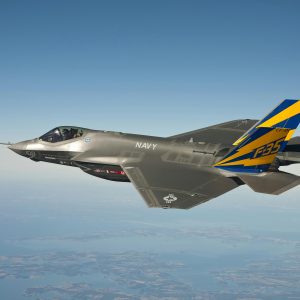
Iran further announced the downing of three Israeli Hermes drones and one F-35 fighter jet, though Israeli officials have not verified the aircraft loss.
US president says cease-fire is holding as Tehran moves to limit cooperation with UN nuclear watchdog
THE HAGUE, Netherlands (MNTV) — US President Donald Trump announced Wednesday that the United States is expected to hold discussions with Iran next week, hinting at the possibility of a new deal concerning Tehran’s nuclear program, though he cautioned that no agreement is guaranteed.
“We’re going to talk with them next week—maybe we’ll sign something, maybe not,” Trump said during a press conference on the sidelines of the NATO summit in the Netherlands.
Despite the planned discussions, Trump downplayed the need for fresh negotiations, reiterating his belief that recent US airstrikes had severely degraded Iran’s nuclear capabilities.
“In my view, the fight is over. The war is finished,” he stated, referring to the 12-day conflict that preceded a fragile cease-fire now in effect.
Tehran has not publicly confirmed any upcoming talks, but US Middle East envoy Steve Witkoff previously acknowledged that there had been both direct and indirect channels of communication between the two governments.
The cease-fire, brokered earlier this week with Trump’s mediation, has so far held for two days and sparked cautious optimism for a potential de-escalation.
However, Iranian officials have made clear they have no intention of abandoning the country’s nuclear energy program.
Speaking to reporters during the NATO summit, Trump insisted that the cease-fire was progressing smoothly and reaffirmed that Iran would “not get a bomb and will not be enriching.”
On Wednesday, the Iranian parliament voted to accelerate a legislative proposal that would curtail Iran’s cooperation with the International Atomic Energy Agency (IAEA), the United Nations’ nuclear monitoring body.
The measure, if enacted, would hinder the IAEA’s long-standing oversight of Iran’s nuclear program and complicate any future verification efforts.
While the US insists Iran’s nuclear infrastructure has been crippled, Iranian leaders continue to assert their right to nuclear development, setting the stage for difficult negotiations in the days ahead.
Iranian general seen alive after reports of death in Israeli airstrikes earlier this month
ISTANBUL, Türkiye (MNTV) — Brigadier General Esmail Qaani, commander of Iran’s Islamic Revolutionary Guard Corps Quds Force, made a public appearance in Tehran during nationwide celebrations marking what Iran described as its “victory” over Israel.
Footage released by Iran’s Tasnim News Agency showed Qaani surrounded by cheering crowds in the capital. “Commander Qaani attends today’s gathering of the people of Tehran following Operation Divine Victory,” the agency wrote on X.
State broadcaster Press TV also aired the video, reporting that Qaani was “warmly received by a jubilant crowd” during the event commemorating Iran’s retaliatory response to recent Israeli attacks.
His appearance came in contrast to earlier claims by the New York Times, which reported that Qaani may have been among the Iranian military figures killed in Israeli airstrikes following the escalation of hostilities on June 13.
Since then, Israel has launched multiple airstrikes on military and nuclear sites across Iran, asserting that Tehran was close to building a nuclear weapon—an accusation firmly rejected by Iranian authorities. In response, Iran launched a wave of missiles and drones targeting Israeli territory.
The conflict drew in the United States, which on Sunday conducted airstrikes on three Iranian nuclear facilities in Natanz, Fordow, and Isfahan.
Following nearly two weeks of intense aerial exchanges, U.S. President Donald Trump announced a ceasefire agreement between Israel and Iran, aimed at halting further escalation.
Heavy overnight strikes kill 13 as U.S. president warns of renewed escalation between Israel and Iran
WASHINGTON/TEL AVIV (MNTV) — U.S. President Donald Trump publicly urged Israel to refrain from escalating its military response against Iran on Tuesday, amid a fragile ceasefire that appeared to unravel within hours of its announcement.
“Do not drop those bombs,” Trump said, addressing Israel’s military leadership after it ordered what it described as “powerful strikes” on Iranian targets.
The president used strong language in a series of social media posts, criticizing both Israel and Iran for undermining the ceasefire he had brokered. Minutes later, he added, “The ceasefire is in effect.”
His comments came as Israel claimed to have intercepted a missile allegedly fired by Iran, hours after the truce took hold.
Tehran denied launching any new attacks and issued a warning that “any further aggression will be met with a decisive, firm, and timely response.”
Overnight, both nations exchanged heavy fire. In Iran, residents in Tehran described to BBC Persian one of the most intense barrages from Israel to date. Local officials reported at least nine people killed in the northern region of the country.
Meanwhile, in Israel, emergency services confirmed four deaths in the southern city of Beersheba. A rescue team said that a residential shelter was directly struck, leaving multiple casualties.
Despite the ceasefire announcement on June 24, both sides have accused each other of violating its terms, raising fears of a full-scale resumption of hostilities.
Israeli Defense Minister says military instructed to target regime sites in Iranian capital after truce collapse and renewed hostilities
JERUSALEM (MNTV) — Israeli Defense Minister Israel Katz announced that the Israel Defense Forces (IDF) have been ordered to carry out “intense strikes” on regime targets in central Tehran, in retaliation for what he called Iran’s breach of the recently established ceasefire.
The announcement comes amid escalating regional tensions, days after both sides exchanged missile attacks and the United States bombed Iranian nuclear facilities. The fragile truce, mediated by US President Donald Trump, appears to have collapsed entirely.
“I have ordered the Israel Defense Forces to respond forcefully to Iran’s violation of the ceasefire with intense strikes against regime targets in the heart of Tehran,” Katz said in a public statement.
No immediate details were provided on the scale or timing of the strikes. Iranian authorities have not yet acknowledged any attacks on their capital. However, earlier in the day, Iranian Foreign Minister Abbas Araghchi said Iran would halt military operations only if Israel ceased its own.
Tensions have surged following last week’s U.S. strike on nuclear sites in Natanz, Isfahan, and Fordow. In response, Iran targeted the Al Udeid U.S. airbase in Qatar with missiles. Both countries have warned of further action, raising fears of a full-scale regional war.
The United Nations and international powers have called for urgent de-escalation, warning of the grave consequences of continued military escalation across the Middle East.