Little Iran answers distant war with sacrifice
Across Kashmir Valley, centuries-old ties with Iran turn grief into giving as ordinary people donate gold, savings, and livelihoods for wartime relief
© Anadolu Agency
SRINAGAR, Jammu and Kashmir (MNTV) — The Kashmir Valley in Indian-occupied Jammu and Kashmir has long been called Iran-e-Sagheer, or “Little Iran,” a name rooted in centuries of shared language, faith traditions, art, and memory.
Today, as war engulfs Iran, that civilizational bond is being expressed not in rhetoric but in remarkable acts of sacrifice. From Srinagar’s old quarters to the towns of Budgam and Baramulla, Kashmiris are stepping forward with a quiet but powerful message: distance does not dilute solidarity.
A recent report by the U.K.-based Middle East Eye noted that families across the valley have been arriving at donation points with copper utensils, jewelry, savings, and even livestock, turning Eid gatherings into moments of collective giving.
The response, organizers say, has exceeded expectations, revealing how deeply the idea of “Little Iran” continues to shape identity in Kashmir.
The scenes have been striking. After Eid prayers, lines formed outside mosques and community centers. Children brought piggy banks filled over the years.
Traders handed over a share of their earnings. Farmers donated livestock. What might otherwise have been private assets became public offerings for people in a distant war zone.
In Srinagar’s Zadibal locality, 73-year-old Tahera Jan watched neighbors deposit copper pots traditionally saved for daughters’ weddings.
Her words captured the emotional weight of the moment: families were redirecting decades of preparation toward those who had lost loved ones in war. What is typically a symbol of hope and continuity was transformed into a gesture of shared grief.
A young truck driver, Sadakat Ali Mir, donated one of his two vehicles, effectively surrendering half his livelihood. Others handed over scooters, bicycles, and personal jewelry. One boy quietly offered a gold chain he had received as a gift, while a teenager signed over his bicycle without hesitation.
Not Isolated acts
These are not isolated acts. They form part of a broader, coordinated movement that has spread across the valley in recent weeks. Organizers say donation centers have seen sustained participation, with contributions coming from all sections of society.
What stands out most is that the movement has cut across sectarian lines. While Shia communities, who form a minority in Jammu and Kashmir, have long-standing religious and historical ties with Iran, Sunni Muslims have participated in large numbers.
In many areas, Sunni families chose modest Eid celebrations this year, redirecting funds toward relief efforts.
Nearly half of the contributors were from Sunni communities. This broad participation has turned what could have been a sectarian initiative into a valley-wide expression of shared identity. Many households on the eve of Eid reduced festive spending.
Experts say that for many Kashmiris, the motivation goes beyond charity. It is rooted in history. The relationship between Kashmir and Iran dates back at least seven centuries, when the Persian scholar Mir Syed Ali Hamadani arrived in the valley with hundreds of followers to preach Islam.
He also introduced crafts such as papier-mache and carpet weaving, shaped spiritual practices, and helped embed Persian language and aesthetics into Kashmiri life.
Persian remained the language of administration and literature in Kashmir for centuries. Its influence is still visible in architecture, poetry, and everyday vocabulary.
From the first mosque of Kashmir, known as the Khanqah-e-Moula shrine, to the Jamia Masjid in Srinagar, the imprint of Persian design is unmistakable.
Even cultural expressions carry this legacy. Sufi music traditions in Kashmir draw on Persian poetry by Hafez and Rumi. Ritual practices echo Persian liturgical forms. The very naming of prayers in Kashmiri reflects this linguistic heritage.
Iqbal’s metaphor
The poet-philosopher Allama Muhammad Iqbal, himself of Kashmiri descent, captured this connection in verse, describing Kashmir as “Little Iran.” The phrase endured, becoming both a cultural marker and a moral reference point.
Observers say the donation to Iran in the current context draws directly from that legacy. They are not simply about responding to a humanitarian crisis. They are about reaffirming a shared past and translating it into present action.
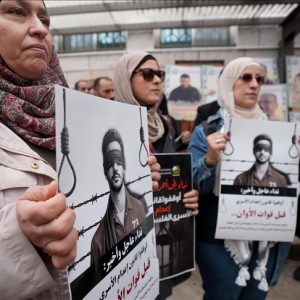
The war in Iran has resonated deeply in Kashmir. Reports of civilian casualties and damage to infrastructure have triggered emotional responses across the valley. Mourning processions, though rare in recent years due to restrictions on public gatherings, have taken place in parts of Srinagar.
The Iranian Embassy in New Delhi acknowledged this outpouring of support, thanking Kashmiris for their “heartfelt solidarity.” In one widely shared video, a widow donated gold she had preserved for decades as a memory of her late husband. Such moments have come to define the emotional core of the campaign.
Importantly, this movement has unfolded in a region where public expression is often constrained. Since 2019, when the region’s semi-autonomous status was revoked, large gatherings have been tightly controlled. In that context, the scale and visibility of these donation drives are significant.
For individuals like Mukhtar, who donated personal jewelry in Budgam, the act is both intimate and symbolic. She imagined hospital wards in Tehran where such contributions might ease suffering. Her words reflect a sentiment echoed across the valley: people are giving not what they can spare but what they value most.
This is what gives the movement its depth. It is not driven by surplus but by sacrifice. It transforms private memory into public action. It turns identity into responsibility.
In that sense, Kashmir’s response to the war in Iran is not merely humanitarian. It is civilizational. It draws on centuries of shared history and expresses it in the language of giving.
“Little Iran” is not just a name. In this moment, it is a lived reality. And in answering a distant war with sacrifice, the valley has shown how enduring that bond remains.

Read also