Kazakh women complete country’s first space isolation experiment
An all-female Kazakh crew has successfully completed the country’s first space isolation experiment, spending 10 days inside a sealed spacecraft
ASTANA, Kazakhstan (MNTV) — An all-female Kazakh crew has successfully completed the country’s first space isolation experiment, spending 10 days inside a sealed spacecraft simulator designed to mimic life aboard an orbital station.
The mission, named SANA-1, was carried out in Astana as part of Kazakhstan’s growing efforts to advance human spaceflight research. The simulator included a command module, climate control, a plant-growing area, and flight simulators replicating long-duration space missions.
“There was no fear, just a new environment and unfamiliar people,” said crew member Darya Komarova. “After two or three days, that all faded, leaving only the work — staying motivated and completing our assigned tasks.” Participants underwent memory, reaction, and attention tests while their brain activity was monitored.
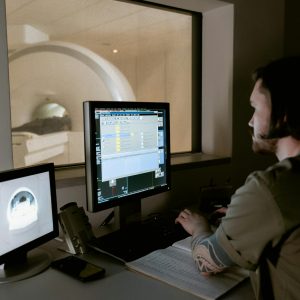
The scientific team conducted medical, psychological, and behavioral assessments to measure stress, adaptability, and teamwork in confined conditions. According to lead researcher Alina Gutoreva, the project yielded valuable insights. “Ten days is short compared to missions like Mars-500 or SIRIUS, but we still observed the full process of adaptation to isolation,” she said.
Preliminary findings show that while participants began the mission with high enthusiasm, they later experienced mild anxiety and apathy — countered through effective communication and collaboration.
Officials say the results will support Kazakhstan’s national astronaut training program, including for future female astronauts, and aid the design of spacecraft for longer missions.
The SANA-1 mission marks a milestone in Kazakhstan’s space research, highlighting the country’s expanding role in human spaceflight studies across Central Asia.

Read also