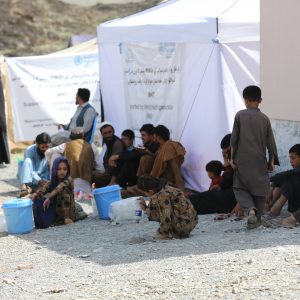
South Korea sends major food aid to Rohingya refugees
Seoul’s latest contribution through WFP will feed over one million Rohingya for two months amid deepening food insecurity in Cox’s Bazar
© File Photo
DHAKA, Bangladesh (MNTV) — South Korea has sent a new shipment of rice to Bangladesh to help feed more than one million Rohingya refugees, deepening its humanitarian partnership with Dhaka as the protracted crisis nears a decade.
The donation — 20,265 metric tons of fortified rice — was handed over this week to the United Nations World Food Programme (WFP) at its Chattogram warehouse. Officials from Bangladesh’s disaster management ministry, South Korean Ambassador Young Sik Park, and WFP Country Director Dom Scalpelli attended the ceremony.
The aid, delivered through South Korea’s Ministry of Agriculture, Food and Rural Affairs, will be blended locally with fortified rice kernels rich in vitamins and minerals before distribution in Cox’s Bazar, where most refugees from Myanmar’s Rakhine State live in crowded camps.
WFP said the new stockpile is sufficient to feed the Rohingya population for nearly two months, providing a critical buffer at a time of declining global humanitarian funding. It also forms part of South Korea’s worldwide food support drive — totaling 150,000 tons of rice for 17 countries this year.
Speaking at the ceremony, Ambassador Park reaffirmed Seoul’s commitment to helping Bangladesh sustain food assistance for the displaced population, calling the effort a “continuation of Korea’s solidarity with vulnerable communities.”
The support comes as the Rohingya crisis enters its ninth year. Renewed violence in Myanmar’s Rakhine State since early 2024 has pushed another 130,000 people to flee across the border, adding pressure to existing camps.
A recent Integrated Food Security Phase Classification (IPC) analysis warns that 40 percent of Rohingya refugees — about 446,000 people — face severe food shortages, while nearly a quarter of a million are at emergency levels of hunger. WFP has cautioned that its operations could face major disruptions by April 2026 unless fresh funding arrives.
Related posts



Read also