Gulf states intercept waves of Iranian missiles and drones
Regional air defenses activate across Gulf as escalating conflict triggers repeated aerial threats and disruptions to transport and security
© Anadolu Agency
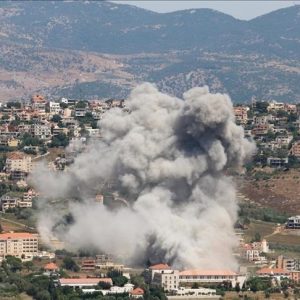
DUBAI/DOHA/BAHRAIN (MNTV) — Air defense systems across several Gulf countries have intercepted waves of Iranian missiles and drones in recent days, as regional tensions escalate following joint military attack by the United States and Israel against Iran.
Authorities in the United Arab Emirates said their air defense forces successfully intercepted multiple aerial threats, including 12 ballistic missiles and 17 drones in one of the latest attacks detected over the country.
Officials confirmed that all incoming projectiles were tracked and neutralized before reaching their intended targets.
Defense officials say Iran has launched hundreds of missiles and unmanned aerial vehicles toward Gulf states since the start of the conflict, targeting strategic locations including military facilities, energy infrastructure and airports. Many of the projectiles were intercepted mid-air by regional air defense systems.
According to the UAE Ministry of Defense, the country has detected more than 200 ballistic missiles and over 1,100 drones since the escalation began, intercepting the vast majority of them before impact.
However, some debris from interception operations has fallen in populated areas, causing casualties and property damage.
Similar defensive operations have been reported across the Gulf. Kuwait, Qatar and Bahrain have all activated air defense systems after detecting incoming drones or missiles entering their airspace.
In several cases, military officials said the attacks appeared to target U.S. military installations or critical infrastructure in the region.
The escalating aerial campaign has also disrupted civilian activity. Flights were temporarily suspended at Dubai’s main international airport after an aerial object was intercepted nearby during one of the missile alerts, highlighting the broader impact of the conflict on regional transport and commerce.
Security analysts say Iran’s use of large numbers of drones and missiles is intended to overwhelm defensive systems and demonstrate its ability to strike across the Gulf.
The strategy relies on launching coordinated waves of aerial weapons in an attempt to penetrate missile shields protecting key installations.
Despite the intensity of the attacks, Gulf governments say their defense networks remain fully operational and capable of responding to further threats.
Officials across the region have urged de-escalation, warning that continued missile and drone exchanges risk expanding the conflict and threatening stability throughout the Middle East.


Read also