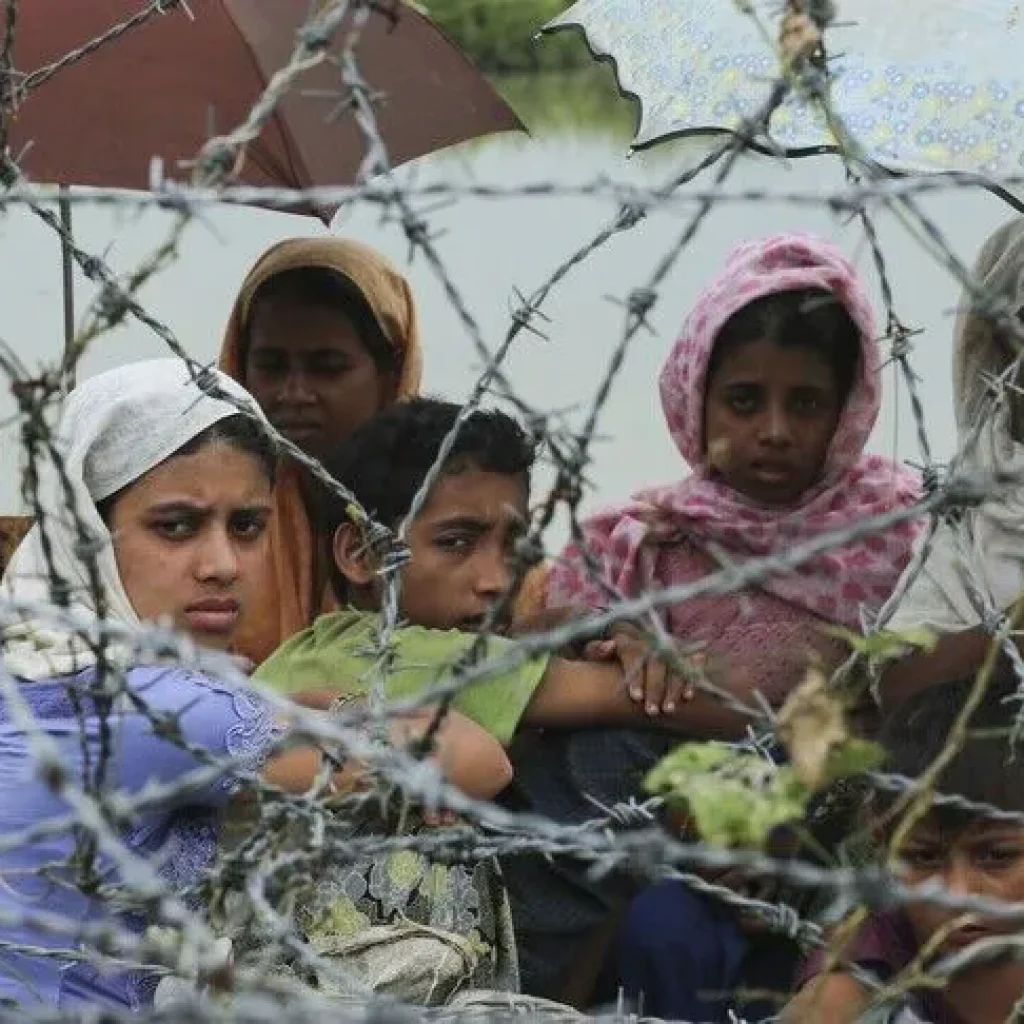
Indian top court spurns Rohingya refugees’ rights
Court questioned need for due process in deportation cases, raising fears India is abandoning protections for genocide survivors and endorsing refoulement
© File Photo
NEW DELHI, India (MNTV) — India’s Supreme Court faced sharp public criticism on Tuesday after the Chief Justice said Rohingya refugees who fled genocide in Myanmar cannot expect a “red-carpet welcome” or full legal protections, remarks rights advocates described as deeply insensitive and reflective of growing institutional hostility toward Muslim refugees.
The comments were made while a bench of Chief Justice Surya Kant and Justice Joymalya Bagchi was hearing a petition alleging the “custodial disappearance” of several Rohingya individuals reportedly last seen in Delhi Police custody.
Their current whereabouts remain unknown, and the petition sought directions that any deportation must follow due process.
During the proceedings, the Chief Justice repeatedly questioned the need for procedural safeguards, asking how individuals who allegedly “cross a fenced border, dig a tunnel and enter illegally” could demand notices, food, shelter or legal protections.
Responding to concerns raised about possible deportations without documentation or hearings, he asked: “Do we want to stretch the law like this?”
The bench further pressed the petitioner on whether the government had ever formally granted refugee status to the affected Rohingya, declaring that “refugee is a well-defined legal term” requiring official recognition.
Counsel clarified that the petition was not seeking refugee status but accountability for detainees who may have been removed without transparency.
When asked whether the broader objective was securing legal status for unlawful entrants, counsel argued that deportation must follow a clear legal memorandum and warned that trafficking or secret removals posed a greater security risk than transparent procedure.
The bench pushed back sharply, asking: “If an intruder comes, do we give them a red-carpet welcome and provide all facilities?”
The Court also suggested deportation should occur if counsel agreed they should be returned, to which she responded that return must be “in accordance with due process of law.”
Expressing surprise at demands for procedural protection, the Chief Justice remarked: “We also have poor people in this country. They are citizens. Are they not entitled to privileges and amenities? Why not concentrate on them first?”
The bench also warned that granting relief could set a precedent: “If it is done for one set of people from one country, another set from another country will demand the same.” Solicitor General Tushar Mehta argued that the petition had been filed by a PIL litigant “and not by the aggrieved themselves.”
Journalist Abuzar Mohd Abuzar Choudhary publicly criticized the remarks, saying they reflected “insensitive and immoral” judicial reasoning and noting that the petition sought only procedural safeguards to prevent arbitrary actions.
Legal experts pointed out that although India is not a party to the 1951 Refugee Convention, it remains bound by the customary international law principle of non-refoulement and by the International Covenant on Civil and Political Rights, which prohibit returning any person to conditions where they face persecution, torture or death.
Observers said the Court’s language risks normalizing arbitrary detention and refoulement by framing genocide survivors as undeserving of basic legal protections.
The Rohingya, a stateless Muslim minority from Myanmar’s Rakhine State, have endured decades of systematic discrimination, military atrocities, mass displacement and what UN investigators describe as genocidal intent.
Rights groups warn that weakening due process protections could result in refugees being sent back to lethal conditions.


Read also