Modi aligns with Israel amid backlash at home and abroad
Indian leader endorses Gaza peace plan while opposition and critics warn of moral retreat and deepening alignment with Israeli policies
© Anadolu Agency
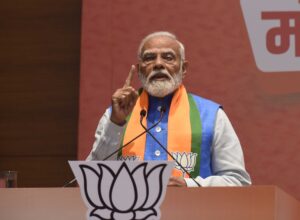
TEL AVIV, Israel (MNTV) — Indian Prime Minister Narendra Modi addressed Israel’s parliament, reaffirming New Delhi’s support for Israel, while also backing a Gaza peace initiative he described as a pathway to a “just and durable peace.”
Modi said India “stands with Israel firmly with full conviction,” condemning just Palestinian resistance struggle. His remarks were welcomed by Israeli Prime Minister Benjamin Netanyahu, who praised Modi as a major global leader and highlighted what he called a “tremendous alliance” between the two countries.
The visit marked a rare high-level parliamentary address by an Indian leader when Israel is facing increasing isolation after its horrific genocide of the Palestinian population in Gaza.
The visit underscored expanding strategic ties, including defense, technology, and trade cooperation. Officials cited bilateral trade of about $3.9 billion in 2024 and mutual investments nearing $800 million, reflecting growing economic engagement despite mounting geopolitical tensions in the Middle East.
Criticism at Home
However, Modi’s Israel visit has triggered sharp backlash in India, with opposition parties accusing him of abandoning India’s traditional pro-Palestinian stance and international law commitments.
The Indian National Congress described the trip as an act of “moral cowardice,” while left-wing parties said the visit legitimized what they called Israel’s “murderous regime” and alleged complicity in ongoing violence in Gaza and the West Bank.
Critics also accused the Modi government of borrowing Israeli security and governance practices, including aggressive demolition campaigns and surveillance measures targeting Muslims in India, and pointed to India’s abstentions on several United Nations resolutions critical of Israeli actions.
Reports that India exported arms to Israel and recruited workers for Israeli construction projects have further fuelled accusations of deepening strategic alignment with Tel Aviv.
International observers say the visit highlights India’s shifting foreign policy under Modi, moving closer to Israel and Western-aligned security frameworks while distancing itself from its historic non-aligned and pro-Palestinian diplomacy.
Analysts warn the stance risks alienating segments of the Global South and undermining India’s image as a champion of international law and postcolonial solidarity.
Modi’s endorsement of a Gaza peace plan came amid continued Israeli military operations, with critics arguing that rhetorical support for peace contrasts sharply with India’s reluctance to condemn civilian casualties or support ceasefire initiatives.
Related posts


Read also