UN court continues hearings on Israel’s obligations in Palestine for 2nd day
© File Photo
South Africa and Saudi Arabia accuse Israel of atrocity crimes, apartheid, and humanitarian violations in Gaza as UN court examines its role under international law
THE HAGUE, Netherlands (MNTV) – The International Court of Justice (ICJ) continued its hearings on Tuesday into Israel’s legal obligations toward Palestinians under international law, marking the second day of proceedings requested by the UN General Assembly.
The case, unfolding at the ICJ’s headquarters in The Hague, comes amid a deepening humanitarian crisis in Gaza, where aid has been blocked for more than 50 days.
The hearings, opened on Monday, focus on Israel’s responsibilities regarding the activities of the UN and other international organizations in the occupied Palestinian territories — including Gaza, the West Bank, and East Jerusalem — and the obligations of third-party states.
Although the court’s eventual ruling will be advisory rather than binding, it is expected to carry significant political weight globally.
More than 40 countries, including the U.S., are scheduled to address the court over the weeklong proceedings.
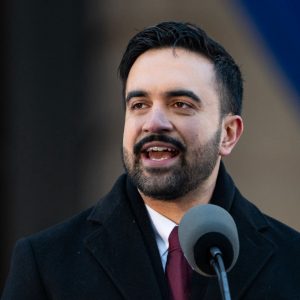
Launching Tuesday’s session, South Africa’s representative Zane Dangor delivered a forceful statement accusing Israel of subjecting Palestinians, particularly in Gaza, to “atrocity crimes, persecution, apartheid, and genocide.”
Dangor said Israel was acting “under the world’s watchful eye” with “impunity,” shielded from accountability by a sense of exceptionalism in the international system.
He alleged that institutions like the United Nations Relief and Works Agency (UNRWA), which supports Palestinian refugees, have been deliberately targeted to erase Palestinian rights — particularly the right of refugees to return to homes lost during the 1948 Arab-Israeli conflict.
“Israel continues to act with impunity,” Dangor told the court. “The attacks also imperil the existence of Palestinians as a group.”
Saudi Arabia’s representative, Mohamed Saud Alnasser, also took aim at Israel, accusing it of “flagrant violations of international law” in Gaza, the West Bank, and East Jerusalem.
Alnasser said Israel has ignored past international rulings and systematically obstructed humanitarian efforts that could mean “the difference between life and death” for Palestinians.
Referring to the complete siege imposed on Gaza since October 2023, he condemned what he called Israel’s “hideous conduct,” arguing that it “piles illegality upon illegality.”
Since October 2023, Israel has tightened a near-total blockade of Gaza, cutting off essential supplies such as food, water, fuel, and medicine. More than two million Palestinians live in Gaza, an area already suffering under a blockade since 2007 when Hamas, an armed Palestinian group, seized control.
Unprecedented restrictions
However, the latest restrictions have been described by humanitarian agencies as unprecedented in severity, plunging the territory into widespread hunger and medical collapse.
Israel maintains that the blockade is necessary to prevent attacks from Hamas militants, but rights groups argue that collective punishment of civilians violates international humanitarian law, particularly the Geneva Conventions.
The ICJ is not expected to issue an immediate decision. Following this week’s presentations, it will deliberate and eventually issue an advisory opinion on Israel’s legal obligations regarding Palestinians and the responsibilities of other states.
While the court’s findings are not enforceable, they carry significant influence over global diplomacy and future legal actions. In 2004, the ICJ ruled Israel’s West Bank separation barrier illegal, though Israel disregarded that opinion.
As the hearings continue, the world watches closely, with growing concerns about whether international law can effectively address one of the most entrenched and explosive conflicts of the modern era.


Read also